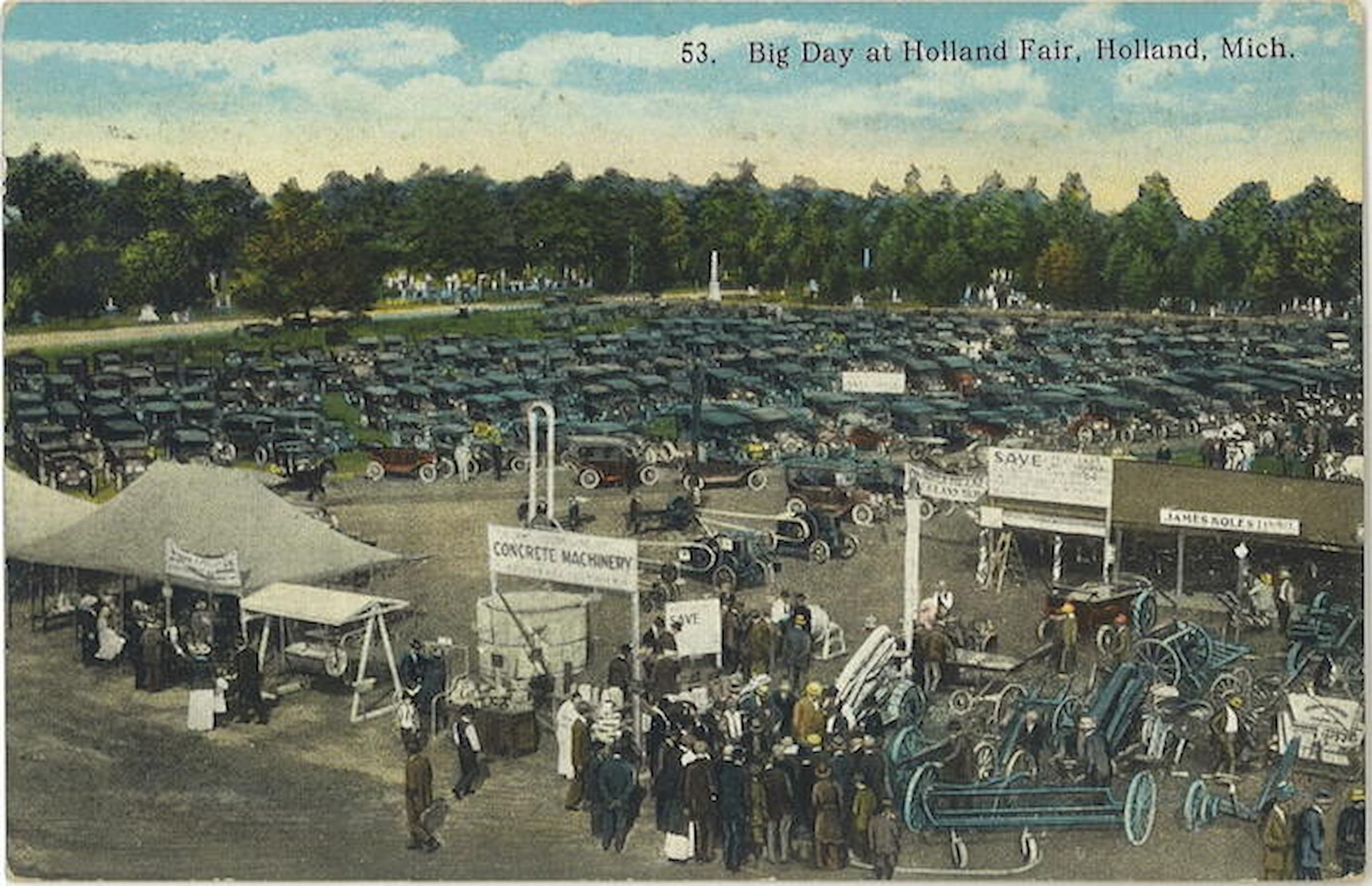
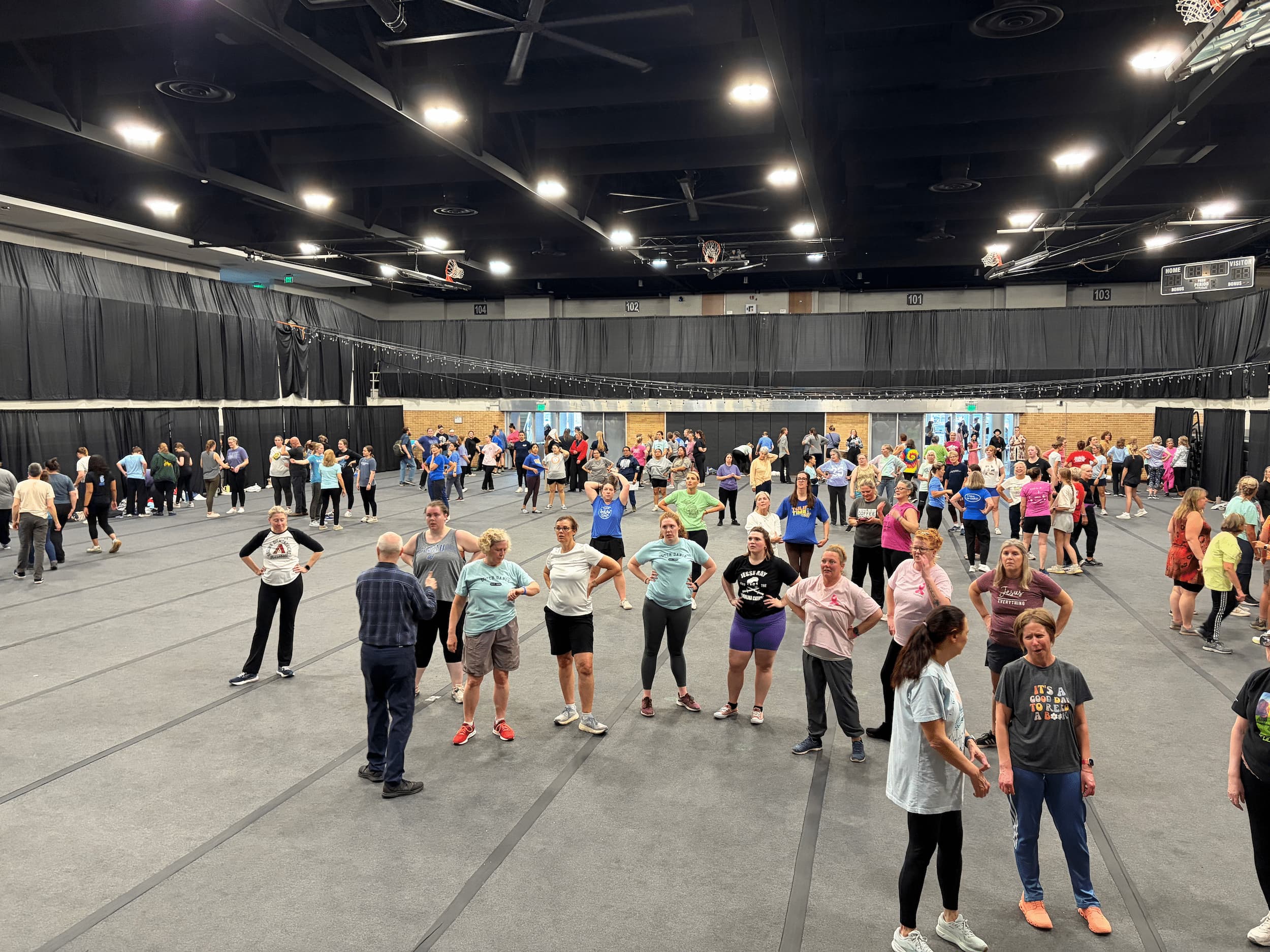
For 91 years now, Holland has been celebrating Tulip Time through dance. Since this March, alumni Dutch Dancers have been gathering to rehearse their 12-minute long klompen dance that will echo through 8th street. This year, the alumni dancers have 36 groups of 12 performing.
The alumni dancers only make up about half of the Dutch Dancers though. Between Kinder (3rd–5th), Middel, and High School dancers all coming from eight local schools, visitors of Tulip Time can expect over 900 Dutch Dancers performing this week. “This is our highest number we’ve had in 10 years of dancers,” Jenn Rykbost, Dutch Dance Program Director, shared.
Interestingly, before 1976 boys were not allowed to Dutch Dance despite the fact that dancers perform in pairs: a boy and a girl. Many girls still perform as boy dancers to this day, but now boys are welcomed into the sport.
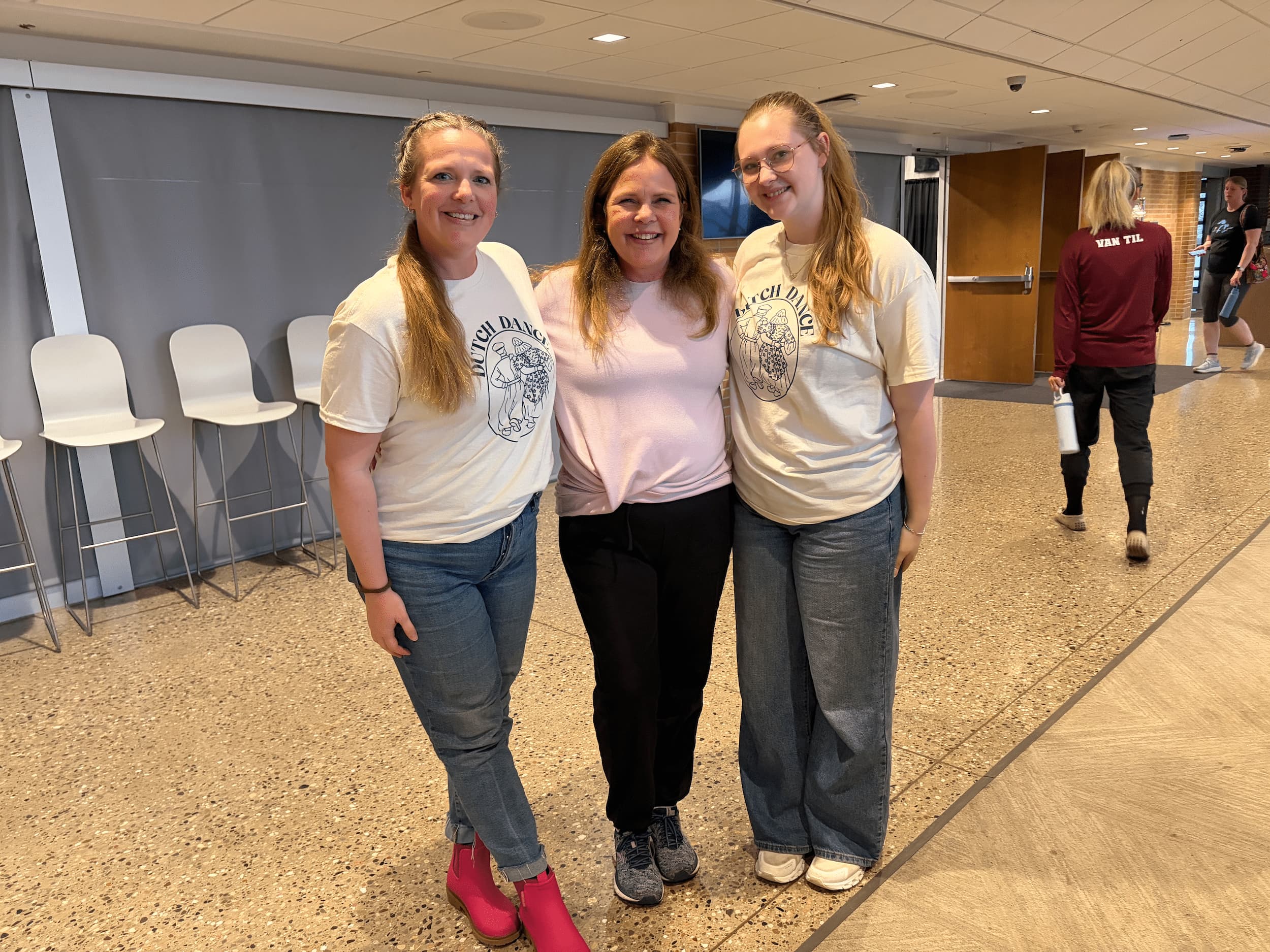
For Jenn, preparations for Tulip Time begin an entire year prior to the actual event. But those are just the things people can see. In many ways, Tulip Time, and Dutch Dance specifically, is a compilation of generations of hard work and dedication. Jenn herself dances alongside her mother and her children.
Dutch Dancing has become a tradition for many families in the Holland/Zeeland area. Annabelle Fickel has been dancing for three years now and is the reason her cousin Mia Dziuban joined Dutch Dance this year. Mia said she’s been enjoying dancing so far, and that “it’s fun. It was hard at first, but it’s really nice to be around family members.”
Biz TerHaar, who has been Dutch dancing for sixty years, was also initially inspired by a family member. She first decided to do Dutch Dance after watching her sister dance. By learning the dance an entire year before being eligible to join, she was able to sneak in as a substitute while only a ninth grader at West Ottawa. Biz went on to direct the Dutch Dance program for forty-five years and has had the chance to dance with her daughters and form incredibly strong bonds of friendship with her fellow dancers.
Janie Avery has been dancing for fifty-three years, and for the majority of those years, she’s danced with her sister (whom she's insisted dance the boy part so she could wear the beautiful dresses!). To this day, Janie still dances with her sister and now her children and grandchildren also dance.
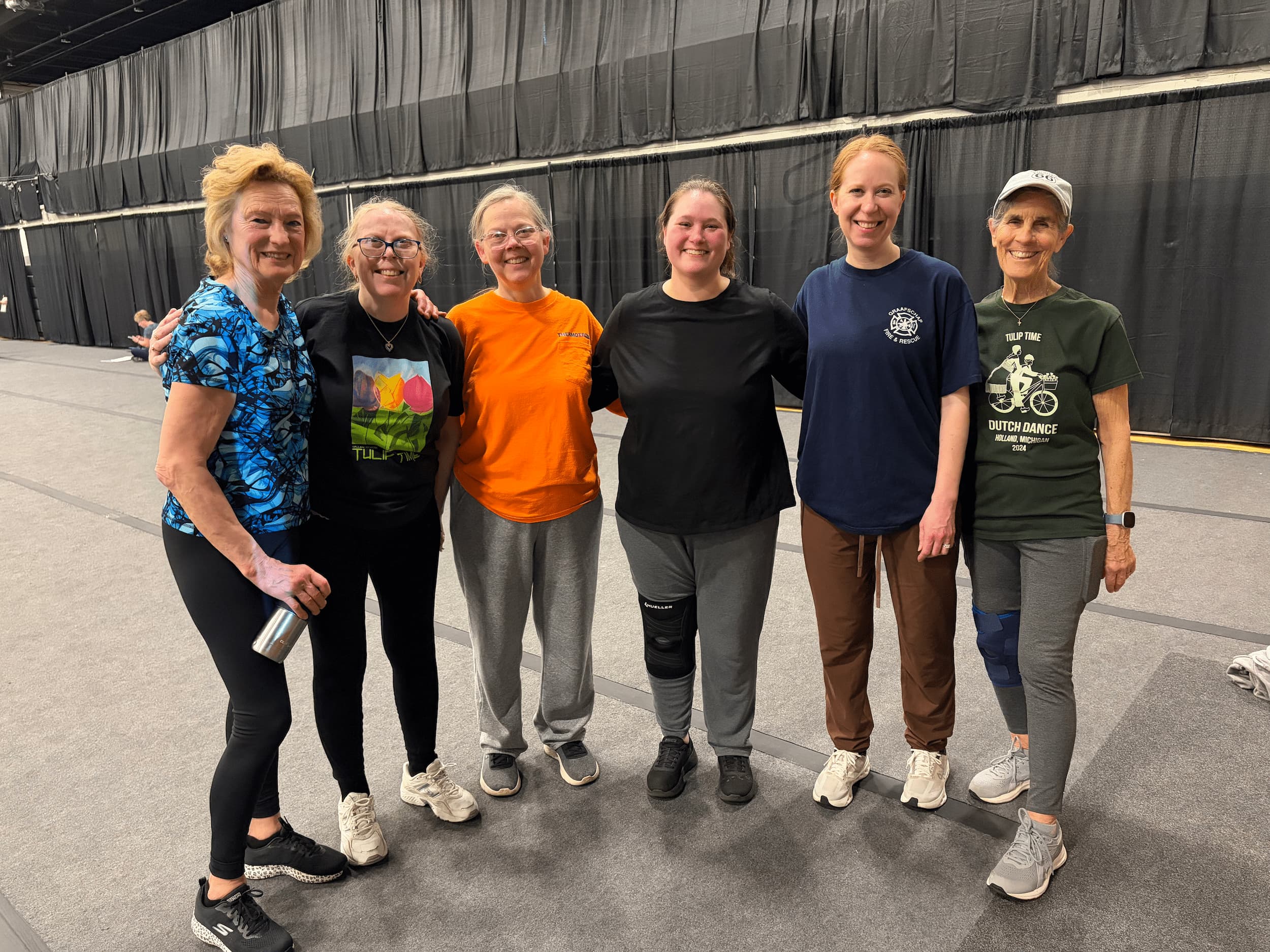
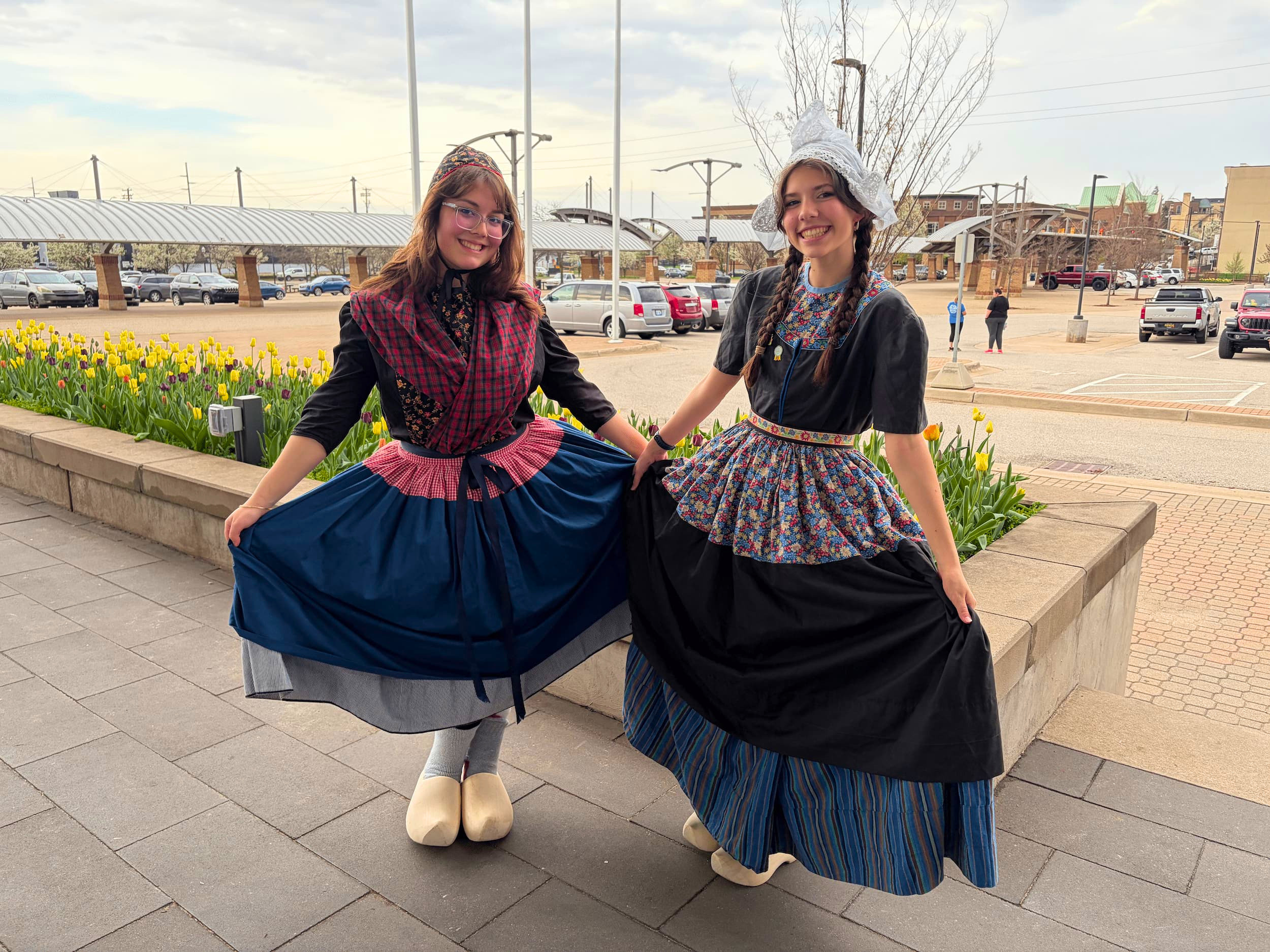
The iconic Dutch Dancer costumes are more intricate and intentional than one might suspect. Every outfit tells a story. Annabelle Fickel explained that girl costumes that have fancy necklaces would traditionally indicate wealth or status. Additionally, a girl’s outfit with rings on her scarf indicates marriage; one without is yet uncoupled. The various styles represent patronage to different regions of the Netherlands, as well as occupation or status. The dancers love to be asked about their specific outfits. So, if one stands out to you this Tulip Time, be encouraged to snap a photo with the dancer and ask about the costume.
Historically, Dutch Dancers’ petticoats were made from old bedsheets, Janie Avery explained. Now the fabrics are purchased and then hand-sewn into garments. On her trip to the Netherlands in 2024, Jenn Ryckbost, Program Director, was captivated by the textiles. Though she shared that lately it’s been challenging to find historically accurate fabrics. For example, she said that “stripes aren’t popular, so they’re not being printed. Petite florals on a white background aren’t popular, so they don’t get printed.” It’s a problem she’s noticed both here and in the Netherlands.
And yet, Jenn, along with all of the directors and seamstresses, made 200 new costumes this year. A true labor of love. According to Jenn, each costume takes roughly fifteen to twenty hours to sew. The fabric itself costs around $200, and with all the bits and pieces, the total cost per costume is between $300 and $500, wooden shoes not included.
Janna Buttimer, an alumni Dutch Dancer who had danced in high school and is currently the Dutch Dance coordinator for the homeschool program, shared a bit about her experience. As an accomplished seamstress, she’s made her fair share of costumes. Last year she sewed eight costumes. The demand for new costumes here in Holland, Michigan, is much higher than in the Netherlands. According to Janna, in the Netherlands, pockets of citizens might wear costumes for events or birthdays of royalty, but they’re not making a whole lot of new costumes anymore. Whereas here, hundreds of costumes are made every year.
It’s important to the Dutch Dance Program that all the costumes are historically accurate. Even down to the majority of the sewing techniques. Janna said, “They are historical costumes, they’re based on historical costumes, and there are some different sewing techniques that don’t really exist in modern sewing that sometimes are trickier.” She explained that sleeves are inserted differently and that collars are made separately from the shirts.
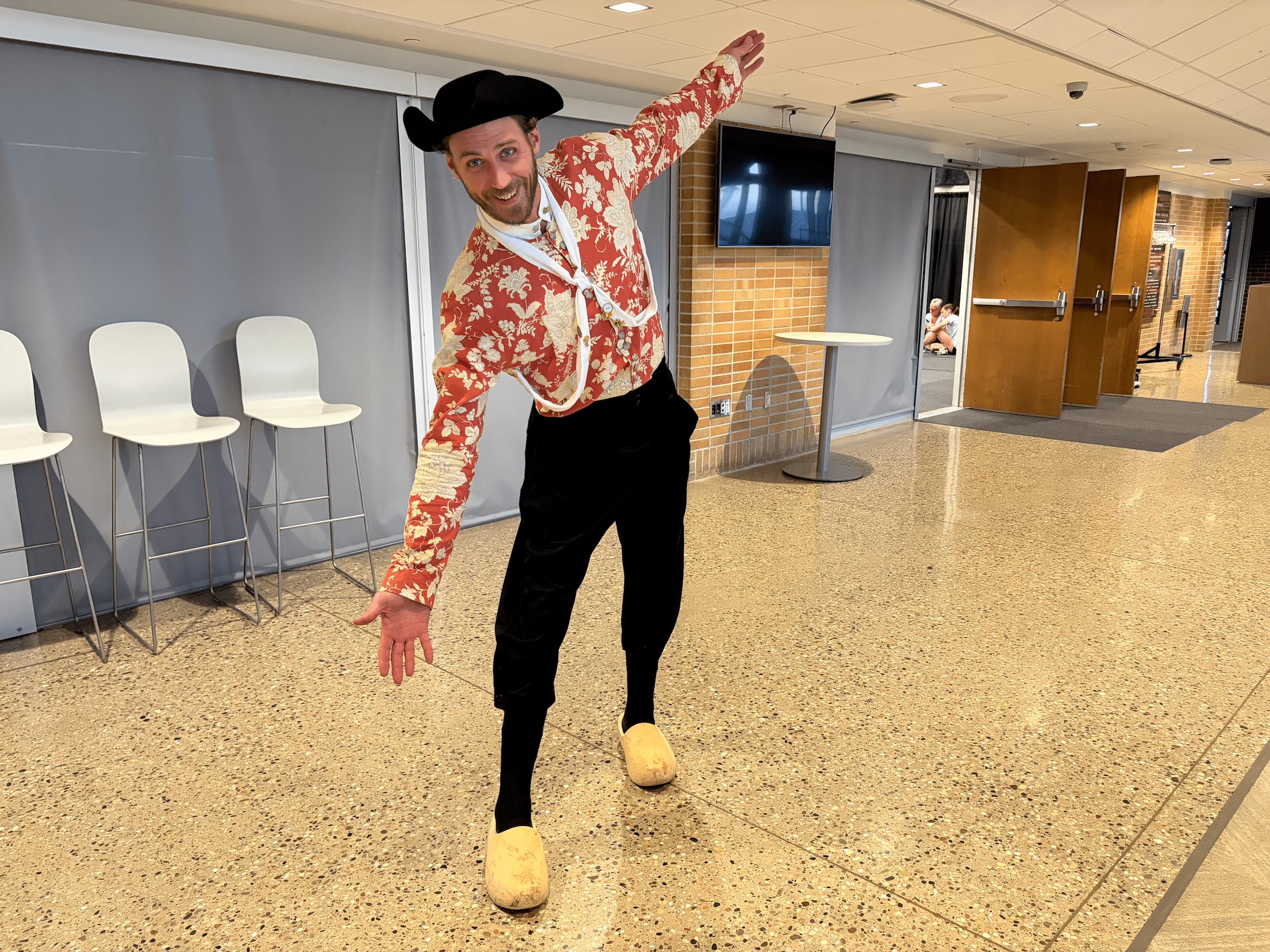
Before the festivities of Tulip Time begin, each Dutch Dance costume is inspected. Years ago, the regulations were much stricter. Over the last five or six years, Jenn has been working hard to increase the joy around Dutch Dancing. Dancers who’ve been with the program much longer, such as Janie and Biz, recall a time when earrings were not allowed, especially hoops, for fear of them getting caught while dancing. Or wearing bobby pins was frowned upon since they weren’t traditional. However, the regulations have become a bit more lenient.
Now, when Janna Buttimer inspects a costume, she looks for a comfortable fit to ensure everything is snug, secure, and yet danceable. She also checks for skirt length, sleeve length, and that all the bits and pieces are accounted for: scarves, hats, pins, socks, and more.
Arguably, the most important piece to any Dutch Dancer costume is the wooden shoes. Like any pair of shoes, it’s important to find a good fit. However, this proves a bit more challenging when the shoe is made of wood. When getting fitted for a pair of wooden shoes, dancers must have their shoes carved to fit the arch of their foot. Some dancers, like Janie Avery, go through a pair of wooden shoes every two years. Meanwhile, Biz TerHaar said while laughing, “I’m more Dutch, some of mine last ten years!” A dancer will spend around $40 per pair of wooden shoes.
Wooden shoes cannot be worn without socks, and not just one pair of socks either.
Dutch Dancers are suggested to wear between eight and ten pairs of socks at a time.
Jenn Ryckbost wears between seven and eight pairs when she dances. Her daughter wears between eight and nine.
At first glance, Dutch Dancers during Tulip Time may appear to be a few groups of smiling people wearing fun, often times colorful outfits. However, it’s so much more than that. For many, it’s their way of honoring their heritage. When Biz dances, she remembers her great grandfather, the first Holland lighthouse keeper, who came over from the Netherlands with Van Raalte. When Janie dances, she, too, remembers her ancestor who came from the Netherlands as a small boy.
For Annabelle and Mia, it’s a way to connect with family members and celebrate their shared history. Annabelle said that she hopes that those watching her dance recognize “how much time we put into it, and that the dancers actually care. We care how you react to it, and we want you to enjoy it just as much as we do.”
Tulip Time brings people from all over the world to Holland, Michigan. It’s a time of celebration, beauty, and history. And while it’s enchanting to be a witness to it all, Annabelle commented that Tulip Time feels so different when you’re a part of it. “It’s really fun to be watching it, but when you’re a part of it, it’s much more exciting.” She’d encourage anyone who's interested in Dutch Dance to give it a try.
Jenn said she cherishes the first dance: “The very first day that we dance and we’re out on the street, I break down in tears literally every time because it’s a relief that we get out there. The music is on, and the people are dressed and have their wooden shoes… There’s nothing like hearing the sound of shoes bounce off the buildings. It’s incredible.”
Holland’s Dutch Dancers perform multiple times throughout the week on 8th street as well as throughout Centennial Park. Exact schedules and locations of performances can be found here on the Tulip Time website. If you’d like to check out Jenn’s favorite spot to watch them dance, mosey on over to the corner by Bouwermans on 8th around 7pm to catch the dancers backlit by a beautiful Holland sunset.

Jade Havenaar is a Holland native and a life-long lover of the lake, coffee, and a good book. She’s a former middle school teacher and a published author. After marrying the boy she met in a bar and traveling the US together, she and her husband welcomed their first born and Jade happily added “boy mom” to the list of hats she wears. When she’s not writing or changing diapers, she’s probably out adventuring with her Golden Retriever, Henry.
Copyright © 2025 Hollander Media. All Rights Reserved. This material may not be published, broadcast, rewritten, or redistributed without written authorization. By providing your email or phone number, you are consenting to receive emails, calls, and SMS/MMS messages from The Hollander and affiliates. Msg & data rates may apply.


.jpg)