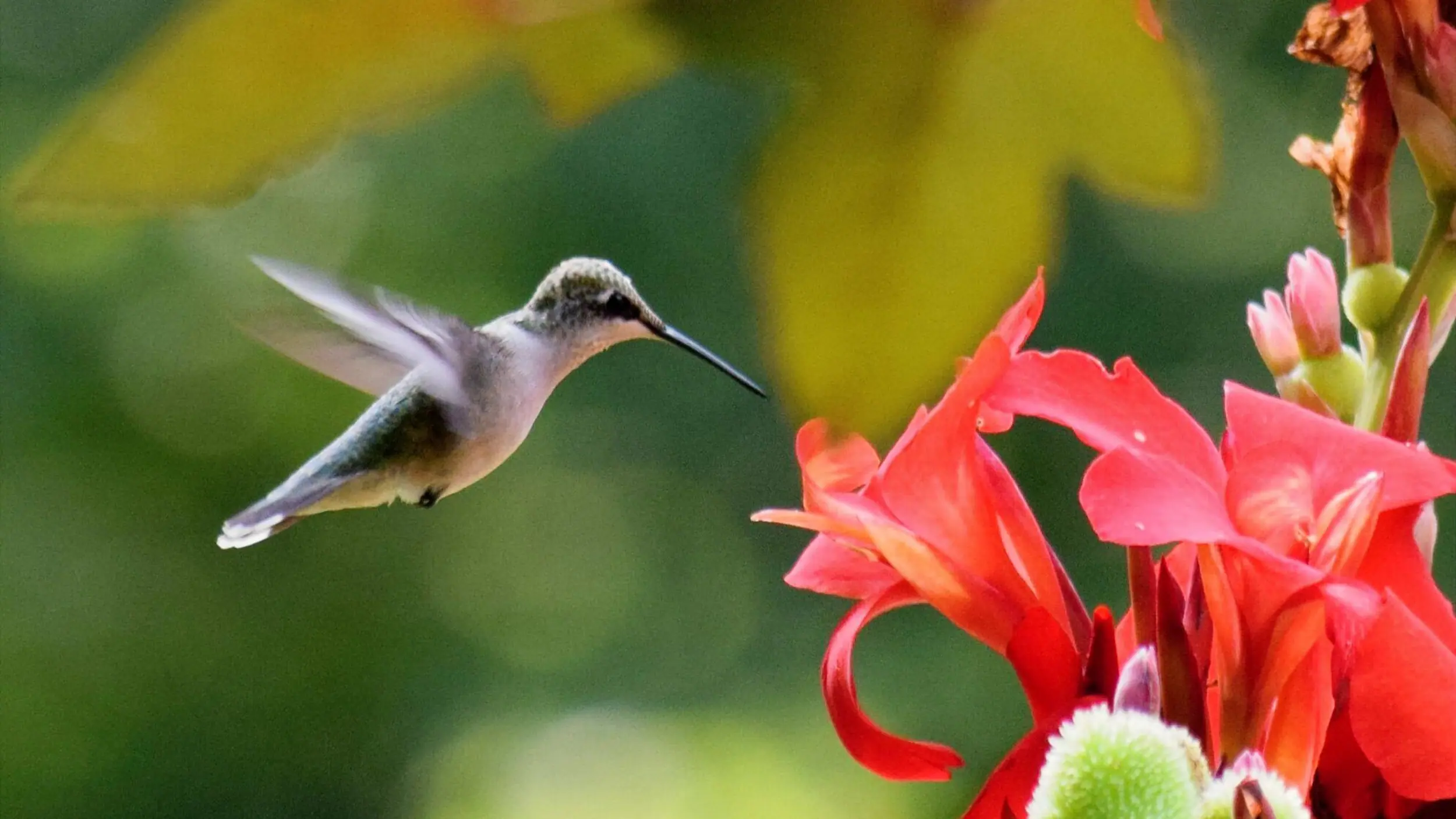
When my husband John and I lived in the city, an occasional hummingbird visitor was cause for celebration. But in our new home, our feeders are busy and these birds are amazing to watch.
One day during the first spring at our new locale, John announced that there was a hummingbird at the front window. We had heard stories of Rose, the previous owner, having hummers eat from a cup in her hand if she sat still long enough.
Our roof overhangs the front porch and there is a hook right in line with the window. I figured that hook was the perfect place to hang a hummingbird feeder. I quickly found mine, brewed up a batch of hummingbird food, and hoped the bird wouldn’t give up on us before I got it out there. But no need to worry. We were on their radar, and they weren’t going anywhere.
We’ve been here for a few years now. I have learned a great deal about hummers and their habits and what amazing little creatures they are.
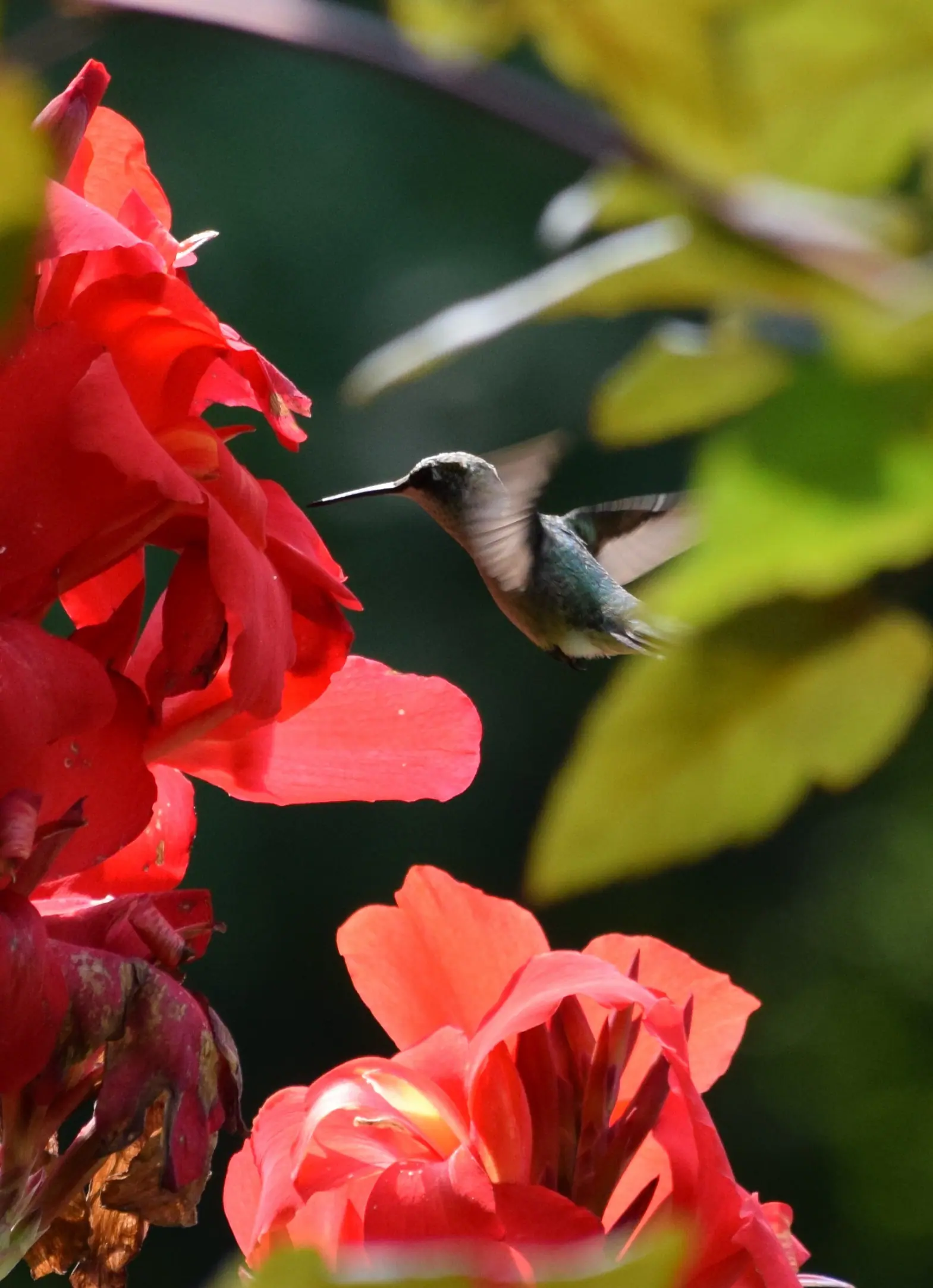
Hummingbirds are tiny, only three to five inches long. Sometimes I can still mistake one for a giant bee or a dragonfly. Their amazing maneuverability with wings and tail allows the bird to hover in one spot, fly backwards, or even fly upside down. Their wings beat up to 60 times a second, looking like nothing but a blur, while producing the whirring sound as they buzz by.
Watching them is fascinating. They make up for their small size with attitude, guarding their territory and food sources. We have one bird I call The Sentinel. She sits at the top of a tall bridal veil bush and polices the feeder. I don’t know how she decides who gets to eat there, but she is the property manager zooming at anyone she feels doesn’t belong. She is relentless.
Hummingbirds only live in the Western Hemisphere. There are 300 different species, but only the Ruby Throated variety lives in Michigan. The males have the ruby throat that flashes brilliant red, and remarkably the throat feathers do not have any red pigment. There is instead a structural aspect of the feathers that allows the red to flash when hit with light at a certain angle, much like peacock feathers.
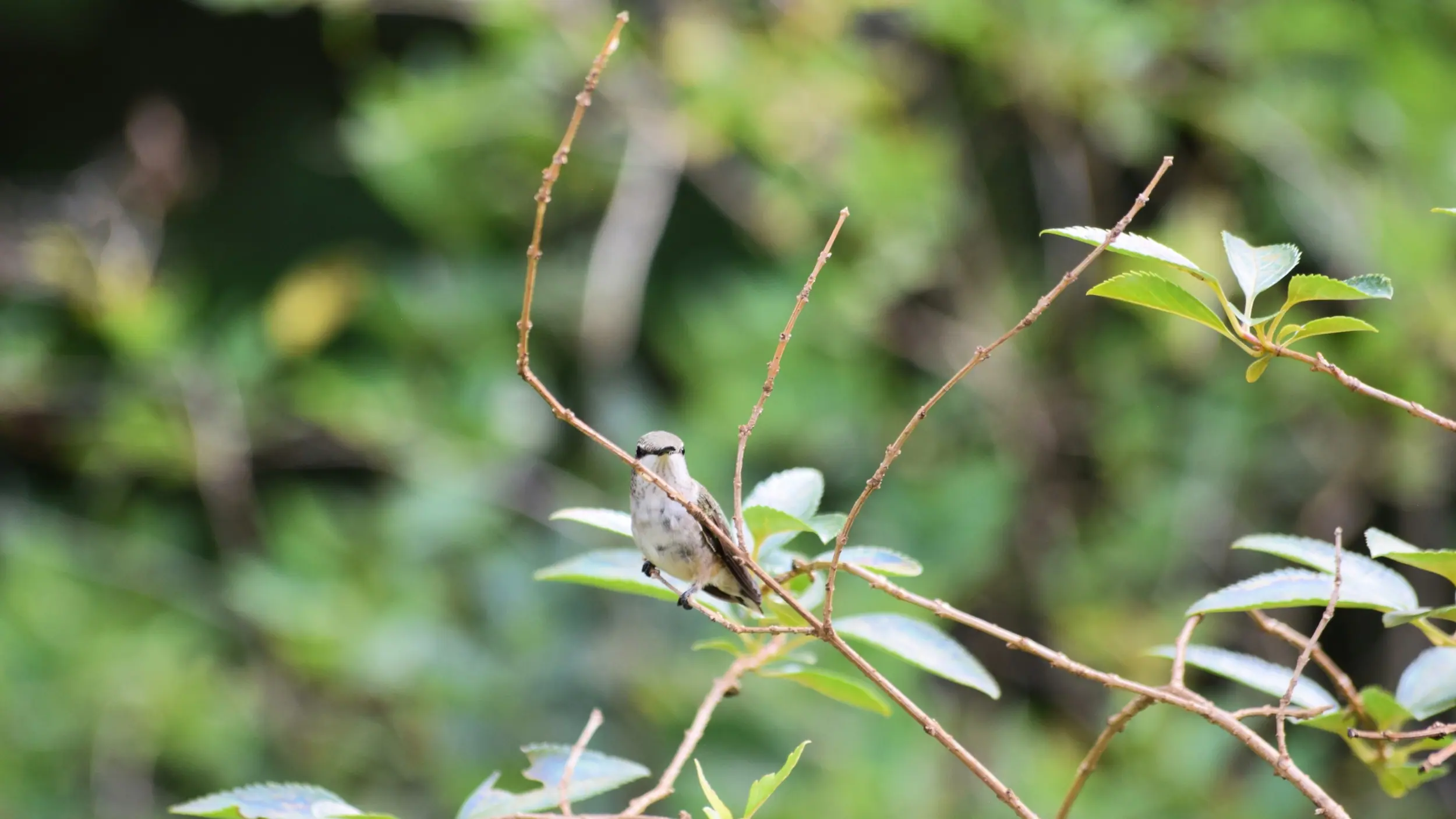
I see many more females as they spend more time feeding while the males are more secretive, but watchful over their territory. Females don’t have the flashy red throat but come in a variety of colors from metallic green to bronze to grayish brown with white fronts.
Their fast metabolism needs constant nourishment; they eat every 10 to 15 minutes. Their long slender beak reaches deep inside tubular flowers. Using their split tongue, they can trap the liquid nectar, going in and out 20 times a second. Although nectar is a major food source, they need the protein derived from a variety of insects like fruit flies, spiders, gnats, mosquitoes, and even wasps. They also catch bugs at the base of their beak, which can drop down to snag a meal.
Hummingbird nests are about the size of a walnut. The female of the pair builds the nest and raises the young. They prefer oak, maple, and fruit trees, but sometimes they will choose an unconventional spot. The nests are held together with spider web silk, lined with a soft material like dandelion down or cotton, and camouflaged with lichen on the outside. With the spider silk, the nest can expand as the baby birds grow. The female will lay two white eggs, each about the size of a jellybean, and incubate them for 14 to 18 days. It takes about three weeks for the baby birds to learn to fly and leave the nest.
When I first saw the young at my feeders, I wondered why there were so many females. Where were the boy babies? Then I learned that juvenile hummers all look like mom. The males develop their ruby throat after the first molt in the wintering grounds. It’s not till they come back the following year to breed that the boys flash their ruby throats.
Hummingbirds winter in Central America and southern Mexico, coming back north to nest and raise their young. Some come straight across the Gulf of America which can be 18 to 22 hours of flying.
They tend to bulk up before they start the journey north. They should reach their breeding grounds by the end of May, but I have read they may be ahead of schedule this year. There are migration maps online, like Hummingbird Central, that show where the birds have been sighted. As of now, they are already in Indiana.
These little travelers go solo and not in flocks. It is thought that sunlight is a determining factor for when they begin their journey back to the breeding grounds. The males leave before the females to look for a good nesting spot for when the females arrive. In the same way, the males leave first when they migrate south again in the fall.
To attract and feed these little guys, it’s a good idea to begin hanging a feeder out a week or two before the scheduled arrival. The nectar is easy to make: a ratio of four parts water to one part white sugar. Heating the water makes the sugar dissolve faster, no need to boil. Use white sugar only and color is not recommended. It’s important to keep the feeder clean and change the nectar regularly.
I find it is good for the soul to surround oneself with the amazing variety and beauty of God’s creation. And these little birds are just one more part of our amazing world.
Geri McCaleb was born in the Netherlands, the youngest of 5, and came to America with her family in 1951. Her hometown, Scheveningen, is a beach town near DE Hague on the North Sea. Her parents found a home in Grand Haven, a beach town on Lake Michigan. Her family lived through the years of Nazi occupation in Holland, and she grew up on stories of hardship and survival during those war years. It shaped her thinking and showed her the importance of faith in God and freedom. Geri served on Grand Haven City Council for 8 years, 2001 until 2009. She decided to run for Mayor in 2011 and served 4 terms ending in 2019. After her time with the city, she was a Community Columnist for the Tribune for several years. She and her husband and have 2 children and 4 grandchildren and now live in Grand Haven Township.
Copyright © 2025 Hollander Media. All Rights Reserved. This material may not be published, broadcast, rewritten, or redistributed without written authorization. By providing your email or phone number, you are consenting to receive emails, calls, and SMS/MMS messages from The Hollander and affiliates. Msg & data rates may apply.