One can have a love/hate relationship with snowplows. On the one hand they keep the roads open for travelling to work, school, and groceries, but on the other hand they can fill the mouths of our driveways with a wall of white. Not a fluffy wall, but a heavily packed wall—creating a barrier between me and where I need to go or preventing me from reaching a safe harbor like my garage.
The plow driver can’t lift his blade at every driveway, but when your personal plow guy has just left and the next guy going by is the road plow, it can cause some negative thoughts.
I’ve seen people with small cars, the ones with 14-inch tires, trying to power through the white wall. In my old city neighborhood, one driver was so determined to get into his driveway, he ended up with the whole frame resting on the packed snow—zero tires touching the ground. At that point, if all you have is a plastic shovel, you have a real problem.
I grew up on Lake Shore Drive and remember watching the plows go by. In those days they drove in pairs. The first plow cleared the road, and the second plow cleared the shoulder. We lived just over the crest of a hill, and there must have been a good spot for a drift. When that second truck came by the snow flew almost to the house, and we were fifty feet off the road. In heavy snow all you heard was a rumble and all you saw was a cloud of white going down the road.
I was surprised by this year’s early snow fall. It has reminded me of Michigan winters of years past. I admit I enjoy the snow. Michigan winters without snow are long and boring. The snow brings beauty but also a potential adventure every time you step outside.
After living in the city for years, I recently moved back to the country. I live on a gravel road near a T intersection. I have been impressed with how well the Ottawa County Road Commission takes care of our gravel road. It’s as smooth as most city streets.
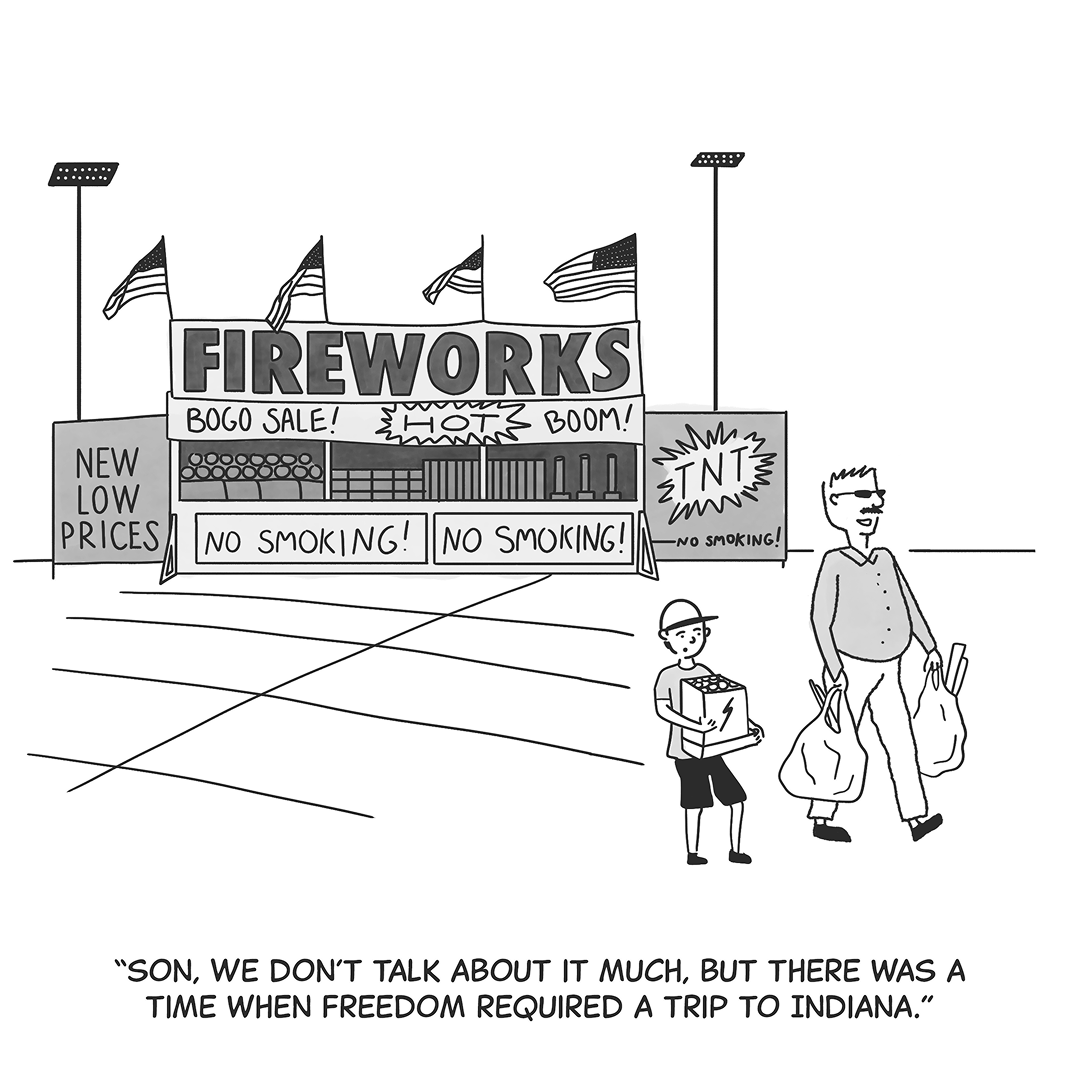
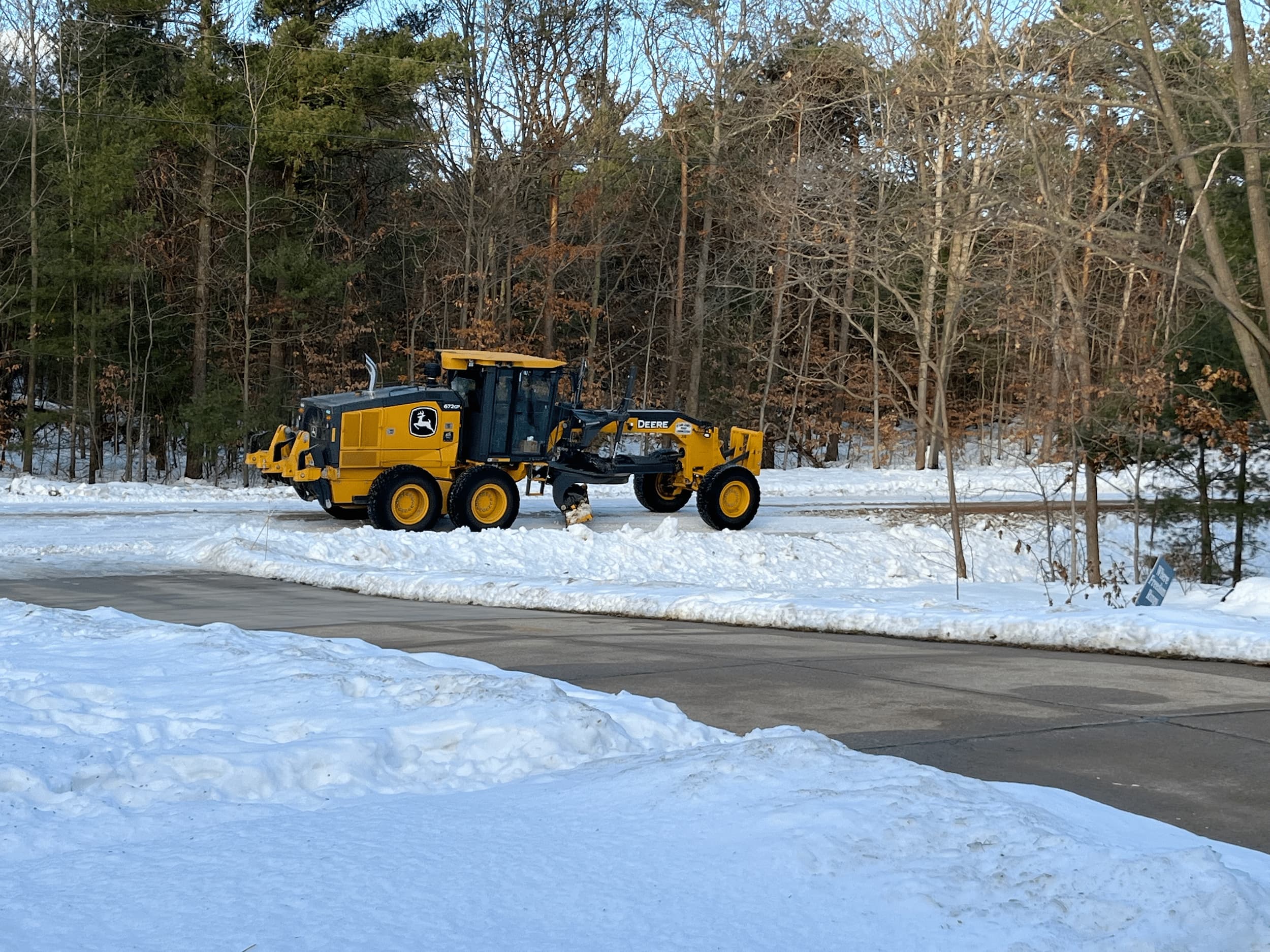
With the snow and cold temps, there has been a lot of snowpack on my gravel road. When I heard the predicted thaw, I was concerned my road would turn to deep slush. But not to worry. As the temperature warmed, a huge John Deere grader showed up and was scraping the slush away—so my concern was averted.
Since the first winter we were here, I have watched how the snowplow driver plows my road and clears the intersection. Most of the streets in the city are laid out on a grid and so the plows drive the grid, but it is different out in the country. I admire the driver’s ability to maneuver that big truck to clean the road and the intersection. He cannot leave a wall of snow anywhere; he must work it all away and he does a great job.
I thought it would be interesting to see what the life of a county snowplow driver was like, so I had a conversation with a recent retiree. Throughout his career with the Road Commission, he saw a lot of changes.

Road Commission Drivers usually have a regular route and get to know their area. Early in the season, it’s important for the driver to push the snow back as far as possible, as subsequent storms can cause a problem if the driver runs out of room to pile the snow. I think that was what my driver was doing when he spent so much time grooming our intersection to make sure there was plenty of room to keep the lines of sight open in anticipation of that next storm.
Even though drivers must have a CDL (commercial drivers’ license) they are not bound by regular CDL rules of hours and breaks. In winter there are three shifts.
The regular day shift is 7 until 3 or 3:30, but in a storm situation that driver can be called in as early as 2 am, work up to 12 hours—and can be called back in at 6 pm to plow at night.
It’s easy to see how a truck can burn through one hundred gallons of fuel in a day of steady plowing.
Ottawa County has 1700 miles of roads and four Road Commission garages. The Grand Haven location, besides a garage, houses the administrative offices. The largest garage is in North Holland. The other locations are in Coopersville and Hudsonville. Each location has its own supervisor and mechanics so repairs can be done on site.
Today’s county plow trucks are diesel, but before the switch to diesel, the trucks ran on regular gasoline. The swirling snow environment would sometimes cause problems under the hood. If the distributor got wet, the truck would cough and sputter and lose its power. The only solution was to take the truck back to the garage to get the distributor dried out before heading back out on the road.
The diesel fleet uses compression instead of that electric spark, so they bypass that distributor issue, and as a bonus, the diesel just adds a lot of power to do a better job.
The new diesel trucks are equipped with a retractable wing plow on the side of the truck. With this added plow blade, one truck can do the job of two trucks and two drivers. The wing plow trucks are equipped with a laser light that shines where the plow will reach. This way the driver can raise the plow to make sure not to take out things like mailboxes, signs, guardrails, bridge abutments, and anything else parked in the right of way.
The driver controls the truck's plow blades with a series of control levers in the cab. The controls are electric over hydraulic. They control the underbody plow, the front plow, the wing plow, and the salt and sand spreader. In today’s trucks, the sand in the back funnels down to the spreader on a belt in a V-shaped bed.
I understand in the early days of snowplowing some poor soul was requisitioned to the back of the truck and physically shoveled the sand down to the spreader. That must truly be the last-man-on-the-totem-pole job. I’m sure he needed to be thawed out periodically during the shift.
Salting and sanding are a tricky business and temperature dependent. If it's below 15 degrees Fahrenheit, the salt is ineffective. It’s best to use grit and save the salt for higher temps. Ottawa County gets about 25,000 tons of salt in a season, and it is distributed among the garages. On gravel roads, only grit is used for traction on the snowpack.
Most importantly, these powerful, heavy-duty trucks and their drivers must be treated with respect for everyone’s wellbeing. When grooming an intersection or a ramp, the plow may pull to the side of the road to back up and rework an area.
It’s imperative that drivers pay attention and give trucks the room to maneuver. In heavy snow, or if you aren’t quite awake early in the morning, don’t just follow the pretty flashing lights into the back of that truck.
For everyone’s safety, recent Michigan law says to stay 200 feet behind a working truck and 20 feet away at an intersection. These trucks have large blind spots and may not see you if you don’t respect their space.
For everyone’s safety, give them room, give them space, and stay safe through the winter months.
Geri McCaleb was born in the Netherlands, the youngest of 5, and came to America with her family in 1951. Her hometown, Scheveningen, is a beach town near DE Hague on the North Sea. Her parents found a home in Grand Haven, a beach town on Lake Michigan. Her family lived through the years of Nazi occupation in Holland, and she grew up on stories of hardship and survival during those war years. It shaped her thinking and showed her the importance of faith in God and freedom. Geri served on Grand Haven City Council for 8 years, 2001 until 2009. She decided to run for Mayor in 2011 and served 4 terms ending in 2019. After her time with the city, she was a Community Columnist for the Tribune for several years. She and her husband and have 2 children and 4 grandchildren and now live in Grand Haven Township.

Copyright © 2025 Hollander Media. All Rights Reserved. This material may not be published, broadcast, rewritten, or redistributed without written authorization. By providing your email or phone number, you are consenting to receive emails, calls, and SMS/MMS messages from The Hollander and affiliates. Msg & data rates may apply.