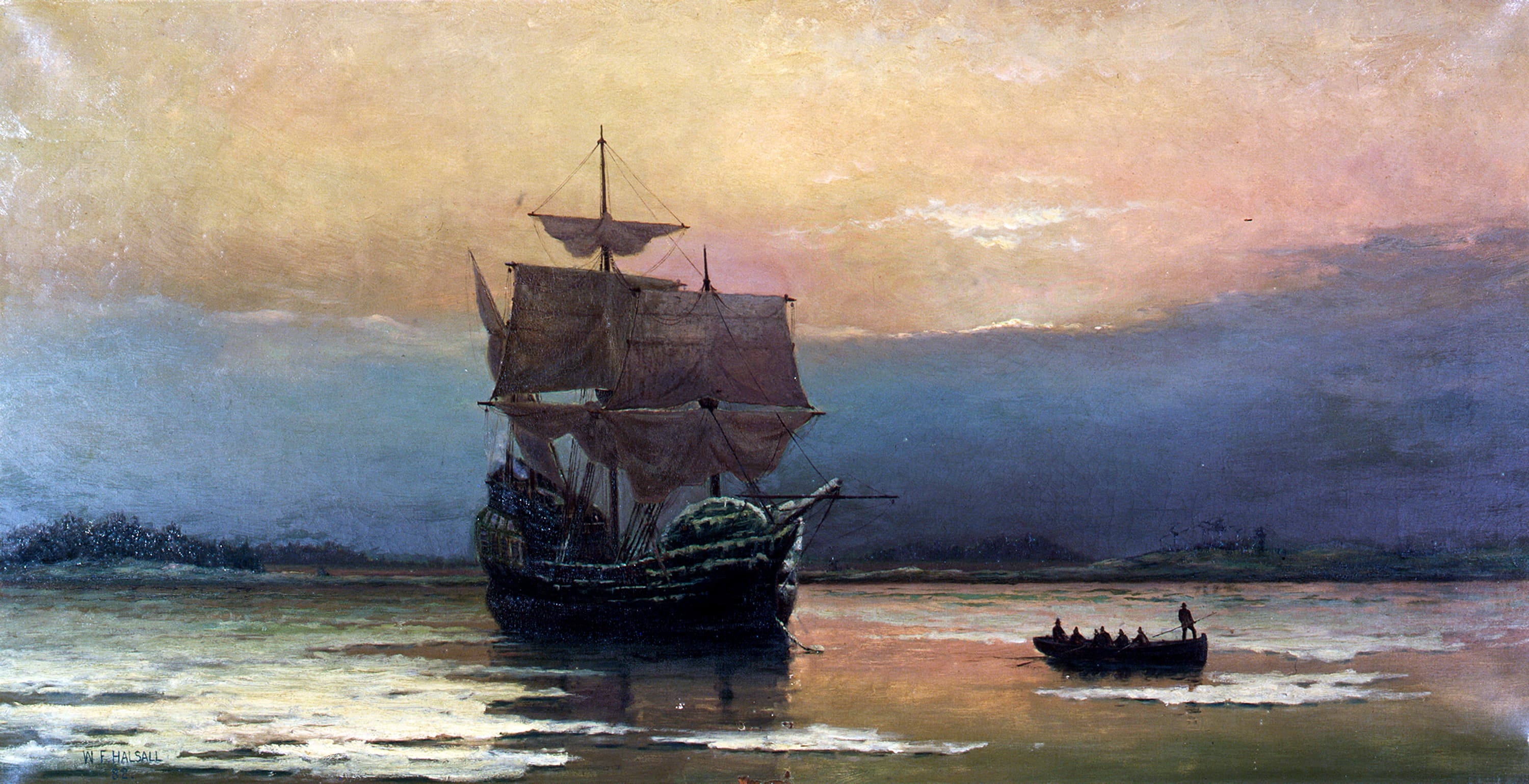
The first landing of English colonists in the new world was at the mouth of Chesapeake Bay, near what is now Virginia Beach. The Susan Constant, Godspeed, and Discovery, left England on December 20, 1606, with 105 passengers, mostly men and boys. The ships reached land on April 26, 1607. The expedition was funded by the Virginia Company of London, and the mission was to look for silver and gold, explore for trade routes, and spread the gospel. The colonists named the spot they landed Cape Henry, for Henry the Prince of Wales, the son of King James I. When the weary travelers landed, the first thing Chaplain Robert Hunt did was plant a wooden cross and dedicate the new land to God and evangelism.
Hunt, a member of the Anglican Church of England, lead the event with this message:
“We do hereby dedicate this Land, and ourselves, to reach the People within these shores with the Gospel of Jesus Christ, and to raise up Godly generations after us, and with these generations take the Kingdom of God to all the earth. May this Covenant of Dedication remain to all generations, as long as this earth remains, and may this Land, along with England, be evangelists to the world. May all who see this cross remember what we have done here, and may those who come here to inhabit join us in this Covenant and in this most noble work that the Holy Scriptures may be fulfilled. From these very shores the gospel shall go forth, not only to this new world, but the entire world.”
These travelers established Jamestown, the first English settlement in the New World. The settlers did not have an easy time of it. The location was swampy, there was disease and sickness among the people, and adversarial issues amongst themselves and with the native tribes. But that did not negate the prayer of Robert Hunt claiming this land for God and the gospel.
The more I read about the people who took the dangerous trips across the Atlantic in relatively small vessels, the more curious I became of what motivated people in the 1600s to venture into the unknown. The travelers on this trip and subsequent voyages were a variety of people, adventurers and fortune seekers for sure, but there was that other contingent driven by faith in God. They called themselves Separatists and Puritans and sought the freedom to worship as their conscience dictated. They had a strong desire to spread the gospel to unbelievers.
That question led back to Martin Luther nailing his 95 theses to the door of the All-Saints Church in Wittenberg, Germany, on October 31, 1517, the event that sparked the Protestant Reformation.
Martin Luther's criticism of the sale of indulgences as a substitute for true repentance spurred the three main ideas of the reformation: first, the inerrancy of the scriptures saying the word of God alone is the authority for Christian faith; second, justification by faith alone and not works; and third, salvation is by grace alone.
In the 1530s, King Henry VIII of England, while a strong supporter of the Catholic Church, was unable to produce a male heir with his first wife, Catherine of Aragon. Henry wanted to have his marriage annulled. Pope Clement VII in Rome, refused his request. Henry was not to be denied and, working with Parliament, passed The Act of Supremacy which made England an independent empire separate from Rome.
The Head of State, King Henry, became Supreme Head of the Church of England in 1534, and so began the English Reformation. The Church of England, also known as the Anglican Church, was in essence Catholicism without the Pope, with Henry being the Head of the Church. The Church of England did not show tolerance for those who did not adhere to the teachings of the State Church.
As the result of the English Reformation, two groups arose. The Separatists wanted a total split from the Catholic Church, while the Puritans felt that reforms would address the differences they had with the Church in Rome. With the Crown being the Head of the Church, it established the rules for church teaching and attendance.
King James I, a descendant of Henry who ruled England from 1603 to 1625, believed in the absolute rule of kings. In the King’s eyes, to defy the King was to defy God. Separatists were penalized and sometimes imprisoned if they didn’t attend the State Church and pay tithes. Church membership was required to hold public office. Things became intolerable for many.
For the Separatists to find religious freedom, they decided they had to leave England. They first went to Holland in 1604. Even though they found freedom of worship, they grew concerned their children were adopting the Dutch language and culture and decided their next move was to the New World.
In 1620, about 100 people—men, women and children, some Separatists, and a variety of passengers who the Separatists called "Strangers"—set sail on the Mayflower. Bad weather pushed them off course and instead of Virginia, they landed in what would now be Massachusetts, in November of 1620, to establish the Plymouth Colony.
The November landing, combined with having been driven off course and not landing where their license or patent stated, brought some legal concern among the travelers. To alleviate disagreements, before getting off the ship, 40 men signed a document now known as the Mayflower Compact. The basis of this agreement was dedication to God, to self-government, and to the establishment of “just and equal laws.” This collaborative effort by the passengers, led by William Brewster, laid out a foundation for self-government. William Bradford was a signer and a chronicler of events.
Just as at Jamestown, the first year in Plymouth was very difficult, and only half of the people survived to the first harvest. None the less, those 50 colonists who survived celebrated and expressed their gratitude to God for seeing them through very difficult times. And so established the first Thanksgiving.
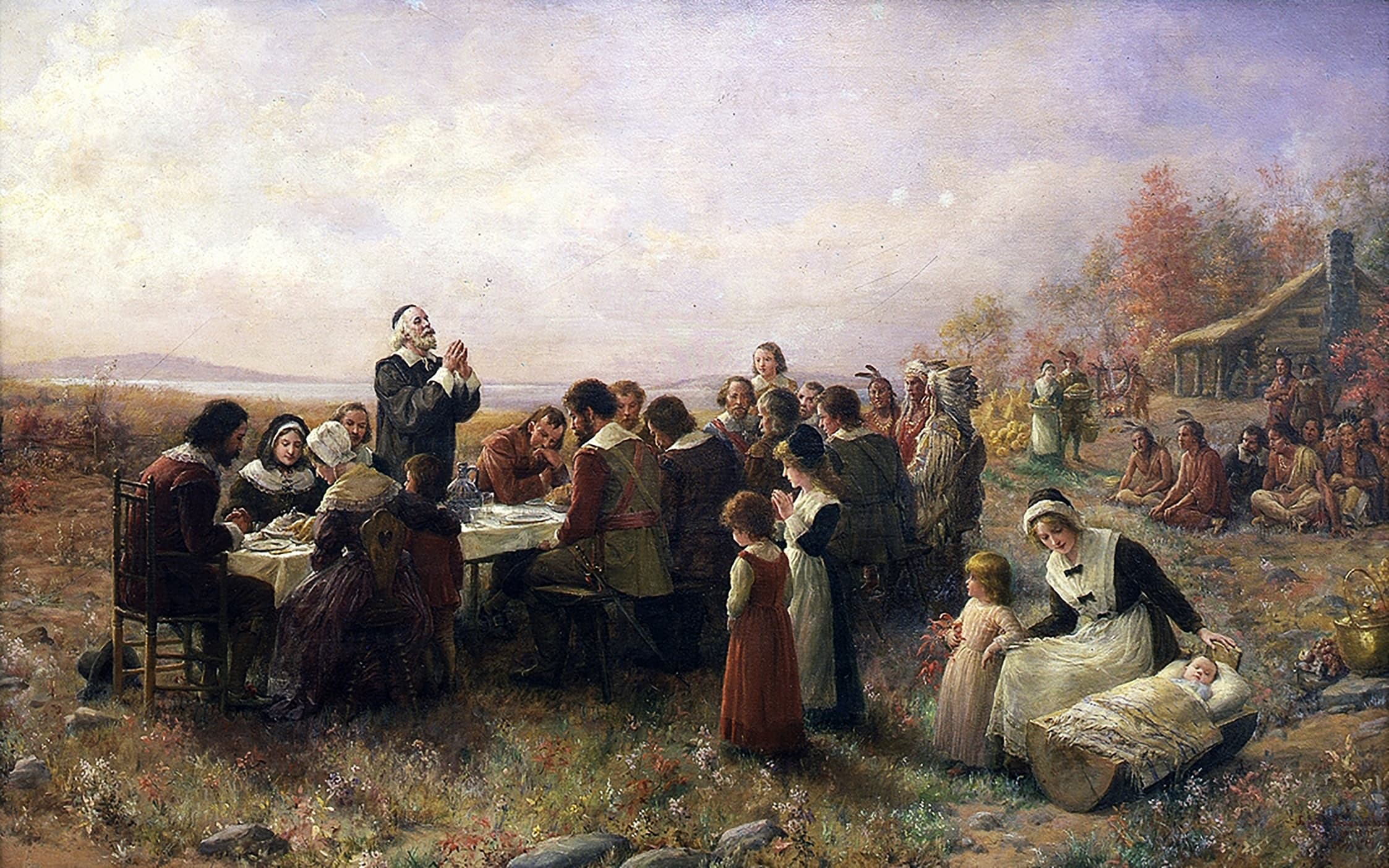
The colonists were joined by 90 Wampanoag Tribesmen, including Chief Massasoit, who brought venison to add to the feast and joined in the celebration.
The pilgrims received much help from the local Wampanoag people who taught them survival skills for the new land. One of the most important was Squanto, a member of the Patuxet tribe, a subset of the Wampanoag people. Interestingly, he had been kidnapped and taken to Spain and then England. There he learned English and made his way back home. But when he came back, his tribe had been wiped out by disease. He stayed with the Wampanoag people, and Chief Massasoit and was a godsend to the colony.
This agreement, for the establishment of the Plymouth Colony to “submit to such government and governors as we should by common consent agree to make and choose,” laid the foundation for future government.
The importance of the Mayflower Covenant was a precursor to the Constitution, as it established government by consent of the signers. It established the rule of law by agreeing to create and adhere to a system of just and equal laws for all people no matter their status, or if they were believers or not. The Mayflower Compact endured as the governing document of the Plymouth Colony until the colony joined the Massachusetts Bay Colony in 1691.

Geri McCaleb was born in the Netherlands, the youngest of 5, and came to America with her family in 1951. Her hometown, Scheveningen, is a beach town near DE Hague on the North Sea. Her parents found a home in Grand Haven, a beach town on Lake Michigan. Her family lived through the years of Nazi occupation in Holland, and she grew up on stories of hardship and survival during those war years. It shaped her thinking and showed her the importance of faith in God and freedom. Geri served on Grand Haven City Council for 8 years, 2001 until 2009. She decided to run for Mayor in 2011 and served 4 terms ending in 2019. After her time with the city, she was a Community Columnist for the Tribune for several years. She and her husband and have 2 children and 4 grandchildren and now live in Grand Haven Township.
Copyright © 2025 Hollander Media. All Rights Reserved. This material may not be published, broadcast, rewritten, or redistributed without written authorization. By providing your email or phone number, you are consenting to receive emails, calls, and SMS/MMS messages from The Hollander and affiliates. Msg & data rates may apply.