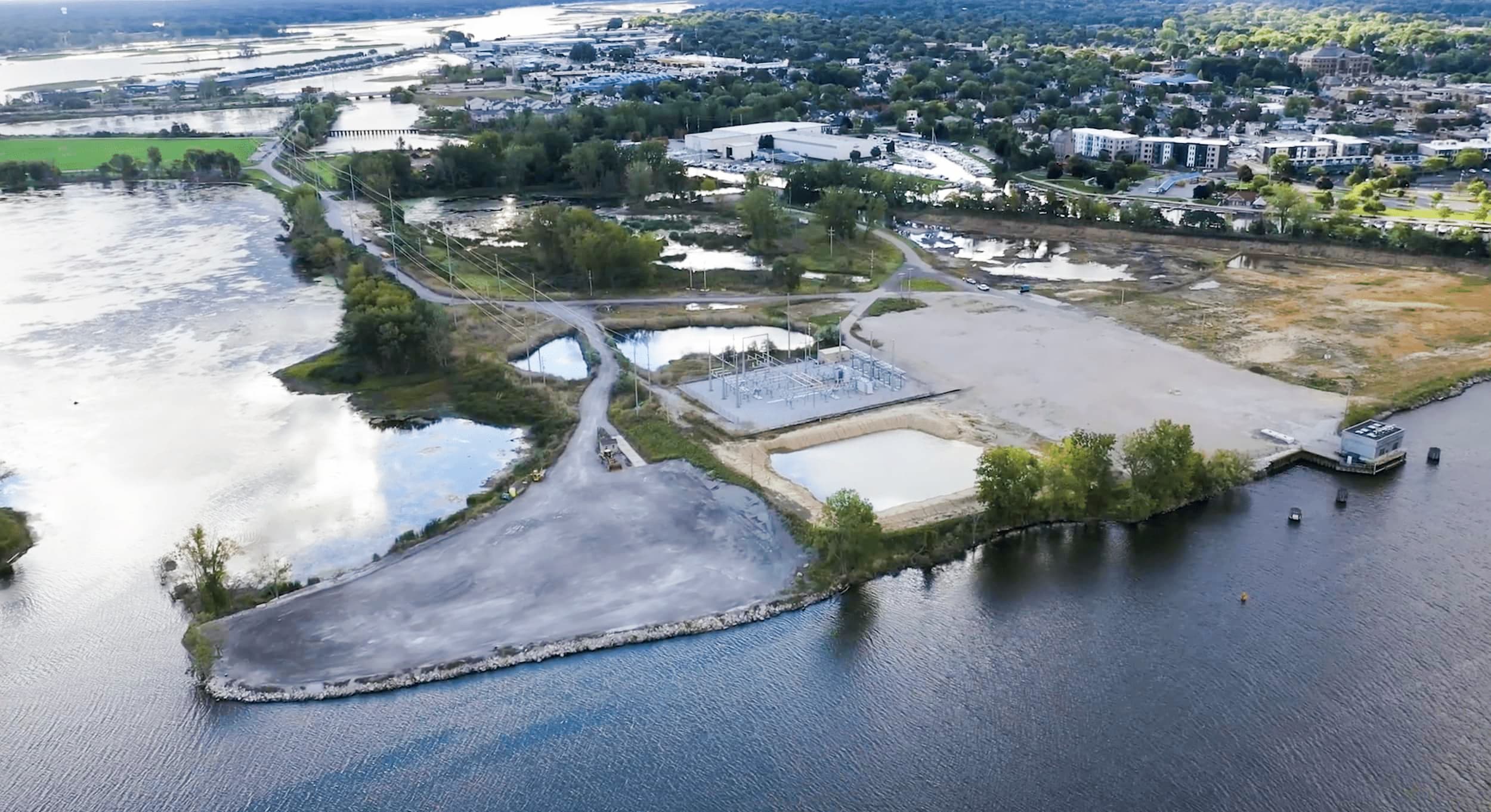
The Holland area lakeshore we’ve all come to love has almost always had this effect on its close inhabitants, or what we like to call ourselves: “locals.” But it has also been known to draw engagement from visitors both near and far. And this was especially true during the late 18th and early 19th century. So what, you might ask, drew visitors in? And hint: It was not Tulip Time… at least not yet. It wasn’t established as a festival until 1929.
Let’s take a step into what characterized the era that occurred between 1890 and 1920.
To put it into perspective, this era began only a mere fifteen years after the end of the Civil War. It became a time where advancements took afoot in industries, medicine, and transportation. And a byproduct of that, was that people began to understand that living longer, healthier lives required taking the time for leisure and recreation.
At the time, railroads that already existed were used primarily for the transportation of goods from place to place, but eventually they caught on that if connections between small and large cities were made, and in those places had destinations and attractions, they’d entice the leisure-seeking middle class to purchase tickets to ride the railroads (some good ‘ole capitalism for you, right there).
So what exactly was the popular destination that drew in visitors? The Ottawa Beach Hotel.
The Ottawa Beach Hotel Was The Spot To Go
The Ottawa Beach Hotel was built by the West Michigan Park Association in 1886. It cost just around $20,000 to construct in its first stage (about half a million dollars if put in current value). It featured 36 guest rooms, each with their own private baths, a wrap-around porch, many windows, and of course, a statement of patriotism by placement of the nation’s flag atop the roof.

There were actually three iterations, or additions, made to the hotel. A year after its grand opening, the addition of 20 summer cottages were built near the West Michigan Park Plat. A few more years after that, a 104-room annex, which connected to the main building, was constructed to meet the popular demand of its visitors (if you can picture a motel-style building, that’s what this looked like). And then, in 1895, Charles Heald—a member of the West Michigan Park Association—bought the hotel on behalf of the railroad. It cost him just $5,100. We’ll get to the third addition in a moment.
So around this time, the waterline along Black Lake (known now as Lake Macatawa) was filled up with different attractions—from a bowling alley to a restaurant to a casino (not a whole lot of gambling occurred here, it was mainly just a place for music, dance, and other hosted events).
However, sometime in February 1896, these attractions began to fizzle out, perhaps due to a lack of popularity, and contractors decided to fill in the land where they once stood. So what now? This is when the third iteration of the hotel occurred. Charles Heald decided that this newly manicured land was a perfect spot for the hotel to relocate. Its current location had experienced blowing sand from the dune where it was built, and this was not ideal for visitors. It seems like nobody wanted sand in their eyes (and for good reason). So it was decided to relocate the hotel to a much more inviting location.
But this was the 1890s, so how in the world could they move a hotel? And to note, the hotel definitely was not a small establishment able or eager to grow legs and walk on over to its new home. The process was quite genius. The hotel was actually raised on jacks, where a series of logs were placed underneath it in order to roll it down the dune and right over to its new spot on Black Lake. It placed itself on a new concrete base, allowing it to tower four stories high (much taller than its previous height). The annex was also moved, and placed in a separate spot tucked away from the main building, though it was still connected via a short boardwalk.

It was the turn of the century, so of course their motto was probably “go big or go home.”
Who Visited The Holland Lakeshore Back Then?
By 1901, the hotel had expanded to three times its original size. In order to meet the demands of its expansive sum of visitors, it had to broaden its scope of spectacle. Its new location, topped with its architectural design and ground layout, took on a much more luxurious appearance. It was almost like an all-inclusive resort at this point.
And with that, it became more enticing for visitors. To stay there, it costs about $1 to $3 a night (roughly $110 in current value). This was assuredly a cost that the affluent middle class could afford. And this was exactly the type of visitors the hotel attracted.
The tourists came from all over: Ohio, Indiana, Illinois, Wisconsin, and more. It was a popular spot for the locals to unwind for a weekend. The only problem though, was its hard-to-access location. It was precisely seven miles away from downtown, and while today it takes us a few minutes to get there, imagine how long it would take back then—there wasn’t a single road that connected the hotel to any outside town, including Holland. It would have taken forever to reach the hotel by horseback, as that was a primary mode of transportation. The only way to get there (and the quickest) was by boat or railroad.
I’d Like a Ticket to Hotel Ottawa, Please
There were two options if you wanted to get to the Ottawa Beach Hotel: either by boat or train. There were a few commercial excursion steamships that carried passengers to the hotel. The Graham and Morton Line, which included its steamship Puritan, and the Macatawa Transportation Company, which came later and included four ferries named Nima, Skidoo, Holiday, and Florence. The Puritan, which was known as the fastest steamship on the lake, carried passengers from Chicago to Holland in just six hours.
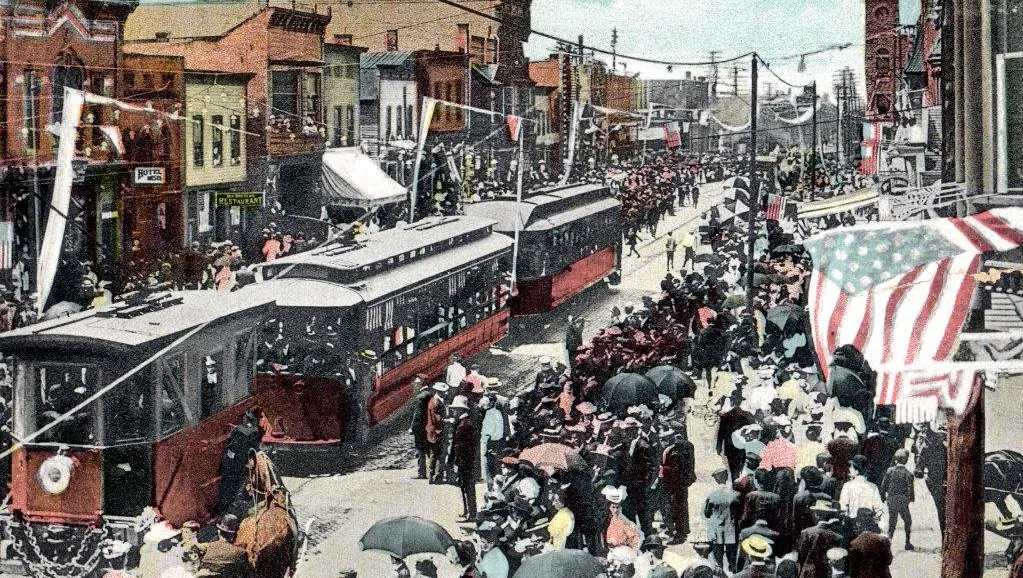
But if you were a nearby local, you might have been accustomed to hopping aboard the Holland Interurban, a railway that connected Holland to other greater areas like Grand Rapids and Saugatuck. The interurban railway was a popular mode of transportation that took its passengers to and from work and home, between cities, and served as a cherished travel memory. Back in 1909, it cost 50 cents (about $18 in current value) for a round trip from Holland to Grand Rapids.
But, there has to be something more, right?
After hearing all this, you might ask, seriously, just a hotel brought in all these people? The answer is yes. But it wasn’t just the hotel alone that drew people in. Of course, the hotel itself was a grand, beautiful spectacle that resembled that of a rich, rustic Victorian home, but it offered a multitude of attractions too.
The hotel grew into more than just a place to spend the night. It was, arguably, the hot spot for tourism in and around the Great Lakes. It was the quintessential summer experience. It offered an array of special attractions and spectacles to look upon and experience, all things that people could not do within the confines of their own backyards or towns.
The Ottawa Beach Hotel was already experiencing a boom of tourism in the years right after the turn of the century. Their visitor numbers were growing each year, and each season required more help, more attractions, and more residences to sustain the large crowds.
And, their opportunities for tourism were plentiful. If you wanted a more immersive experience, the hotel owned numerous nearby cottages, and there were nearly fifty of them, along the lakeshore that guests could book or rent for the summer. It encouraged people to become summer-long visitors or even seasonal residents, many of whom would return year after year. It led visitors into the mindset that perhaps the lakeshore wasn’t just a hotel destination, but rather a place they could call home.
And, fun fact: Gerald R. Ford’s parents owned one of the cottages on lots 132-33, but sold it, and then purchased a similar nearby lot that was left vacant after the fires.
Back Then, Attractions Weren’t Boring Like You Think They Were
At this point, you might be thinking, well geez, the hotel’s attractions could not have been that interesting, well think again. Sure, there was fishing, boating, and promenading (the act of walking about, most of the time without intention or destination in mind). But even the most mundane or usual activities had their own excitement.
The sport of fishing was a popular pastime at Ottawa Beach. And actually, there is some lore around it. A 1902 local newspaper account mentions the ever-so-popular name, Bill Murphy, whose persona lingered about the Ottawa Beach area. He was better known by his friends as “Pitchfork,” a reference to the time when he speared an alleged muskellunge. He invited his friends to dine over his recent catch, only to find out that it was too tough to chew. It wasn’t a muskie… it was a dog fish. After that, spearing with a pitchfork became the newest style of fishing at Ottawa Beach.
Even the ladies, with their hands clad in shiny rings and bracelets, partook in fishing. They’d sit in chairs on the docks of the hotel, swinging their lines into the water. When they hooked a fish, they’d pull it up so that a bellboy could take the fish off for them, place new bait on their hook, and they’d cast right back out.
A much different form of entertainment occurred in the form of balloon ascension (this is most unfamiliar to all of us). In August 1900, a balloon ascension was arranged to take place at Ottawa Beach Hotel, featuring John Grouix of Grand Rapids as the aeronaut. He ascended into the air sometime in the afternoon when there was little wind. Once he was steadily up in the air about 2,500 feet, he waved a goodbye salute to the crowd and then sprung into gymnastic feats. A recollection of this moment written in a news article states, “Every move of the young man showed that he knew not the meaning of the word “danger.”’
He experienced a sudden jerk that caused him to lose his grip, and with horror to the spectators below, he fell into the lake. The same article states, “Then his body started to turn over and with frightful rapidity as he plunged to death. He struck in about 2 feet of water a few rods east of the Pere Marquette freight dock. His body bounded in the air and a shower of water was dashed in the air..”
By June 25, 1903, the Ottawa Beach Hotel even had a nine hole golf course. It was laid out by a golf expert from Kent County Golf Club, W.H. Symons, who designed the course to fit first class conditions. It was made sure the course was top-tier, as all the bankers who would travel to the hotel needed a place to unwind and discuss “business matters.”
But one of the most notable attractions was Venetian Night. It was hosted on August 2nd, and involved over 300 boats that came to life, illuminated by Japanese lanterns, lights, and decorated with colorful displays that matched with the similarly decorated docks, hotels, and cottages. There was even a cannon placed high atop the Ottawa Beach dunes, serving as a “boom” or signal for the fireworks to be set off in the harbor.
It attracted those from all around, even some who came in from far away who would live out of their Pullman cars for the few days of Venetian Night.
But apart from all of these spectacles, there was a quaint attraction that sat on the nearby dunes.
Introducing: Holland’s Shortest Railroad Ever
If you live in Holland or know the railroad that runs through town, you’re familiar with the 7 a.m. blast of a train horn waking you up. We also know that this railroad connects miles long throughout various parts of the state.
But, back then, Holland had a railroad that was quite the opposite of what we think today. It didn’t stretch for miles across the state, hauling freight or commuting passengers. In fact, it barely stretched at all.
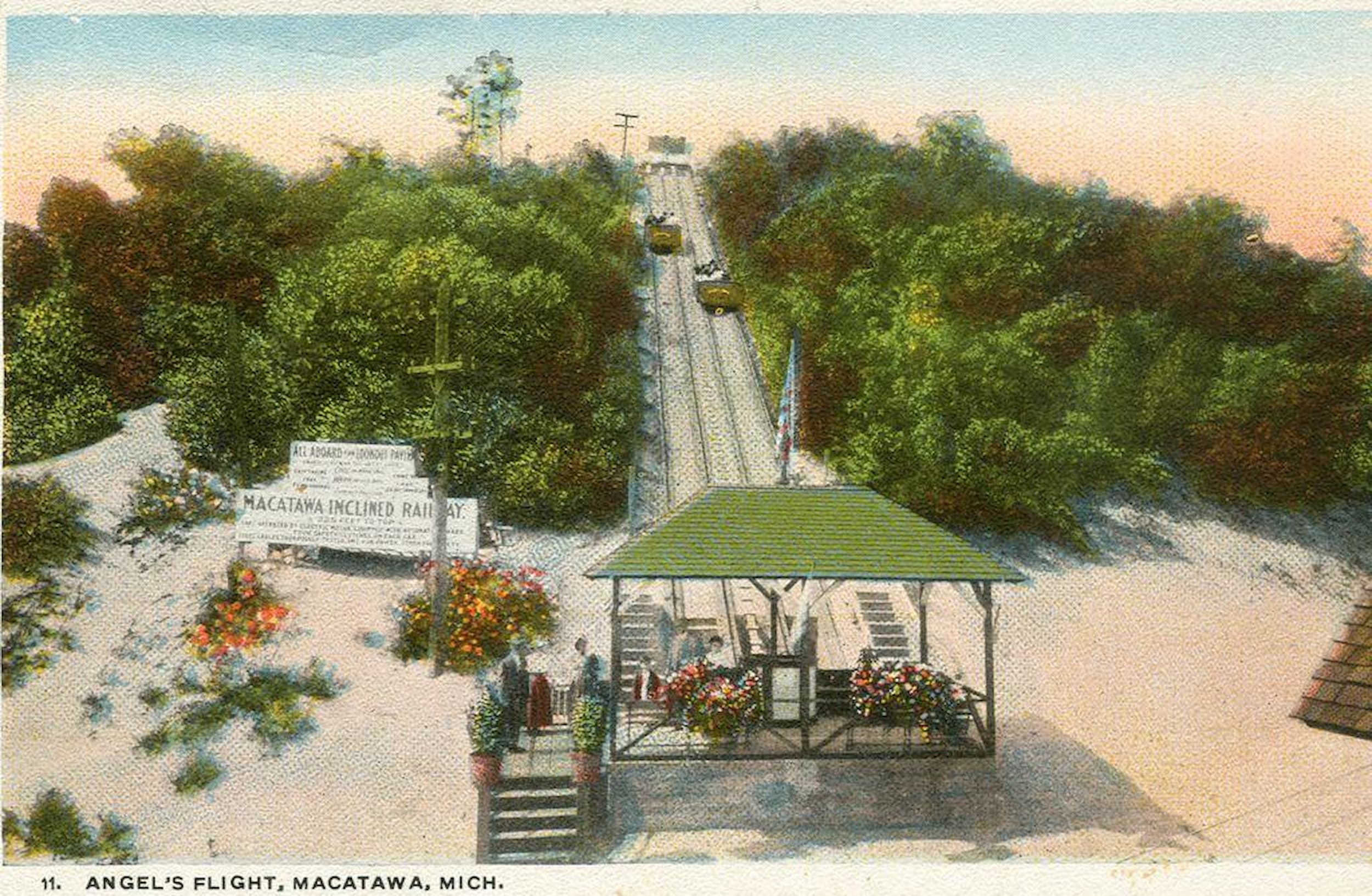
Perched along the towering dunes near Ottawa Beach was a small (but mighty) attraction known as Angels Flight to Macatawa Park. Built by Arthur Fowle, it opened August 13, 1909, but this miniature railway wasn’t meant for transportation in the traditional sense—in fact, it was built purely for the experience. And what an experience it was.
The concept was simple, yet fascinating. It consisted of two small cars that operated on a cable system, balancing against one another. As one car made its way up the dune, the other descended. At the top, a powerful electric motor—quite the modern feat for its time—kept the whole system running together. And just for 10 cents (roughly $3.50 in current value), visitors could hop aboard and take the ride up (unless, that is, if you preferred walking up the sinking sand). I mean, not a bad deal for a view that stretched endlessly across Lake Michigan.

Now, if you’re picturing a small hill, think again. This railway actually climbed a whole 255 feet up Old Baldhead Dune. And waiting at the top was more than just a scenic overlook: there stood a lively pavilion, complete with a dance hall, an ice cream parlor, and a soda fountain.
And much like the hotel itself, it became a destination within a destination. Some old postcards from 1910 and 1913 show just how popular it was—people didn’t just visit Ottawa Beach and forget about it, they documented it, remembered it, and came back for more.
But, as with many things from that era, its existence didn’t last forever.
The early fires from the 1920s wreaked havoc on the area. By November 6, 1923, the little railway was destroyed and never rebuilt. The Ottawa Beach hotel was also lost in the same fire.
Later fires in 1945 further erased what remained of the once-bustling dune-top experience.
And yet, it’s not entirely gone.
The Ottawa Beach Hotel may have been the anchor to the little railway’s existence, but it was everything that culminated to shape the area’s persona that keeps it alive. Because whether it’s the hum of cars driving into Holland State Park, or the calmness of walking the boardwalk on Lake Macatawa, or yes—even that 7 a.m. train horn—we’re still waking up in a place where people once traveled miles, and hours, just to see.
For historic information mentioned in the article, please visit:

Sierra Ozolins is a West Michigan native, currently a student at Hope College. As an athlete, she is passionate about fitness—from running to weightlifting. With a interest for politics and lifestyle, she is intrigued how local culture, community, and everyday events shape the world around her—often with an iced coffee in hand and her dog by her side.
Copyright © 2025 Hollander Media. All Rights Reserved. This material may not be published, broadcast, rewritten, or redistributed without written authorization. By providing your email or phone number, you are consenting to receive emails, calls, and SMS/MMS messages from The Hollander and affiliates. Msg & data rates may apply.