.jpg)
While there are some in the community who don’t support the Emergency Orders to keep open Consumers Energy’s J.H. Campbell coal plant, most agree that allowing the company to inject waste deep into the ground is problematic. Also found to be problematic, are some of Consumers Energy's (CE) waste disposal practices.
Currently, the coal waste that doesn't get recycled goes into a lined landfill, which is a step up from when it used to go into an unlined landfill. The waste is then diluted with cooling water from the plant and dumped into Lake Michigan. This practice has been used by coal plants for years, but new technologies are emerging.
Though classified as “non-hazardous,” coal wastewater has been shown to contain heavy metals such as mercury and arsenic and toxic substances including selenium—as well as compounds of bromide and chloride.
If the Emergency Orders keeping the plant open cease, CE plans to close the Campbell as originally intended. Were that to happen, and the plant were no longer in operation, no cooling water would be produced. A new disposal mechanism would be needed to span the years it would take for the plant to decommission. Thus, CE is requesting permits from the Environmental Protection Agency (EPA ) to install two injection wells which would send the waste underground once the plant closes.
Community members may never have learned of the current method for wastewater disposal had CE not sought the injection well permits—which prompted an information meeting and a public hearing.
Those opposed to putting diluted, heavy-metal-containing wastewater into Lake Michigan in no way found injection wells to be a better option.
An injection well would send the wastewater down a few thousand feet to where porous rock would catch and absorb the fluid. From where the well would empty, solid rock and about three thousand feet would separate the groundwater from the waste being spilled out. The assurance given by CE is that the wastewater would be trapped in the depths, well separated from ever touching the groundwater. Many residents wondered if that claim truly could be guaranteed.
%20sploosh.jpg)
At the Thursday, July 23 public hearing, residents were given the opportunity to comment on whether they believe the proposed injection well permits align with the Safe Drinking Water Act and EPA's underground injection control regulations, and whether the facts—as determined by EPA—are accurate. The EPA will prepare a written response to address all significant comments.
The hearing began with an invitation to federal- and state-elected officials and representatives. However, no federal or state official or representative was in attendance to speak for constituents on whether this would be good for the environment. As one resident would later suggest, "CE is one of the largest donors to politicians in the state, and it would be wise to pay attention to voting records on protecting our environment and the consequences of that."
Only a few dozen community members attended the hearing. Many of the concerns focused on the fluids, saying that whether diluted in Lake Michigan or injected 5000 to 6000 feet down into rock formations, the pollutants will remain in the environment, unable to be recovered.
People questioned the wells themselves, speaking of the possibility of mechanical degradation over time from chemical stress, pressure, and temperatures that can affect the casings that store the waste.
Several residents insisted on requiring CE to provide consistent monitoring of the wells far into the future. Others suggested alternatives, such as selling more of the recyclable waste, and wanted the problem resolved rather than shoved into the ground. Some thought it was CE’s responsibility to “get creative” and invest in above ground wastewater purification rather than “taking the cheap way out and pumping toxic waste directly beneath our properties,” calling it an “an unacceptable risk to our homes and families.”
One resident spoke of CE not keeping up with the requirement of watering mounds to inhibit the coal dust, which has covered nearby homes and cars. He pointed out that since the company isn’t being a good steward now, what makes the community think it will be a good steward later by monitoring the wells. Many said their trust level in CE is at a low.
Some focused on how vulnerable the water already is, and that CE has a documented history of groundwater contamination from its previous unlined ash pits. There was concern over the risk of high-pressure waste mitigation or a case failure permanently ruining the aquifers.
A realtor spoke of how injection wells penalize local homeowners since the wells are designed to store waste for at least 50 years, turning the community into a permanent, industrial waste sink—long after the plant is demolished. The wells will lower property values, creating a massive stigma for future home buyers and threatening the local community.
By the end of the hearing, it was evident that those in attendance are not in favor of the injection wells CE would like to use upon closing the Campbell.
Ever since May of 2025, the U.S. Department of Energy (DOE) has issued back-to-back Emergency Orders keeping the Campbell open in order to support the power grid. President Trump has called coal "beautiful" and "clean" and even signed an Executive Order last February to “celebrate the coal industry’s revival.”
To back that revival, the DOE will award $175 million to modernize six projects focused on strengthening the grid. The modernizations will be in addition to the DOE’s $525 million effort toward “targeted upgrades that increase efficiency, extend plant life, and add dependable capacity using infrastructure that is already built and connected to the grid.”
U.S. Secretary of Energy Chris Wright“ said, "For years, previous administrations targeted America’s coal industry and the workers who power our country, forcing the premature closure of reliable plants and driving up electricity costs... These investments will... ensure we have the reliable power needed to keep the lights on and power our future.”
Just as the modernizations of coal plants have decreased the impact to the environment, the upgrades with the recycling and processing efforts of the resulting waste also have seen improvement.
Injection wells are not the only option for coal leachate, which is what currently resides in Campbell’s landfills and is defined as liquid that percolates through a landfill and picks up dissolved or suspended contaminants from waste.
CE is working to remove the dry coal ash from neighboring properties, and residents want there to be just as much effort put into “leaving no trace” with the liquid contaminant. As a public commenter at the hearing implored, let’s look for a real resolution and not just shove this waste into the ground where it can never be recovered.
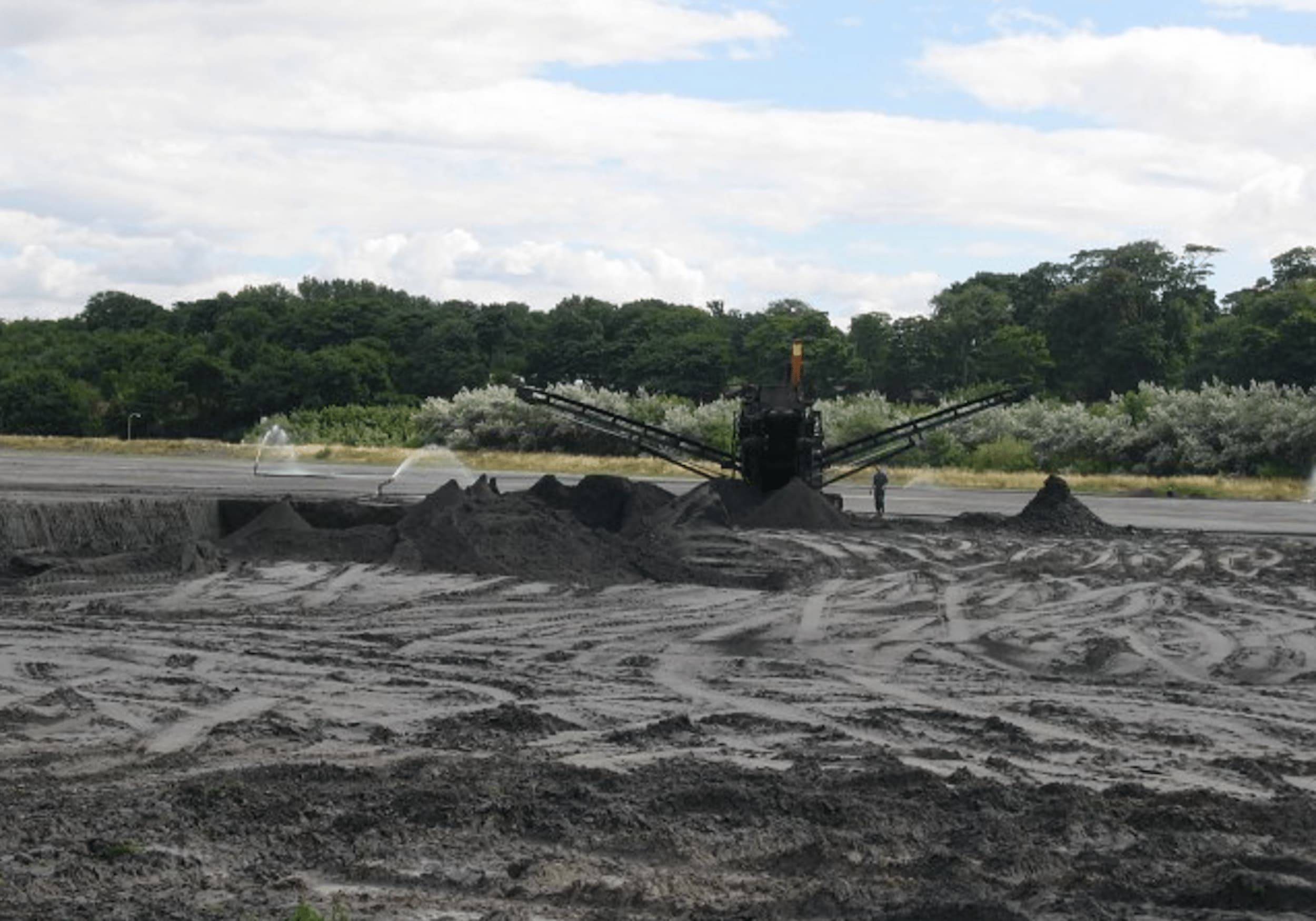
One alternative, which the EPA has suggested, is dewatering the coal leachate and leaving the coal combustion residuals (CCR) in place with safeguards and monitoring. EPA claims this method “may achieve the necessary environmental protections and in fact offer a significantly lower environmental footprint and cost than removal and disposal off site.”
Additionally, leaving the waste in place may help with CCR consolidation, monitoring, and cleanup obligations.
Dober is a company specializing in dewatering and uses the coagulation–flocculation process, which is hailed for its simplicity and effectiveness. The company’s water treatment chemistries are 100% biodegradable, derived from all-natural, plant-based materials, and have been proven to “successfully sequester coal ash solids from the water that accumulates at the top of coal ash ponds and from the wet sludge at the bottom.”
Another option was explained by a resident who shared that Arizona and Virginia use municipal wastewater for cooling data centers. While the Campbell wastewater would require more treatment, it might be an option to explore.
In addition to there being alternatives for leachate which seem more environmentally friendly than injection wells, there also continue to be more and more opportunities for recycled coal ash. Given enough time and creativity, the disposal issue might become a concern of the past.
Thinking back to the Max Gen 2 event that happened in January and the heat wave that hit this July, our region has much to be thankful for with the uninterrupted, crucial energy the Campbell provided—which gave local families and businesses the energy security and stability to handle the extremes.
If the Campbell is to continue operations and if the current trend continues to make not only the use but the disposal of coal “beautiful and clean” through upgrades and more efficient processes, it seems it could be a win-win for both the environment and our bank accounts.

Krista Yetzke is a native of Ottawa County. A jeep-driving, guitar-playing wife, mom, and everyday adventurer, Krista was raised on the love of Jesus, the great outdoors, the arts, the value of frugality, and the beauty of food as medicine.
Copyright © 2025 Hollander Media. All Rights Reserved. This material may not be published, broadcast, rewritten, or redistributed without written authorization. By providing your email or phone number, you are consenting to receive emails, calls, and SMS/MMS messages from The Hollander and affiliates. Msg & data rates may apply.