HOLLAND — To most passersby, the small solar-powered cameras mounted on traffic poles along US-31 and 16th Street are easy to miss. But among a select few of local young people, these cameras have instead captured their attention.
It’s the Hope College students who have come to recognize the presence of these Flock Safety cameras—with criticism rather than approval. They’ve come to describe them as intrusive—possibly unwanted—and otherwise a deserving target for wreckage.
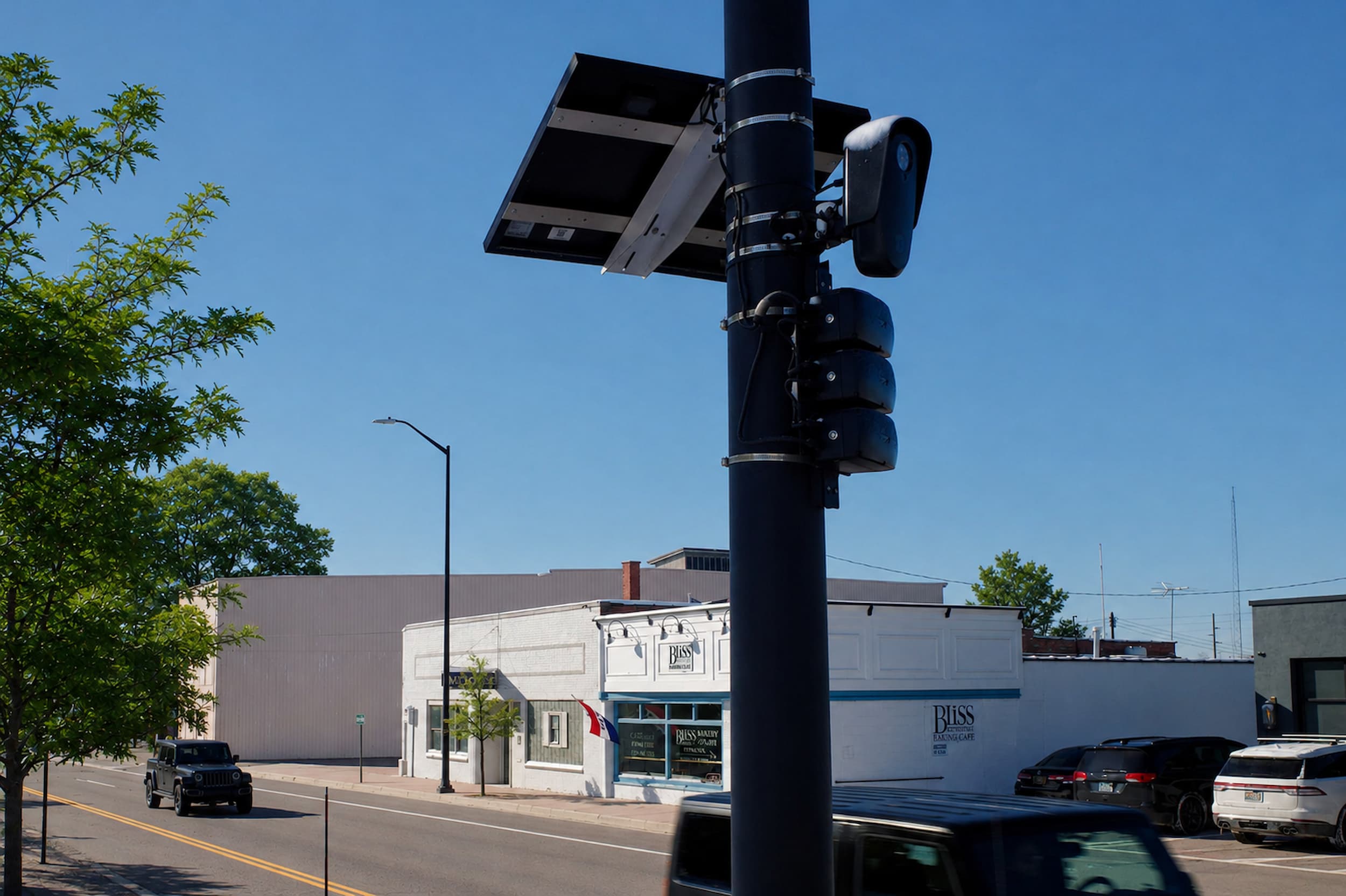
They’re fairly easy to spot. That is, if you look for them. Each camera is accompanied by a large, oftentimes black solar panel that’s a tad larger than a laptop computer. They’re usually placed on a telephone poll near intersections, city entry points, and even residential entries.
Flock Safety cameras have been attributed as “public safety technology.” These cameras have since been deployed across the United States, operating in over 5,000 local communities across nearly every state. Flock Safety states it has 120,000+ automated license plate readers and surveillance cameras within the United States.
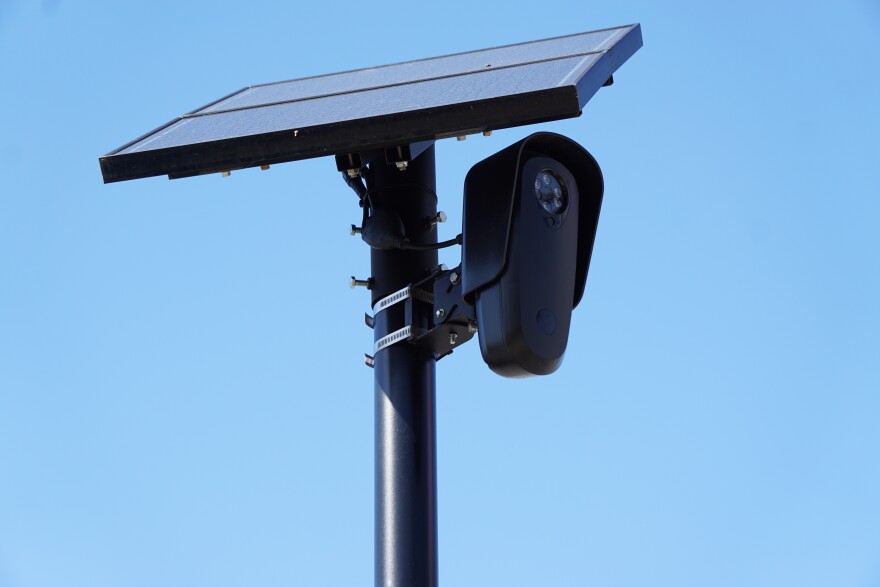
So, what’s their point? Flock Safety founder Garret Langley stated in a TED Talk in April 2026 that crime was the focal point behind the camera’s purpose. “Crime felt too easy to get away with,” Langley stated during this talk. “It didn’t make sense that you could steal someone’s car… or you could kill someone and have a fifty percent chance of getting away with it.”
These cameras can help aid in tracking down crime. If someone’s car is stolen, police can tap into the camera footage to figure out where the perpetrator went, with greater chances of locating the stolen vehicle. For more intense crimes, such as a suspect at large, these cameras can pick up the license plate of an associated vehicle, allowing for police to better locate them.
And it doesn’t stop there. Flock Safety has created a series of other monitoring devices from drones to audio detection devices to other high-tech software. The surveillance comes from more than just cameras.
But this discourse of public safety surveillance has not been widely accepted.
That’s precisely the question some people have been asking.
These Flock Safety cameras are marketed as automated license plate readers. They’re able to instantaneously log license plates, from vehicle models, colors, to unique features (such as bumper stickers and obvious vehicle damage), and store them within a searchable database that is accessible to both law enforcement and network partners.
While this seems positive for reasons like tracking down crime, it has posed other questions about a citizen’s right to privacy. They don’t just pinpoint those with criminal intentions, they track the patterns of everyday citizens. Whether it’s your home-to-work commute, frequent Meijer outing, or even your weekly coffee stop, these cameras have it logged.
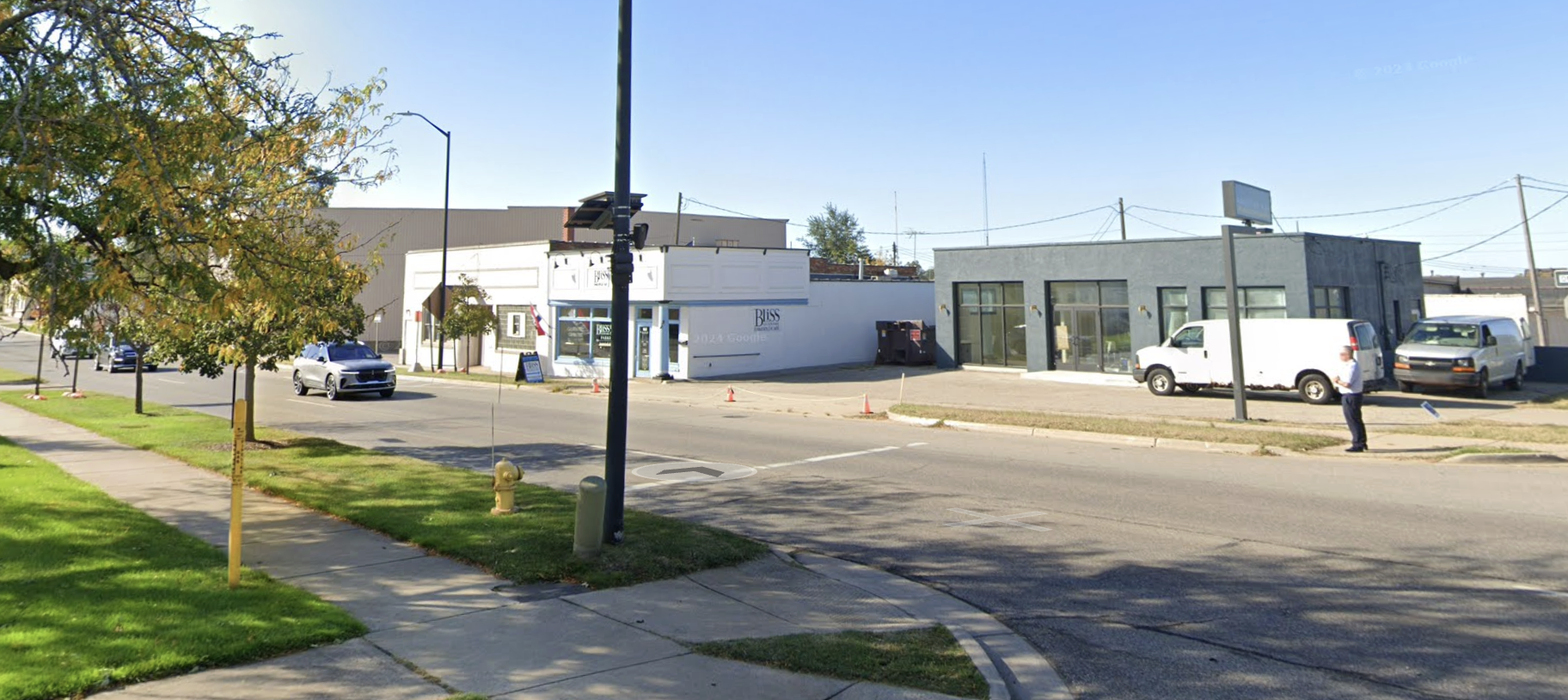
Despite the fact that this information isn’t likely tapped into by local law enforcement, it’s assuredly logged somewhere within the Flock Safety databases. And this exact notion has caused people to ask, “Who has access to this data?”
It’s been proven by independent researchers that these Flock Safety cameras are highly susceptible to hackers. In his video, “We Hacked Flock Safety Cameras in Under 30 Seconds,” Benn Jordan explains that it’s not difficult to tamper with these cameras, and subsequently the database that they are linked to.
In light of this daunting reality, on November 3, 2025, Senators Ron Wyden (D-Oregon) and Raja Krishnamoorthi (D-Illinois) issued a statement to Congress, calling upon the Federal Trade Commission to open an investigation into Flock Safety in order to “hold the company responsible for its negligent cybersecurity practices.”
This has even been realized by local municipalities throughout Michigan.
Ypsilanti, Michigan has decided to outright ban ALPRs (Automated License Plate Readers). That decision alone has sparked a precedent throughout the state, proving that local municipalities can draw a firm line when it comes to automated data collection on public roads.
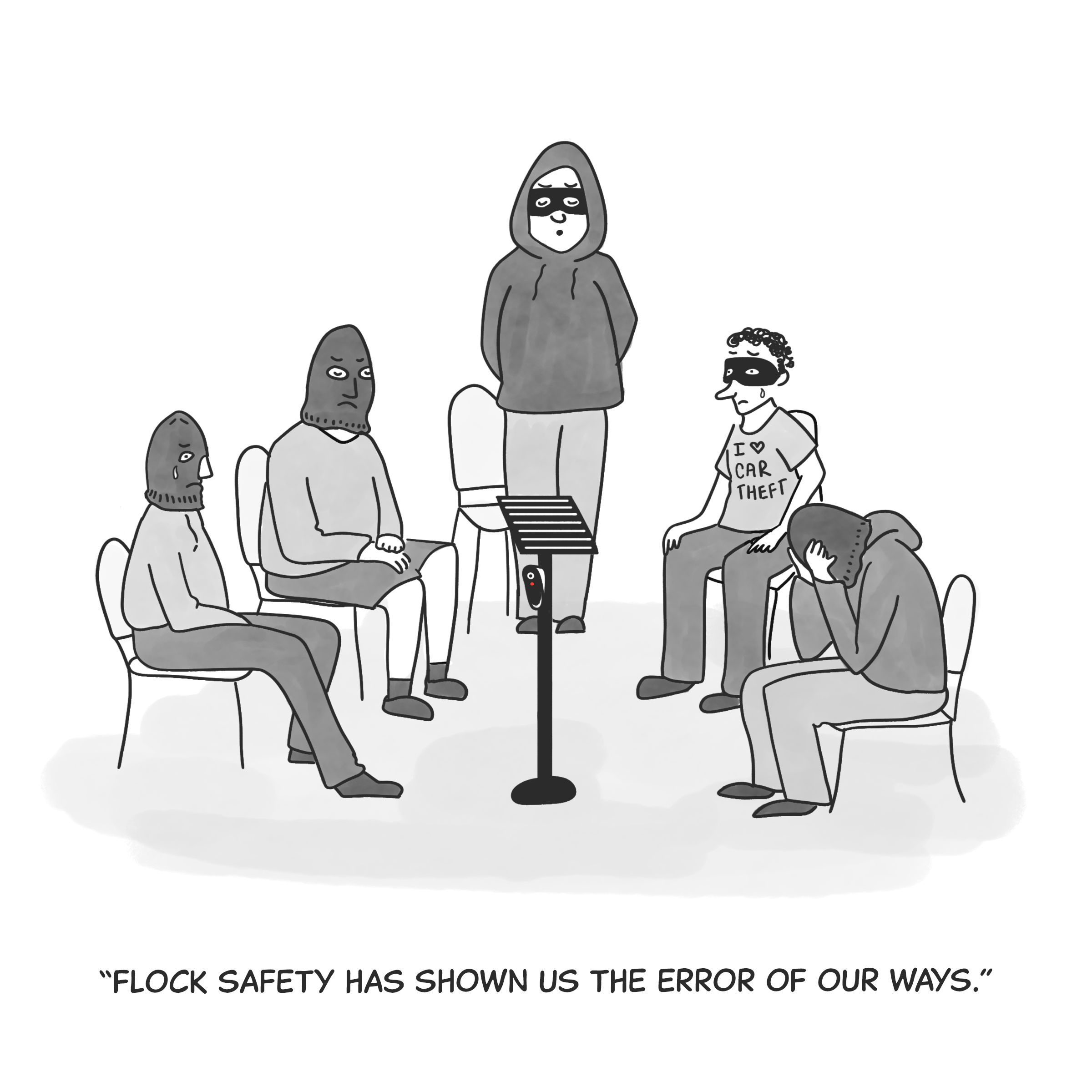
Within the past year, we’ve seen people across the United States take initiative over these Flock Safety cameras. From New York, where one citizen decided to cut down a camera using a chain saw, to California, where another citizen threw paint at the camera, to Florida, where one man decided to hold up a piece of cardboard on a pole to purposely block the camera’s view.
These Flock Safety cameras have even become a source of humor. Frankie LaPenna, a Grand Rapids-based influencer, recently posted a video satirizing the cameras by conducting his own “inspection.” In the video, LaPenna sits beside one of these cameras, surrounded by a collection of computers, wires, and gadgets, acting as if he is performing a high-tech repair.
A City of Kentwood police officer eventually approaches and questions what he is doing, prompting LaPenna to jokingly respond, “We’re doing a malware update.”
Flock Cameras in the City of Holland
The opposition to these cameras is no longer restricted to nearby or distant towns or comedic internet stars; it’s taking root right here in Holland, Michigan.
Some residents of Holland Township have formed a petition called “Get the FLOCK Out of Ottawa County.” It has 160 signatures as of August 4, 2026. Their issue statement reads, “This isn't about being against law enforcement or public safety. It's about protecting the rights and freedoms of everyday citizens. It's about making sure Holland Township remains a place where people are trusted, not constantly monitored.”
It’s not just the informed adults who are skeptical of these cameras. It’s the youth too.
For the most part, Hope College students are only on campus during the academic year. But that doesn’t mean they aren’t tapped into the local conversations over the summer. These students are often eager to return back to campus, and some are already concerned about certain features that await them once they return. So, what exactly are these “certain features?” Yup, you guessed it—flock cameras.
It’s strange to think that the young adults, especially those who aren’t in Holland throughout the entire year, even care about issues such as Flock Safety. I mean, most young people just assume it’s someone else’s problem if it doesn’t pertain to them. But seriously, they have concerns about these presumably pesky tracking devices.
Hope College students aren’t necessarily the ultra-rambunctious, criminally charged individuals you might find at larger universities. They’re oftentimes humble, go about their business, and sometimes indulge in a “side quest” every once in a while.
And they don’t like the feeling of being constantly tracked. It’s one thing for students' Life360 app to send a notification to their parents that they made it back to their dorm at the humorous hour of 2 am; it’s another thing entirely for Flock Safety cameras to monitor when they come and go from campus.
Yik Yak, a pseudoanonymous social media chat platform, allows college students to post and engage with others via chat threads. This serves as a dominant platform for students at Hope College to communicate with one another. Its use is rather rampant during the academic year, but some students still engage with the platform over the summer months.
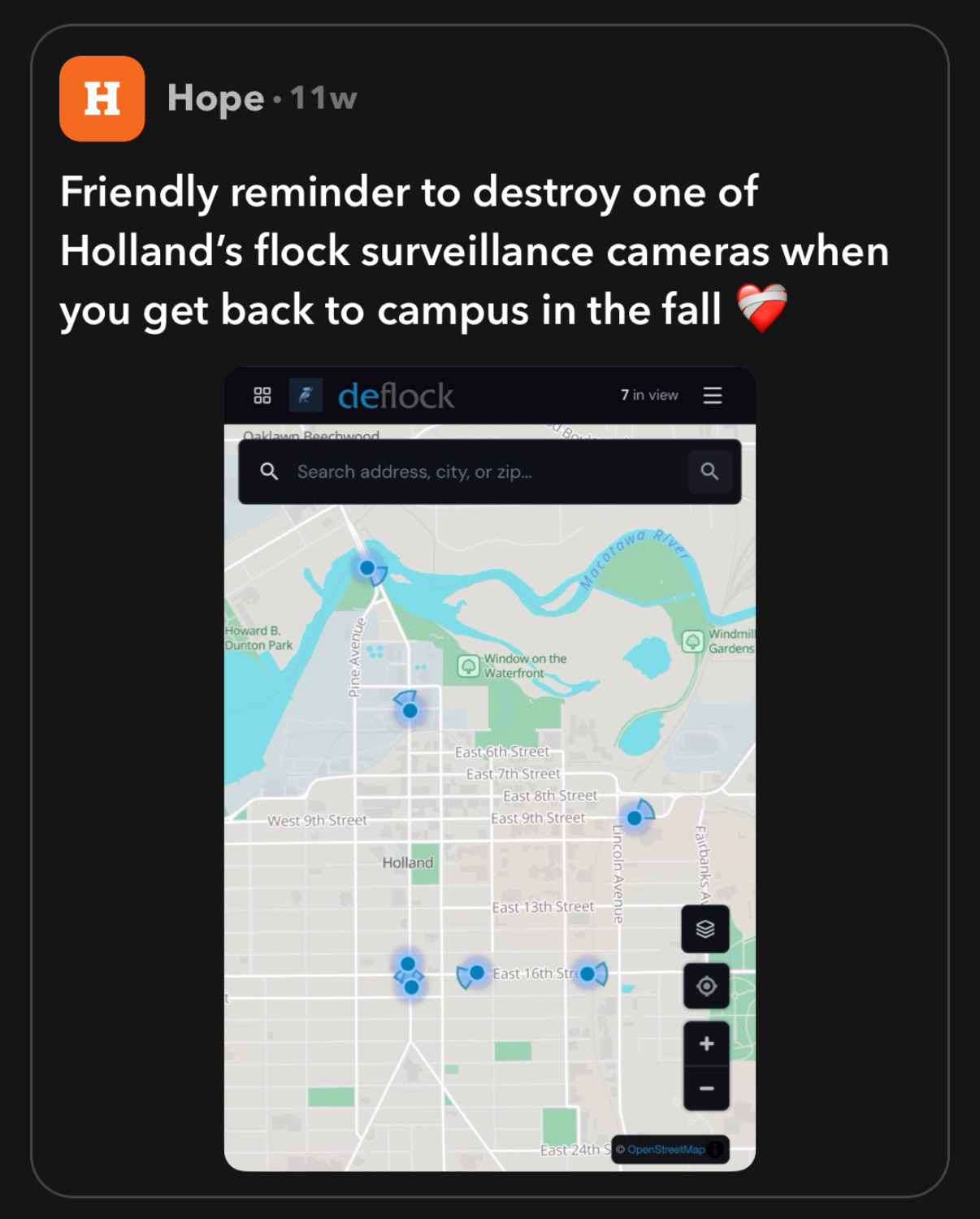
In a recent post, a student writes, “Don’t you just love being tracked and monitored by privately owned surveillance companies everywhere you go?” To accompany the post is a screenshot from DeFlock, an open-source mapping project used to locate automated license plate readers. The image reveals a dense constellation of blue icons that represent each of these cameras—all the way from the intersection of 16th Street and Pine Avenue up along US-31 and Waverly Road.
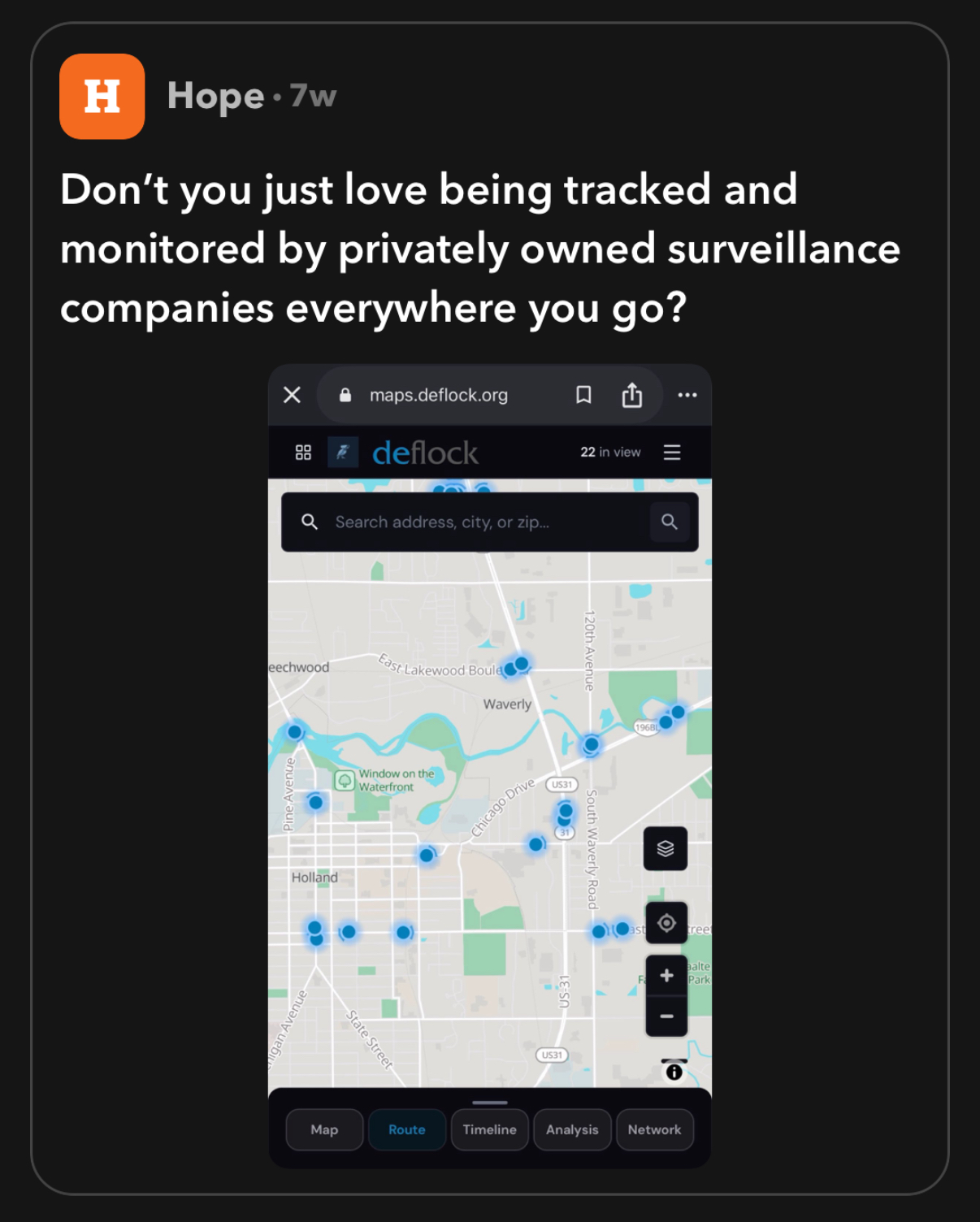
The thread quickly filled with extraneous student commentary, exposing a mix of frustration, privacy concerns, and a disbelief over how extensive this monitoring network has become.
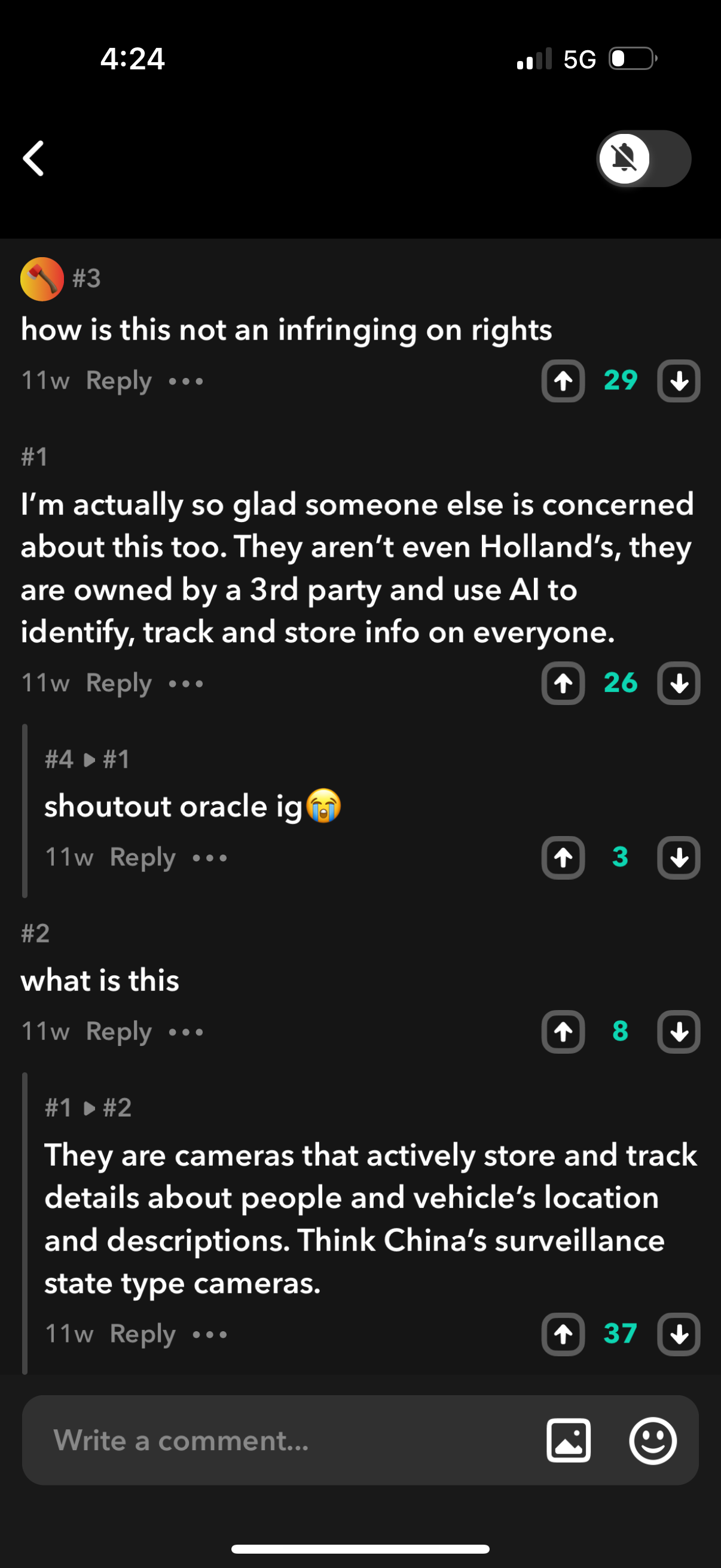
“How is this not an infringing on rights?” one student questioned.
Another anonymous user echoed the alarm, emphasizing the possible role of a third-party: “I’m actually so glad someone else is concerned about this too. They aren’t even Holland’s, they are owned by a third party and use AI to identify, track and store info on everyone.”
Surely, the young students at Hope College value their privacy. (I mean, nobody wants their embarrassingly heinous selfies from 7th grade exposed on any platform.) This frustration with Flock cameras has escalated, as another anonymous user suggested a “Friendly reminder to destroy one of Holland’s Flock surveillance cameras when you get back to campus in the fall.”
The conversations around Flock Safety are ever changing.
It seems that these cameras have moved closer and closer to our own stomping grounds, even here in Holland, Michigan. You’ll likely pass one if you’re taking a stroll down 9th Street, driving through US-31, and even down 16th Street.
It should be no surprise that those of the generation who grew up with cell phones and tablets in their hands are showing concern over their privacy. After all, they are all too familiar with the infringement of privacy, as they’ve witnessed their personal algorithms change according to what they search on Google or what they say at home near their Amazon Alexa.
Even the local youth are shifting the conversation away from passive awareness to active questioning. It’s not just noticing these cameras, it’s asking: “Why are they there?” and “Who has access to this?” and “How exactly are they being used?”
Honestly, if the younger generations are realizing it—it must be worth the hype.

Sierra Ozolins is a West Michigan native, currently a student at Hope College. As an athlete, she is passionate about fitness—from running to weightlifting. With a interest for politics and lifestyle, she is intrigued how local culture, community, and everyday events shape the world around her—often with an iced coffee in hand and her dog by her side.
Copyright © 2025 Hollander Media. All Rights Reserved. This material may not be published, broadcast, rewritten, or redistributed without written authorization. By providing your email or phone number, you are consenting to receive emails, calls, and SMS/MMS messages from The Hollander and affiliates. Msg & data rates may apply.