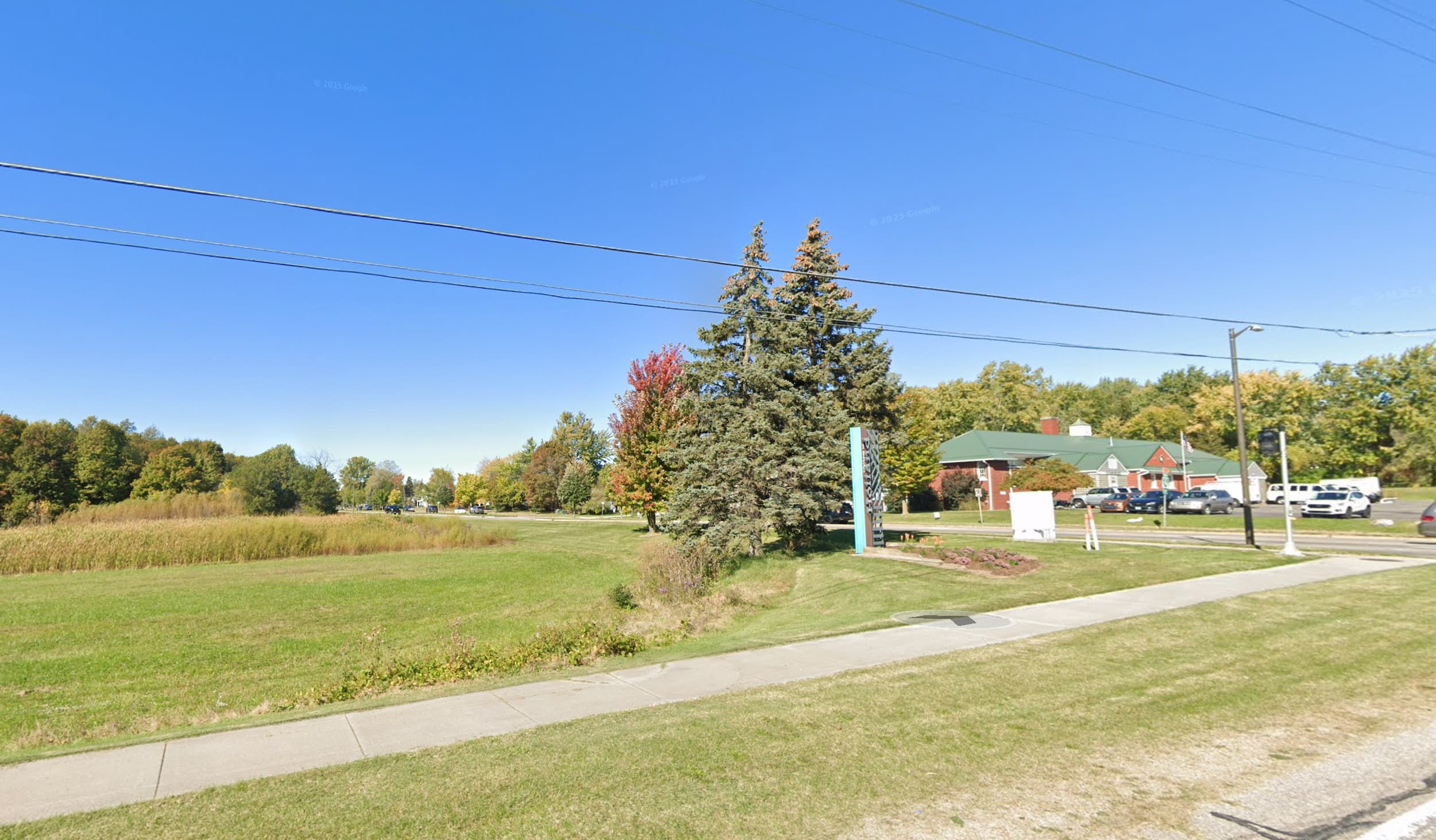
Two projects came before the Holland City Council on November 4 requesting the adoption of resolutions that would approve housing. While both projects are categorized as “brownfield” developments, the label is not due to contamination. Rather, each property qualifies under Michigan Act 381’s broad legal definition of brownfield which includes housing developments.
The first project presented was the Brownfield Plan for 367 Country Club Road. The project will sit on the corner of 16th Street and Country Club Road, with the main entrance on Country Club Road.
The plan is for a multifamily project consisting of 120 units: 45 one-bedroom, 57 two-bedroom, and 18 three-bedroom units with external parking as well an underground parking garage. The parking will be along 16th Street or on the east side, shielded from the north adjacent properties.
Holland’s housing needs have been considered by incorporating attainability and looking at the area median income (AMI). The AMI levels are 70 and 80%, which is consistent with the city’s current housing policy.
There will be a total of 30 attainable units which will be income restricted for a period of 15 years. The units will include:
• 15 one-bedroom units at 70%.
• 15 two- and three-bedroom units at 80% .
Rents for the attainable units currently are projected to range between $1450 and $2300, though those rates will be assessed again against the market once the units are built.
The second project presented was the Brownfield Plan for Kensington West Development. The project will be located at 800 Buckingham Street and 831 Winchester Lane and will be a $52 million investment into the community.
The development will include 182 new residential units including 42 alley-load (rear entrance) homes, 41 townhomes, and 99 front-load structures.
The breakdown of the 182 units will be:
• 119 (65.4%) homes for sale.
• 63 (34.6%) homes for rent.
Of those homes, 51 of the units will be income restricted for 13 years, and the monthly rental cost will be broken down as follows:
• For 80% AMI: a one three-bedroom unit that will be approximately $1600, and eight four-bedroom units that will each be approximately $1800.
• For 90% AMI: a one three-bedroom unit for approximately $1900, and eight four-bedroom units that will each be just over $2100.
• For 100% AMI: two three-bedroom units that will each be just over $2100, and 31 four-bedroom units for approximately $2300.
Anxious to move in? You won’t have to wait long. The build schedule will be aggressive to address the acute housing shortage. The plan is to build all 182 units in four years—48 units the first year, 48 the second year, 48 the third year, and 38 the fourth year, with the income-restrict housing being the first to be built.
The homes will go up in phases—not in clusters but rather set out sporadically throughout the area.
The developer’s goal for subdivisions with rental, owner-occupied, and income-qualified housing is that those driving by won't be able to tell which type of housing the unit is. All units will have the same look and feel and same high-end appliances.
As Council member Scott Corbin pointed out, “We as a council can’t build housing, but we can provide incentives…”
Samantha Mariuz, project manager for Fleis & VandenBrink, works on behalf of the City of Holland but is paid by the developer. She analyses development projects and deciphers whether they are capable of moving forward without a form of incentive.
Mariuz explained that Michigan state law requires applying a brownfield’s tax and financing to every jurisdiction equally, with the exception of debt. Based on the feedback from study sessions and the City’s housing development policy, she worked with City Manager Keith Van Beek on the development plans, the brownfield requirements, the municipal service agreements, and the tax increment financing (TIF) request from the developer to help fund costs.
As Mayor Bocks further detailed, even if these projects weren't developed, a certain amount of tax would be generated by the properties. However, if the projects are developed, a larger amount of property tax is generated. The difference is the increment between the two. When considering tax increment financing, there is an effort to figure out a way to be able to use that difference.
The Brownfield Redevelopment Authority (BRA) recommended to Council by a 3 to 1 vote to approve the resolutions. And one of the BRA’s criteria is, “But for doing a project [with the incentives], this project would not happen at all.” So, by doing tax increment financing and a municipal services agreement—which is another tool the City has to request that the developer makes a payment to the City to help cover the cost of additional services that will be required because of the project—the development could move forward.
“We know housing is an issue in Holland and there are certain tools that are available to us. These are pretty complex tools, but for our doing these kinds of things this project wouldn’t pencil out,” Mayor Bocks said.
Mariuz added that by using the incentive—which she called an “advantageous” tool that is being used across the state—the attainable rates are able to stay lower for a longer period of time. She added that after the 25 years of TIF, there will be a 5-year period where the developer continues to pay into the local brownfield revolving fund.
Van Beek clarified that, “It’s not that we’re using other money somewhere in the budget or from another taxpayer to pay the developer. The only thing that’s happening is the taxes that the developer will pay in the future, they pay that full rate of taxes. We’re able to capture not only local but also state taxes and reimburse them when they follow through with the requirements that are in all of these agreements.” Both projects make the case that they would not be able to go forward without some sort of incentive.
The Council, with the exception of Lyn Raymond who was absent, voted unanimously to adopt the resolutions to approve both project plans as well as the corresponding municipality service agreements.

Krista Yetzke is a native of Ottawa County. A jeep-driving, guitar-playing wife, mom, and everyday adventurer, Krista was raised on the love of Jesus, the great outdoors, the arts, the value of frugality, and the beauty of food as medicine.
Copyright © 2025 Hollander Media. All Rights Reserved. This material may not be published, broadcast, rewritten, or redistributed without written authorization. By providing your email or phone number, you are consenting to receive emails, calls, and SMS/MMS messages from The Hollander and affiliates. Msg & data rates may apply.