OTTAWA COUNTY — Ottawa County voters will decide Nov. 3 whether to raise the county's parks millage by 0.20 mill for 10 years, which would bring in an estimated $3.76 million in 2027 for trails, land purchases and other park projects.
If it's approved, the increase would raise the county's Parks and Open Space Millage from 0.33 mill to 0.53 mill for 2027 through 2036. The Ottawa County Board of Commissioners approved the ballot language after a public hearing at its April 30 meeting, according to the county. The county Parks and Recreation Commission had unanimously recommended a 0.53-mill, 10-year millage, and the board split it into two questions: the 0.33-mill renewal on the August ballot and the 0.20-mill increase in November.
The official ballot language reads:
"For 10 years beginning with the tax assessments in December of 2027 and ending with the assessments in December of 2036, shall the total taxable property rate limitation in Ottawa County under Section 6 of Article IX of the Michigan Constitution of 1963, be increased up to the amount of 0.20 mills (20 cents per thousand dollars of taxable value) as an increase to the renewed 0.33 mill authorization for the purpose of acquiring, improving, operating, maintaining, restoring, and protecting parks, open space, trails, greenways, water access sites, recreational facilities, and related conservation and educational activities in Ottawa County and if approved and levied in full, this millage will raise an estimated $3,763,230 in the first calendar year it is levied (2027)."
The increase is 20 cents for every $1,000 of taxable value. To figure your cost, multiply your taxable value by 0.20 and divide by 1,000:
Taxable value is on your tax bill and assessment notice, and it's often well below market value, especially for homes that haven't sold in years. If the increase passes, the total county parks millage of 0.53 mill would cost the owner of a $200,000 taxable-value property about $106 a year, up from $66 at 0.33 mill. You can see an estimate for your own parcel by looking up your property through miOttawa.org/taxes and clicking "Calculate Proposed Millages."
The county's millage page lists the projects the increase could fund:
The full project list is in Table 13.2 of the county's 2026 Parks, Recreation and Open Space Plan.
The parks system keeps its current funding either way. The 0.33-mill millage voters renewed in August runs through 2036 and is expected to raise about $6.2 million in 2027. The county says that rate is "largely dedicated to day-to-day operations and maintenance," leaving "little to no capacity" to keep pace with growth or take on new priorities. If the increase fails, the projects above wouldn't have a dedicated source of money. The county also uses user fees, donations, partnerships and state and federal grants for parks.
Yes, on a different question. On Aug. 4, voters renewed the existing 0.33-mill parks millage for another 10 years, with 66.7% voting yes, according to the county. That vote also restored the rate from 0.3100 mill after Headlee Amendment rollbacks. The county expects the renewal to raise about $6.2 million in 2027, mainly for operating and maintaining the current park system. The November question is a separate increase on top of that.
Voters first approved the parks millage in 1996 and renewed it at 0.33 mill in 2006, with 67% voting yes, and in 2016, with 72.3%. Since the 2016 renewal, the county says, the millage has helped it acquire 1,150 acres, including Ottawa Sands, and build more than 10 miles of the Idema Explorers Trail.
Park Township voters will see a second, separate parks question on their ballots. It would renew the township's Parks and Recreation Millage and raise it to 0.7 mill for four years, 2027 through 2030. The current rate is 0.6 mill, reduced to 0.5720 by Headlee rollbacks, and it expires Dec. 31, 2026.
According to the official ballot language, the millage would raise an estimated $1,006,720 in its first year. The language also says the proposal "would increase the taxes on a home with a market value of $500,000 by approximately $32 per year." On its millage page, the township puts the average Park Township home's taxable value at $183,698. For that home, the full 0.7 mill would come to about $128.59 a year ($183,698 x 0.7 / 1,000). The township says the money pays for maintenance and programs at 11 township parks and several water access areas, including the newer Community Park and Cooper Van Wieren Park.
Park Township residents pay county taxes too, so they'll vote on both the county and township questions.
The county parks question appears only on Ottawa County ballots. Holland residents who live in the part of the city in Allegan County won't see it.
Look up your sample ballot, early voting site and polling place at Michigan.gov/Vote. For questions, contact Ottawa County Elections at (616) 994-4535.
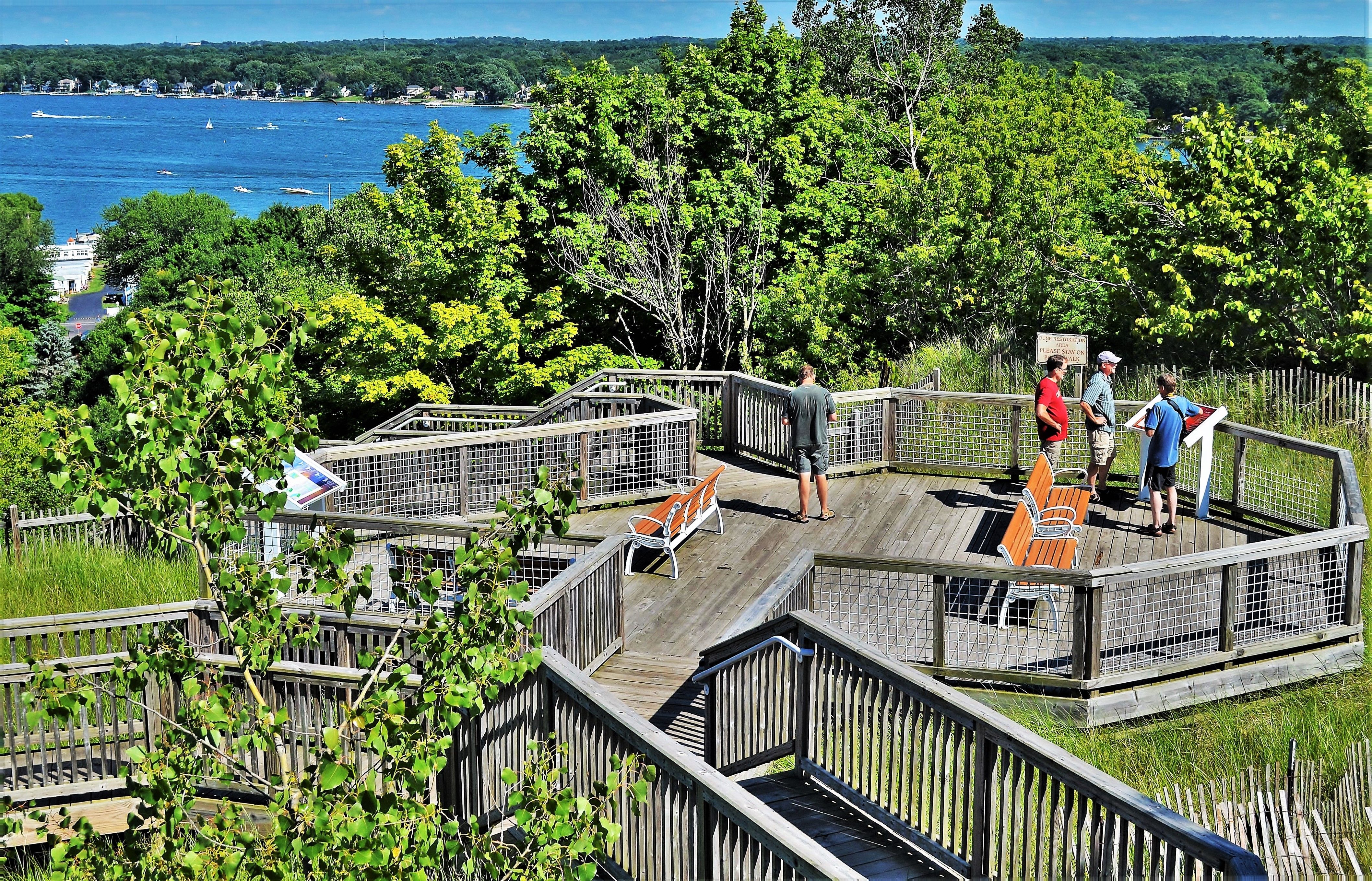
Cover photo: Visitors take in the view of Lake Macatawa from the Mt. Pisgah overlook at the county's Historic Ottawa Beach Parks, next to Holland State Park. Photo courtesy of Ottawa County Parks & Recreation.

Copyright © 2025 Hollander Media. All Rights Reserved. This material may not be published, broadcast, rewritten, or redistributed without written authorization. By providing your email or phone number, you are consenting to receive emails, calls, and SMS/MMS messages from The Hollander and affiliates. Msg & data rates may apply.