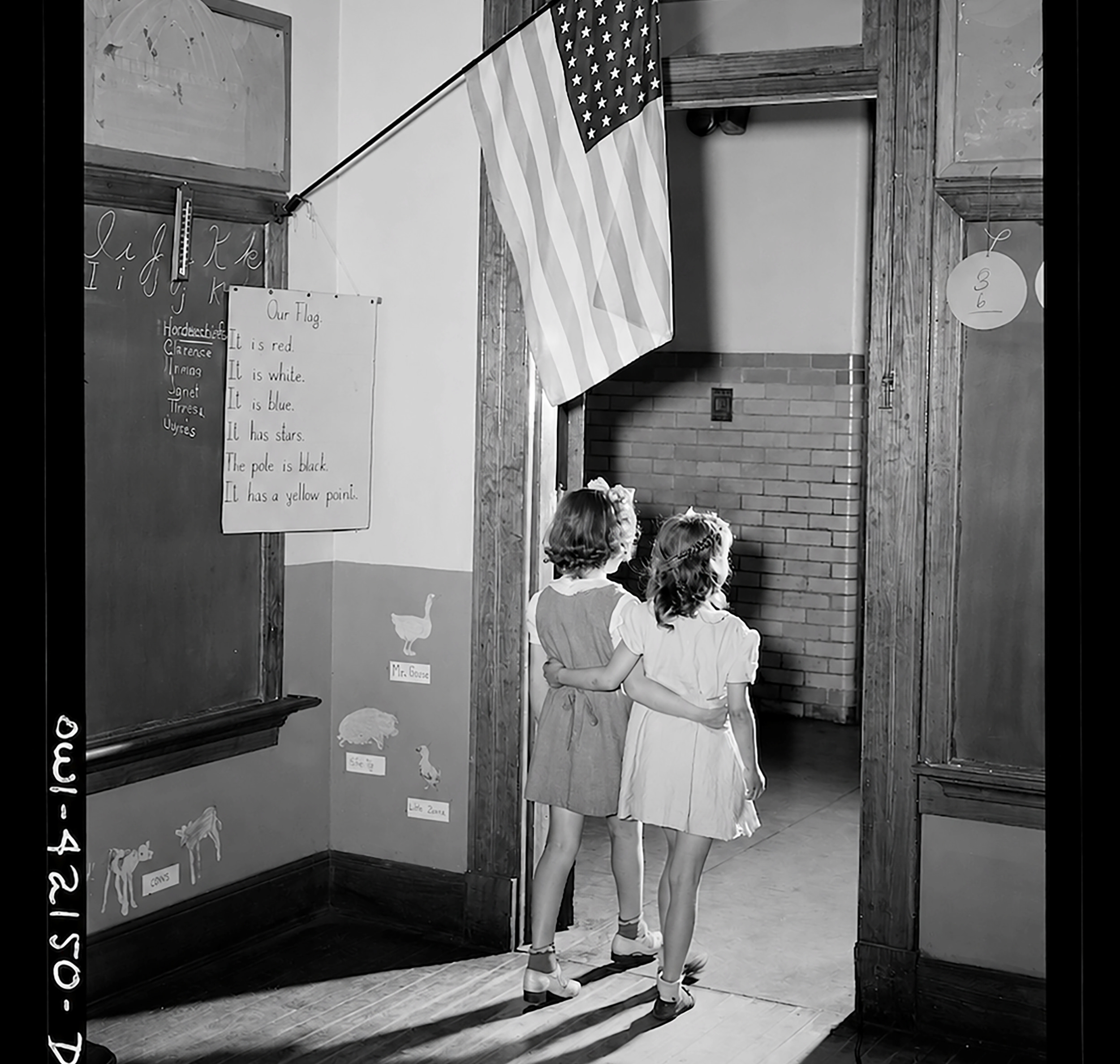
There’s no better time than in 2026, 250 years since our country’s founding, to reacquaint ourselves with history. America was founded as a Republic—sometimes clarified as a Representative Republic or Constitutional Republic—and not, as some believe, a Democracy.
A democracy, as defined by Merriam Webster (MW), is a government by the people with the rule of the majority.
According to Constituting America 250, “A representative republic uses “democratic means to manifest consent of the governed. We vote for representatives, who vote on measures. Voting is democracy in action, but that does not make the United States a democracy.... We do not have pure democracy, or 'rule by the majority,' because we have constitutionally protected rights that cannot be voted away...”
Some have called the U.S. a “Representative Democracy” which MW defines as a form of government in which the people elect representatives to make decision, policies, laws, etc. While that definition is close to a Representative Republic it doesn’t mention that the representatives govern “according to law.”
Not knowing what type of government we have is not the only civics issue that has become foggy in the minds of Americans. Somewhere along the way schools stopped teaching civics, or, if they haven’t completely stopped, they have diminished its importance, severely. That’s why the recent step taken by the Michigan State Board of Education (SBE) to both celebrate America's 250th anniversary and reintroduce civic education to our schools is so significant.
On June 9, 2026, the SBE discussed a resolution put forth by Board Member Nikki Snyder who, as one of only two Republicans on the Board, is no stranger to disagreement from the six Democrats at the table. What could have been considered nonpartisan topics of recognizing America's founding and the value of teaching civics, were not viewed that way by some of the Board members.
While most of the Board expressed appreciation for Snyder’s efforts and timeliness to adopt the resolution before the 4th of July, questions were raised on some of the content.
Board President Dr. Pamela Pugh wanted to strengthen the resolution by making it “more inclusive, making it more historically accurate, and honest, and then also consistent with civic education.” To her that meant adding that America’s founding not only established a Constitutional Republic, but also a “Representative Democracy.” Pugh explained that the addition was critical with the times we're in, “especially where voting rights and civil rights are being rolled back.” She said the Board should acknowledge that the country is a Representative Democracy and that the voice of the people matters.
Additionally, Pugh asked that the following two clauses be added to the resolution:
The American story includes both the nation's founding ideas and continuing efforts of generations of people to expand liberty, justice, and equal protection under the law.
And
High quality civic education should support critical thinking, respectful dialogues, informed engagement, and honest teaching about the nation's achievements, contradictions, struggles, and progress because that is what has pushed us to be a more perfect union.
What Pugh considered the causation for “a more perfect union” contradicts the Founding Fathers who spoke in the Preamble of the Constitution that “We the People in order to form a more perfect union… do ordain and establish this Constitution....”
And speaking of the Founding Fathers, Pugh also asked to change the resolution so that the credit for our founding government went to the “Nation’s Fathers.”
Pugh also asked to have this paragraph deleted—
WHEREAS, systems of government rooted in authoritarianism, collectivism, communism, Marxism, and socialism that diminish individual liberty, private property rights, free expression, and constitutional self government stand in contrast to America’s founding ideals;
—because “the ideology makes it problematic.”
When Pugh finished with her “friendly amendments,” Snyder compromised and agreed to accept the additional clauses and the addition of “Representative Democracy” and “Nation’s Fathers,” but did not agree to the deletion of the paragraph that Pugh had called problematic. Snyder argued that America established a Constitutional Republic and Representative Democracy in order to fend off things like authoritarianism and Marxism and Socialism which are the antithesis of what those forms of government value: individual liberty, private property rights, free expression, and self government.
Even with Snyder's argument, the majority of the Board sided with Pugh, and the amendment to delete the “problematic” paragraph passed.
Board Member Tiffany Tilley suggested changing the earlier-referenced paragraph about the country’s founding from “America’s founding established a Constitutional Republic” to “America’s founding established a Democracy.”
On that suggestion Snyder drew the line. “Absolutely not,” she said. “Our government’s documents are very clear. It’s a Constitutional Republic.”
Tilley then suggested a change on this paragraph—
BE IT FURTHER RESOLVED that the Board encourages Michigan schools and districts to provide age-appropriate opportunities for students to engage in learning related to the Declaration of Independence, the Founding Fathers, the United States Constitution, the Bill of Rights, civic virtue…
—explaining that she thought the Declaration of Independence and Constitution already are taught, and instead she wanted students: “to learn civic engagement inclusive of community service, political involvement, and collective action…”
Tilly asked that for this paragraph—
BE IT FURTHER RESOLVED that districts are encouraged to share educational resources, student projects, historical observances, assemblies, classroom activities, and community celebrations that honor America’s founding and the enduring principles of liberty and constitutional government.
—the phrase “and the enduring principles of liberty and constitutional government” be removed. None of Tilly’s suggestions were motioned, though Pugh said she had made good points which could be considered in future discussions on civic lesson and social studies standards.
Board Member Tom McMillan, the only other Republican, commented that the addition of a paragraph encouraging students’ “civic participation” would be “pretty controversial,” adding that the politicization of education would put the basics of reading, writing and arithmetic on the sidelines, as students do more and more activism, sit ins, and walk outs. His motion to remove "civic participation" did not receive support.
Snyder pointed out that education has become so overly politicized, which “is very negative for our public education system and the State of Michigan.” She added, “If we cannot figure out how to say civic education without encouraging the politicization of that concept, it's pretty significant. It's a problem for us. It's a problem for our state."
In the end, though she voted against the removal of the “problematic” paragraph, Snyder did vote to adopt the resolution. McMillan voted to pass. The majority approved the motion and the resolution was adopted.
The final adopted resolution is available online.
The original resolution put forth by Board Member Nikki Snyder also is online.
While this is a valuable step taken by the SBE, it will be important for parents and students to be discerning with the implementation, ensuring it indeed is civic education and not a partisan promotion to activism.
The 1853 President of Hillsdale College Edmund Fairfield said, “Freedom and learning go together, just as ignorance and slavery go together.”
Our next generation needs to know the fundamentals of preserving our Constitutional Republic so that our citizens can be assured of liberty and wellbeing.
“A republic, if you can keep it,” is what Benjamin Franklin is quoted as once saying. The Constitution Center interprets his statement as our government being “absolutely dependent upon the active and informed involvement of the people...”
And when our young people are taught the history of our founding, the functions of our government, and their role in the process, we have a better chance of “keeping it.”

Krista Yetzke is a native of Ottawa County. A jeep-driving, guitar-playing wife, mom, and everyday adventurer, Krista was raised on the love of Jesus, the great outdoors, the arts, the value of frugality, and the beauty of food as medicine.
Copyright © 2025 Hollander Media. All Rights Reserved. This material may not be published, broadcast, rewritten, or redistributed without written authorization. By providing your email or phone number, you are consenting to receive emails, calls, and SMS/MMS messages from The Hollander and affiliates. Msg & data rates may apply.