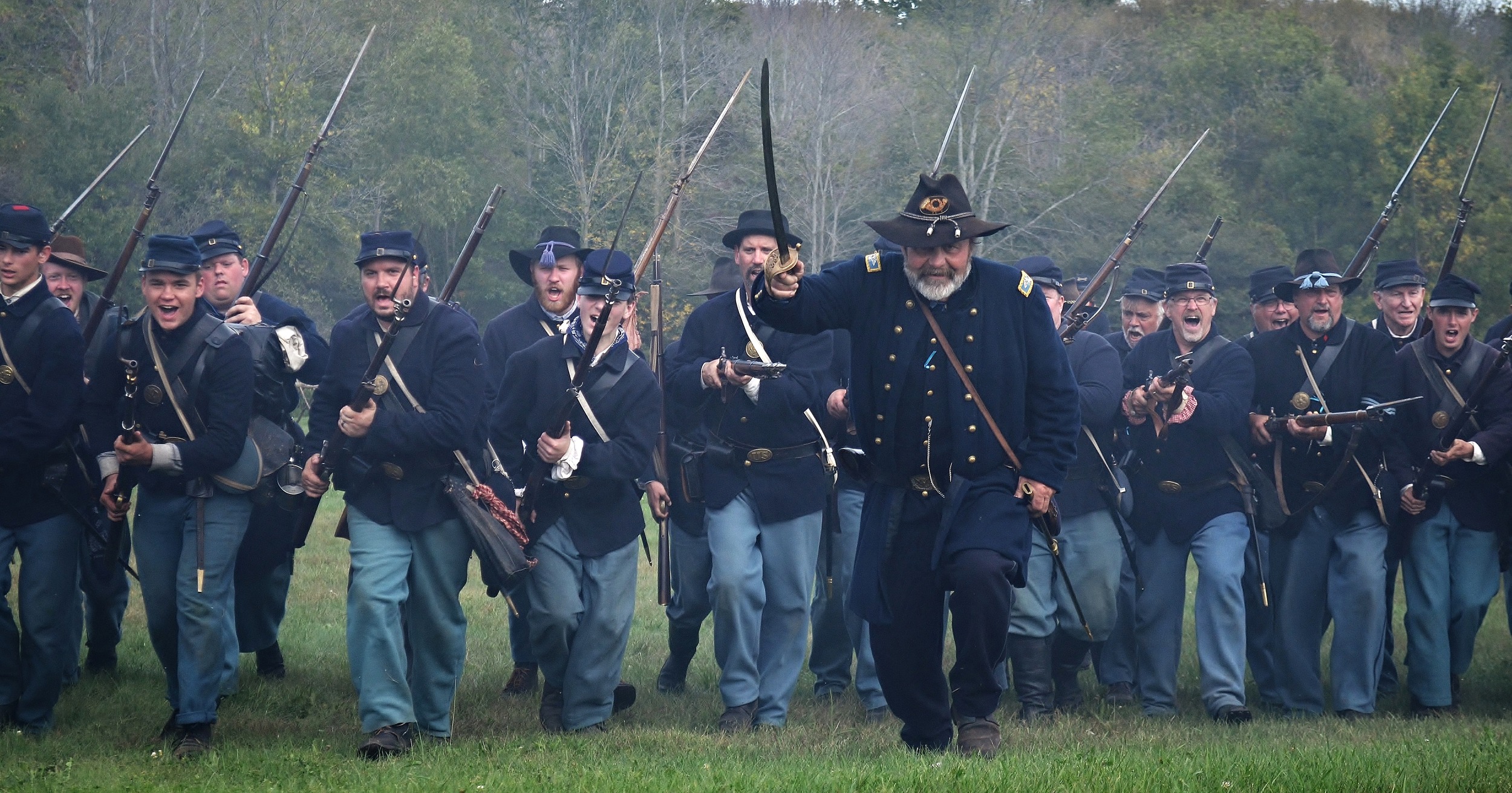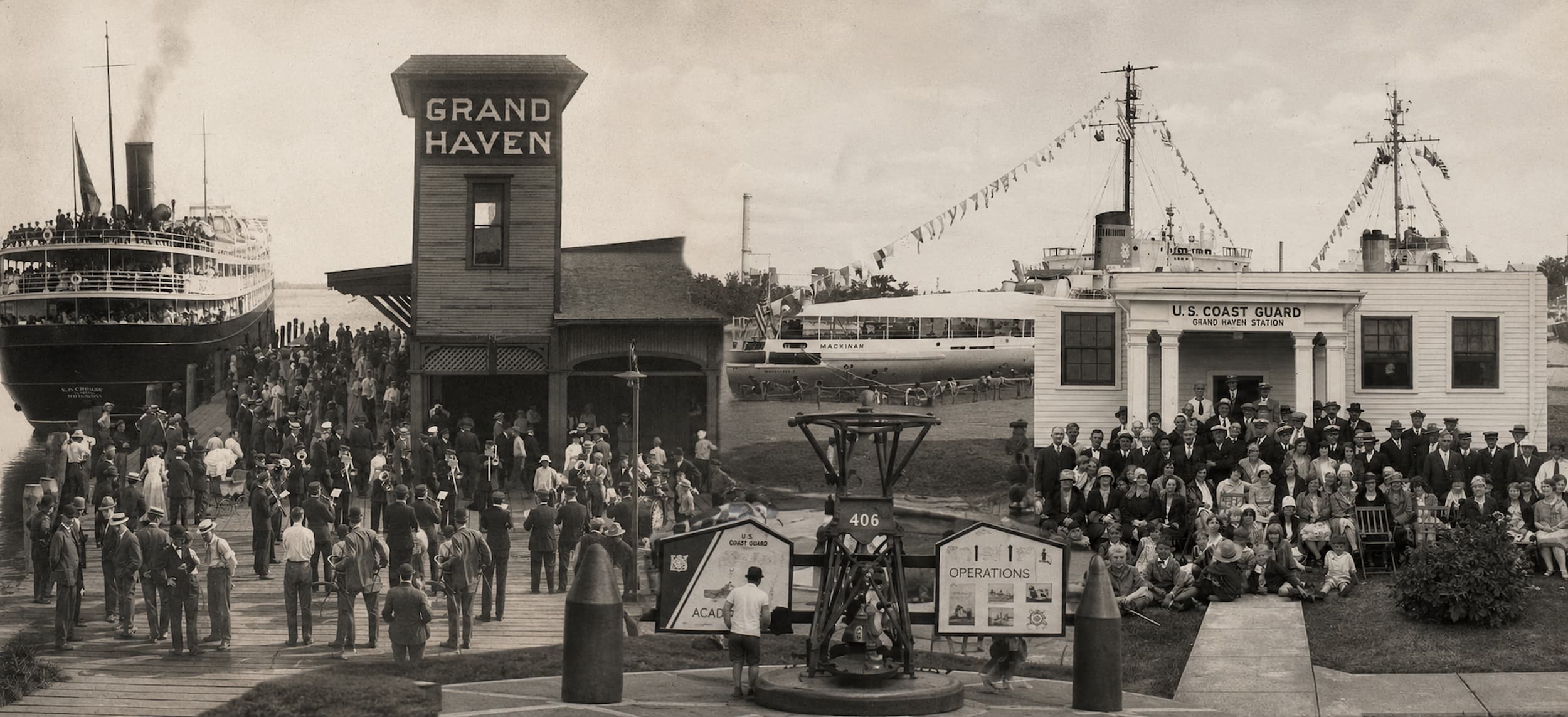
Before thousands of locals and visitors alike filled the downtown streets, before ships lined the boardwalk and fireworks lit up the nighttime sky over the shoreline, the Grand Haven Coast Guard Festival began as something much smaller.
A lot smaller, actually.
To truly understand how one of Michigan’s most beloved summer festivals came to be, you have to go back more than a century—to the year 1924. This was considered the pivotal middle phase of what we know as the “Roaring Twenties.” We were in the first year of the Calvin Coolidge Administration, experiencing the first-ever Macy’s Thanksgiving Day Parade and witnessing the first Dum-Dums Lollipops in store.
This year attributed to a spike in consumerism, as the middle class began to splurge on new things, mostly household items such as appliances and radios. The Model-T established itself as a common mode of transportation after it reached a state of mass production. It cost about $265.
The consumption of alcohol was still illegal as outlined by the 18th Amendment.
And a dozen eggs cost nearly 12 cents.
And Grand Haven, Michigan?
In 1924, Grand Haven, Michigan was known as the hustle-and-bustle harbor town.
It was a place where locals and visitors alike cherished the water. The fishermen used to head out onto the lake before sunrise, freighters passed through the channel with goods, and the city’s waterfront served as both an economic steamship and local hotspot.
If you stood along the Grand River, you’d hear the whistle of passing ships, watch crews unload cargo at the docks, and see locals pause to watch another vessel make its way through the vast channel. And, just a few blocks away, Downtown Grand Haven was a lively, bustling hub.
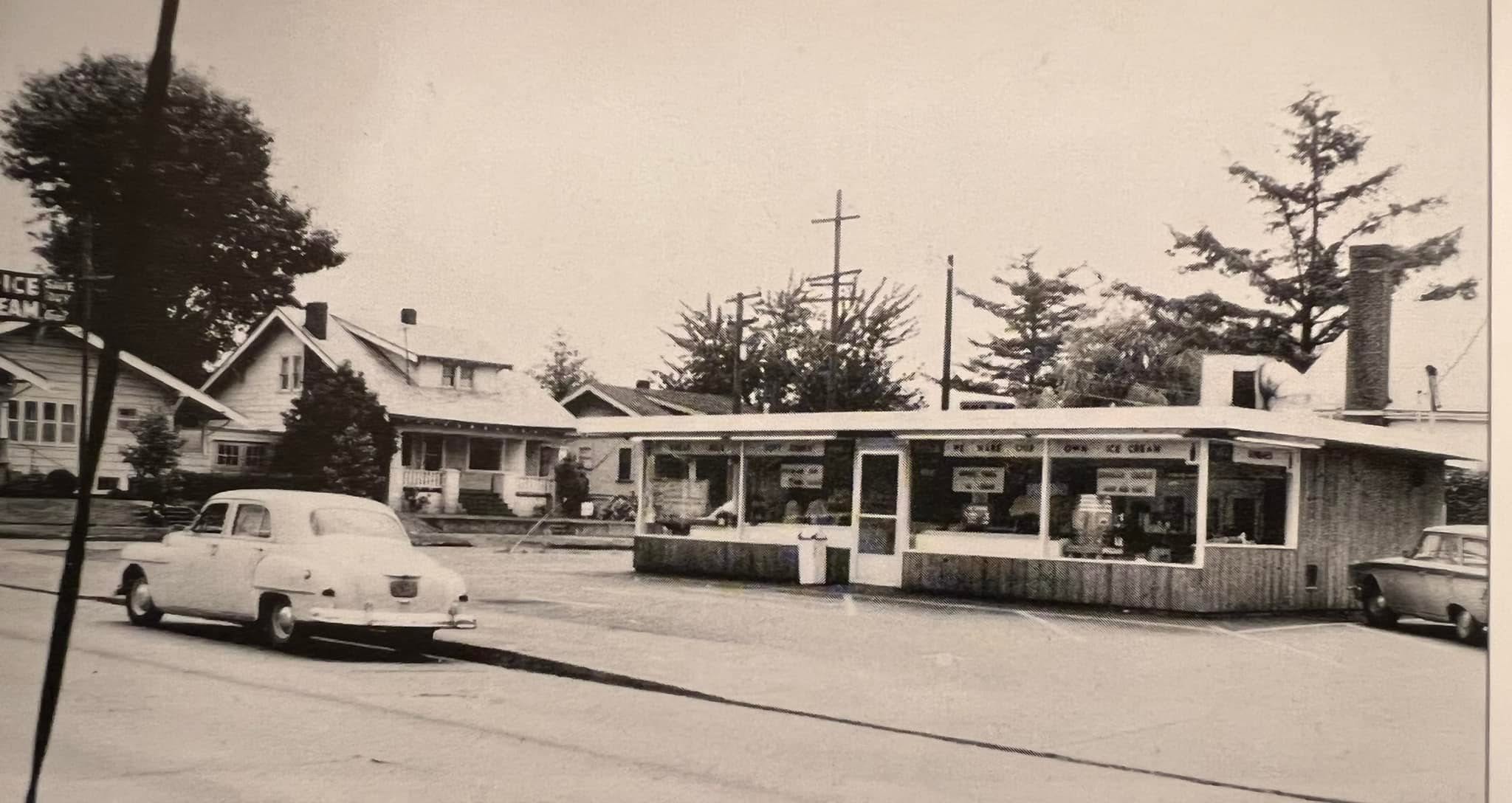
The well-known Washington Avenue was lined with local businesses where residents shopped, worked, and caught up with their neighbors. It's where travelers checked in to the Washington Street Hotel or the Kirby House. It’s where storefronts like Rose’s Ice Cream Parlor, owned by William and Bess Rose, buzzed with customers until the evening.
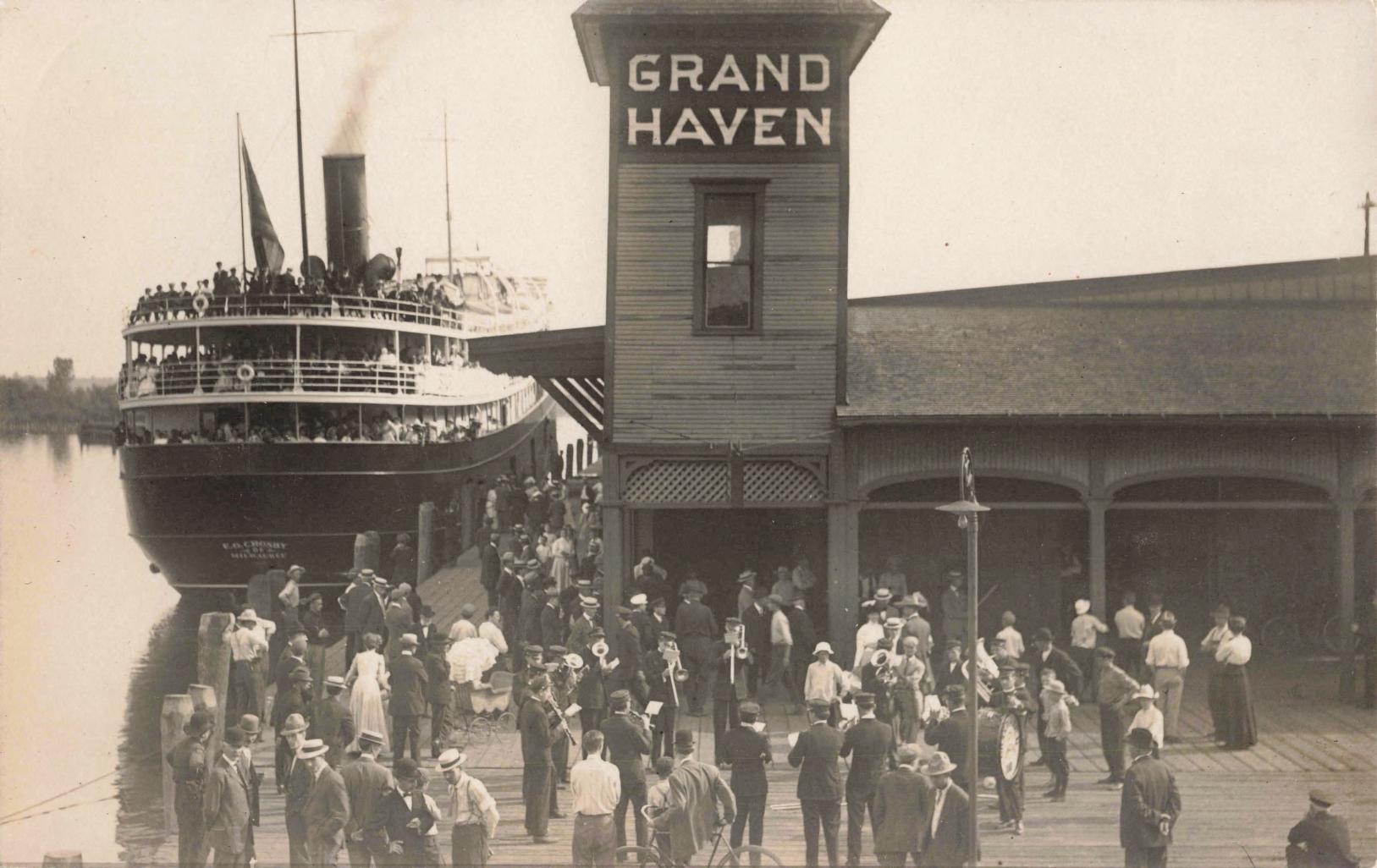
It’s where Floyd Sherk opened Sherk Auto Company, selling Studebaker automobiles as cars began to trump the interurban. It’s where James Oakes opened the first off-street filling station, conveniently named Auto Fill.
The businesses themselves often reflected just how fast paced this time was. A particular storefront, named Smith Brothers Soda Grill, transformed into Weimer’s Ice Cream Parlor, then Candyland, and by the end of the decade it was Green Mill Tavern. It would later become a real estate office, then a drug store.
It’s not to assume that Grand Haven hadn’t experienced the influx of tourism for its esteemed beaches and rising commerce. It was still very much a working harbor, but visitors had already begun to discover its appeal as a summer destination. Much like its neighbors, Holland and Saugatuck, Grand Haven was an escape from the harsh cities, offering relief on the lakeshore.
Most visitors spent their days taking a stroll on the boardwalk, swimming along the shoreline, and pitching a picnic atop the dunes. But the water wasn’t just a place to work or relax, it was also a place to compete. The prestigious sport of rowing had become a reason for crowds to gather along the banks.
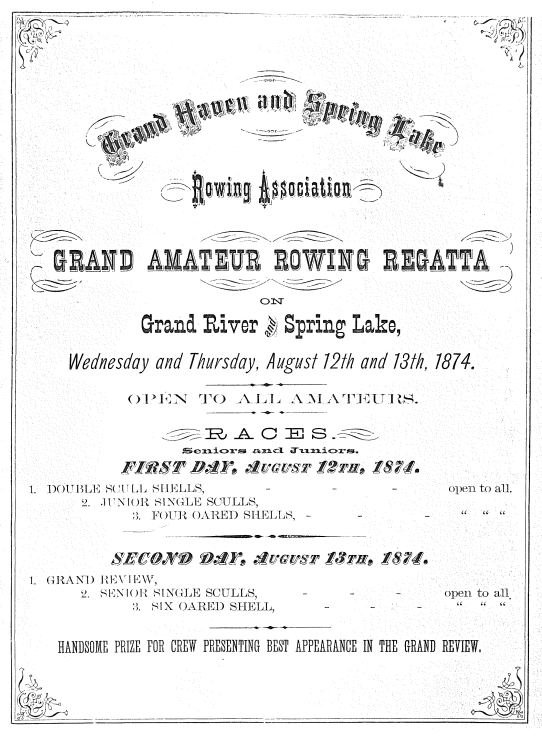
It was competitive but also brought a sense of local pride. These regattas brought both athletes and spectators into town during the summer months. These events featured experience levels that allowed for both amateur and senior athletes to showcase their talent. And, per a flyer from the Grand Haven and Spring Lake Rowing Association from August 1874, there would be a “handsome prize for crew presenting best appearance in the grand review.”
Yet 1924 was also a year of tragedy. The SS Lakeland, a cargo freighter that carried brand-new automobiles, from Nash, Kissel, and Rollin, sank to the bottom of Lake Michigan after a leak sprung water onto the ship only nine miles off the coast of Sturgeon Bay, Wisconsin. It was meant to reach Grand Haven—but never made it there. Its 27-man crew was able to safely abandon the ship thanks to lifeboats.
Some rumors suggest that insurance companies suspected the owners had the intent to tamper with the ship in order to receive a payout. A few years ago, salvage divers discovered that the ship’s stern sea valve was left wide open, which could account for the fact that water overtook the ship. I guess we will never know. Today, you can see the well-preserved, vintage automobiles at the bottom of the lake.
As you can imagine, the Lake Michigan waters offered abundance to Grand Haven. As local commerce boomed, tourists flocked to the shoreline, and rowing regattas sped through the channel, and tragedies much like the sinking of ships reminded residents that even the most familiar, cared-for waters could become a threat.
It was this constant balance between both an avid love for the water and a sense to be responsible, to respect it, that Grand Haven fostered a close relationship with a presence that would soon become woven into the identity of the city itself.
That presence began with a simple mission: to save lives.
As ships traveled through the channel and across the unpredictable waters of Lake Michigan, the need for trained crews at the ready to respond in times of disaster became apparent. This was before modern technological advancements in rescue equipment existed, so the survival of stranded sailors or persons depended on audacious determination of those who were apt to face the waters.
In 1876, Grand Haven became home to the regional headquarters for the United States Life-Saving Service, an organization created to protect those whose vessels were ever in peril. Not long after, May 1st, 1877, Grand Haven opened its first lifesaving station next to the channel. It was not a grand structure by any means, but it was equipped with a six-ton lifeboat, a surfboat, and a crew of men who were prepared to be sent out onto the water when it was needed.
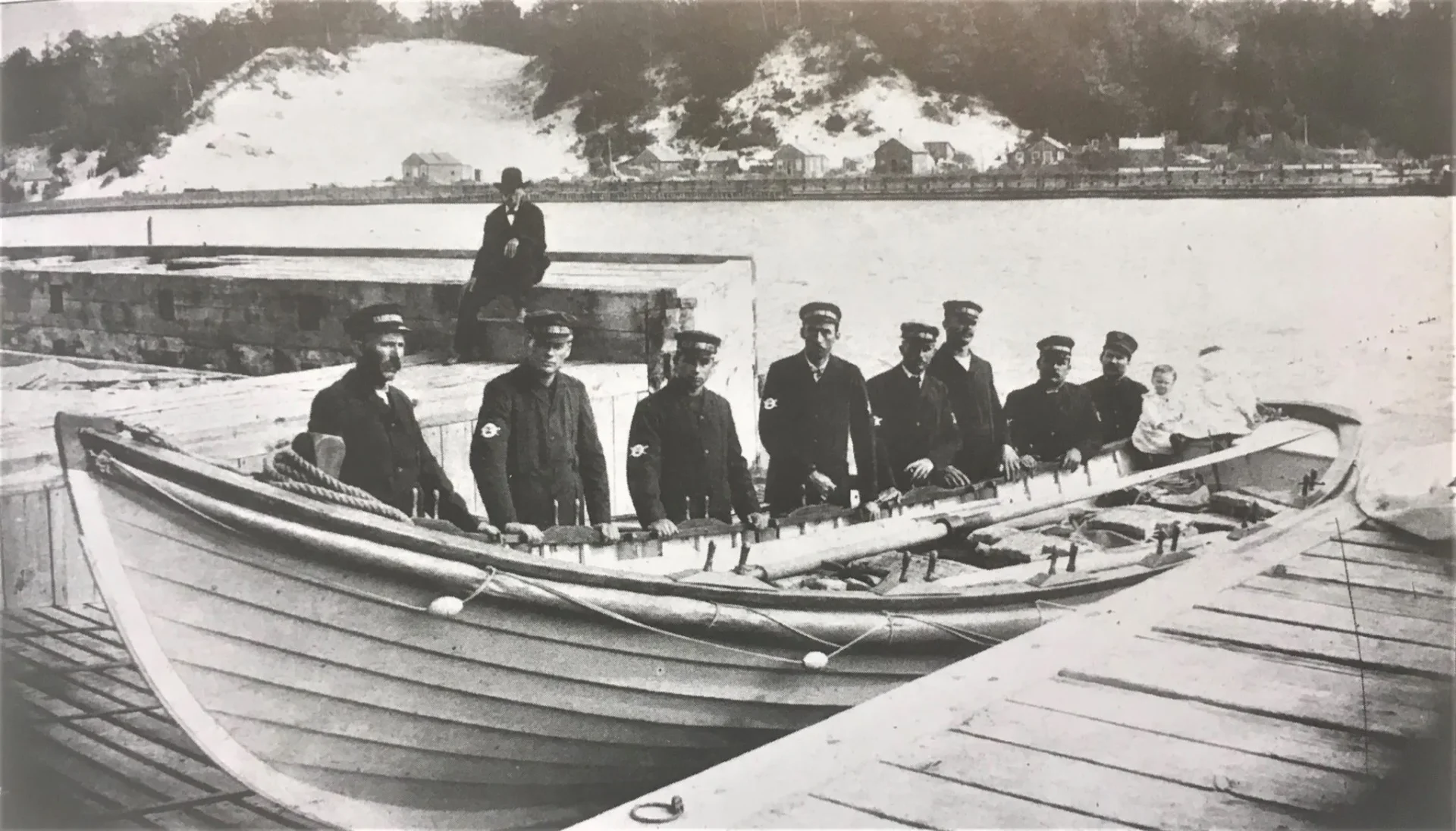
These were Grand Haven’s first lifesavers. Their faces became known along the waterfront. For them, a day-to-day would consist of drills, maintenance, and constant preparation, knowing that a sunny, routine day could quickly turn into a swirly storm that could send them off into a rescue mission. These men faced powerful waves, fierce storms, and the overall uncertainty of the vast lake. It was up to them to protect the waters that provided Grand Haven with its livelihood.
These men were more than just stationed personnel. The locals would watch as they drilled along the shoreline, the sailors would depend on their expertise, and generations of residents grew accustomed to seeing their presence along the harbor. This relationship between Grand Haven and the United States Life-Saving Servicemen was shaped through decades of service and sacrifice, all shared over a respect for Lake Michigan.
Then, in 1915, that relationship entered a new era.
The United States Life-Saving Service merged with the Revenue Cutter Service.
This formed the United States Coast Guard.
And now, Grand Haven was considered the headquarters for the Tenth Coast Guard District, which did not add significant honor, but it set them apart from nearby neighbors, Holland and Saugatuck.
But this connection was not defined by emergencies alone. The presence of United States Coast Guard personnel was a cause for appreciation. It necessitated celebration. By 1924, the locals and servicemen had curated such a close-knit bond that they yearned for a way to honor this.
The 10th Coast Guard Headquarters scheduled for August 4, 1924… a picnic.
And, of course, as Michigan weather has its own agenda, the picnic was pushed back to the next summer. (As Michiganders, we know that unpredictable weather always has a part in our event planning… it’s been this way for generations.)
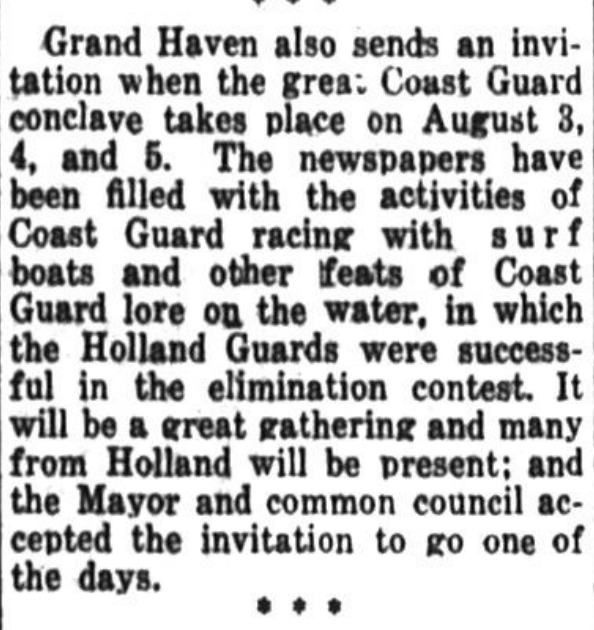
In 1925, the picnic resumed. It was highly anticipated. There were swimming demonstrations, rescue drills, and a rowing competition. But it didn’t stop there. From 1925 until 1937, this picnic grew bigger and bigger in size. By then, it evolved into a festival.
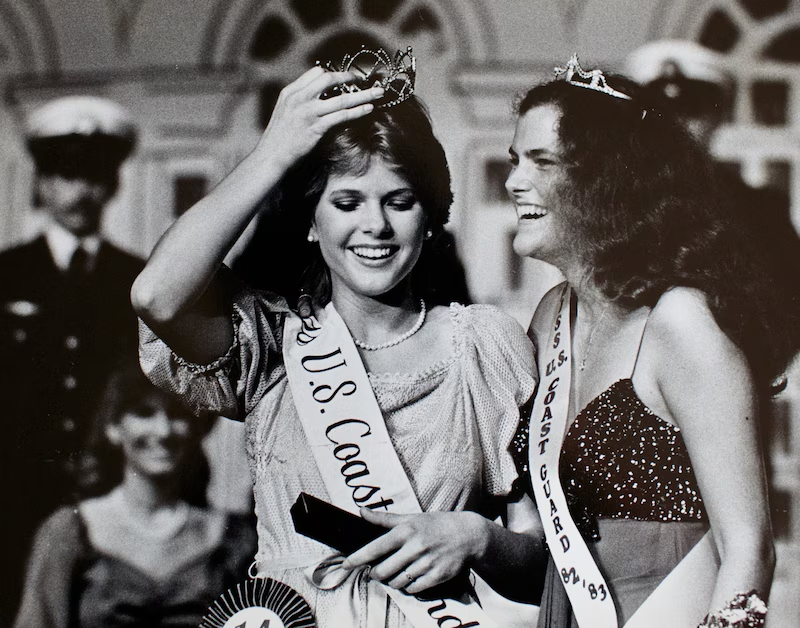
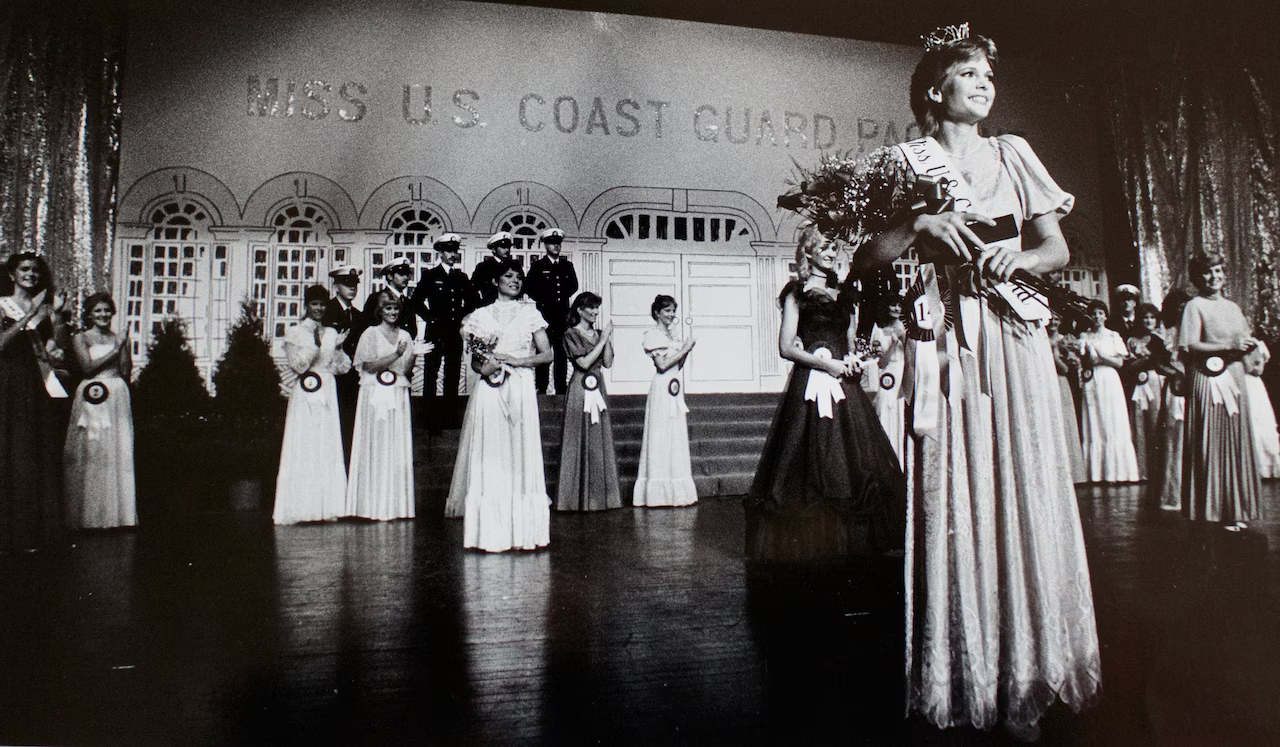
In 1934, Grand Haven hosted the Centennial Celebration, which included the first community-sponsored Coast Guard picnic. By 1937, this expanded when the Junior Chamber of Commerce added the Water Festival. This would span over three days with activities such as competitive races, drills, and water demonstrations. There was even a Coast Guard Festival Queen, imagine that!
Though the picnic transformed into a festival, its purpose remained the same: to honor those who protect the waters that have defined Grand Haven.
In 1998, President Bill Clinton signed an act that officiated Grand Haven as the nation’s first Coast Guard City, USA. The title acknowledged something residents have understood for generations.
The Coast Guard was not simply located in Grand Haven. It was part of Grand Haven.
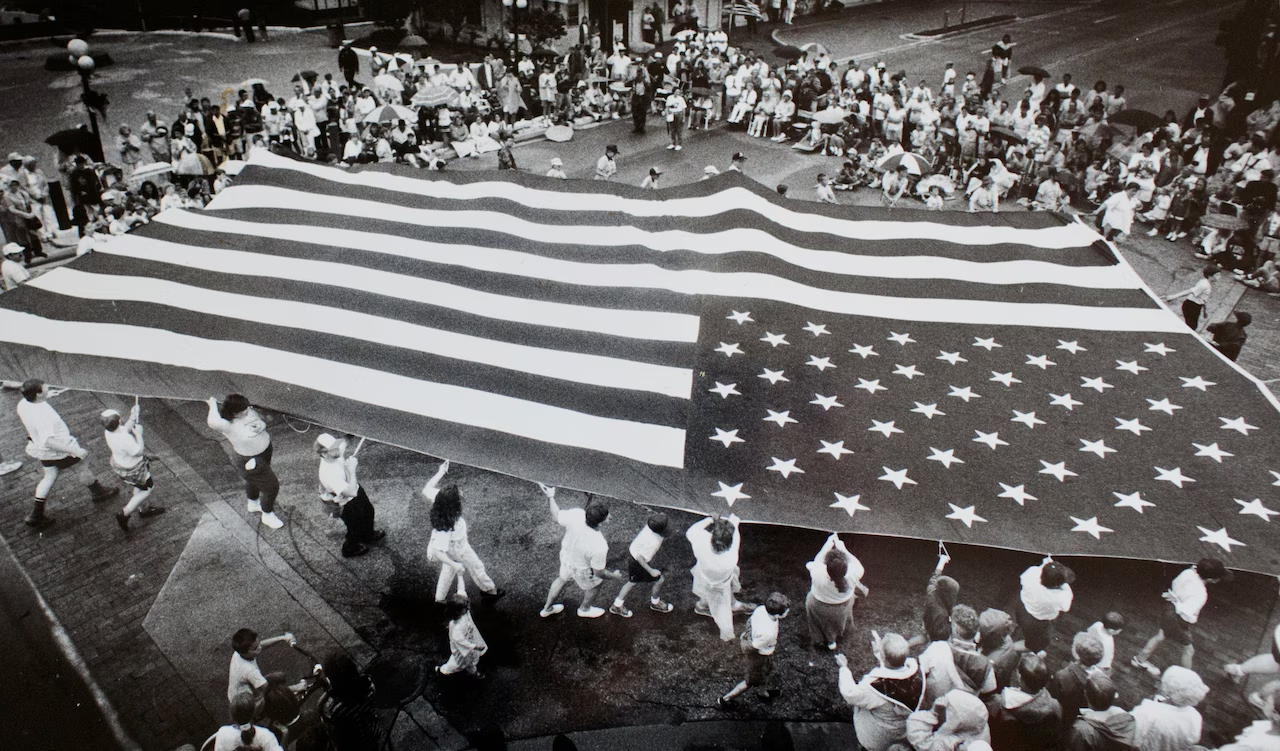
The Grand Haven Coast Guard Festival stands now as a living continuation of this. There are parades, fireworks, ship tours, waterfront concerts, car shows, flea markets, sandcastle competitions, cardboard boat races, volleyball tournaments, water skiers, a carnival, and more. In 1989, the annual Coast Guard Festival Parade allowed children and adults alike to showcase their four-legged friends as part of the parade. It was candidly referred to as the "pet parade."
And, get this… the Grand Haven Coast Guard Community Picnic still happens. It’s an integral part of the week-and-a-half long celebration. You won’t want to miss it.
We’re in the midst of the Coast Guard Festival for 2026.
Be sure to check out all that is offered at https://coastguardfest.org/.

Sierra Ozolins is a West Michigan native, currently a student at Hope College. As an athlete, she is passionate about fitness—from running to weightlifting. With a interest for politics and lifestyle, she is intrigued how local culture, community, and everyday events shape the world around her—often with an iced coffee in hand and her dog by her side.
Copyright © 2025 Hollander Media. All Rights Reserved. This material may not be published, broadcast, rewritten, or redistributed without written authorization. By providing your email or phone number, you are consenting to receive emails, calls, and SMS/MMS messages from The Hollander and affiliates. Msg & data rates may apply.