%20sploosh.jpg)
Rural areas of Ottawa County have been targeted for renewable energy projects. Zeeland and Jamestown Townships have a developer wanting to put solar panels on 1900 acres. In Blendon Township, a developer is vying for close to fifteen acres for a battery energy storage system (BESS).
But what if you don’t live in a rural area? Maybe you live in Ottawa County but haven’t thought you’re close enough to give this any thought. The debate affects you more than you might think.
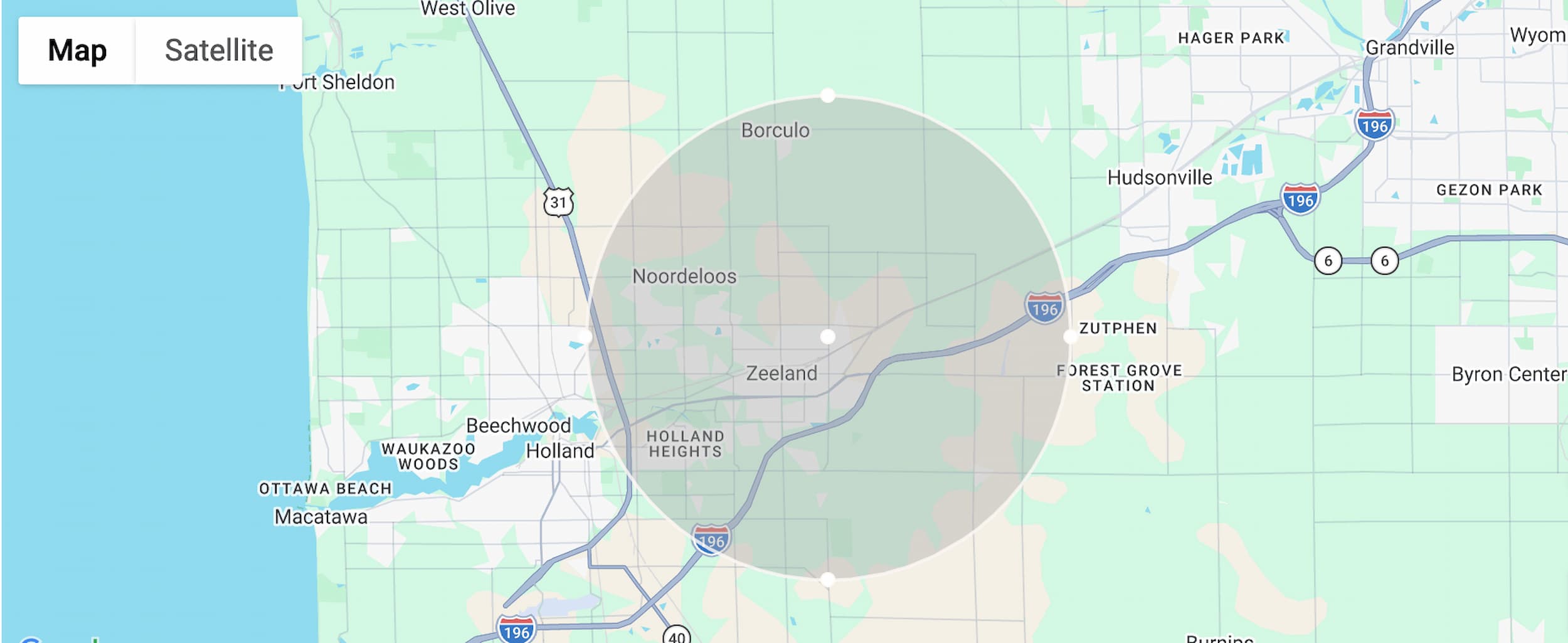
If you live within a five-mile radius of the proposed BESS site in Blendon Township, an evacuation could be in your future if one of the lithium batteries were to catch on fire.
Fires have broken out at BESS across the country. In 2024, the facility in Escondido, CA caught fire and residents, businesses, and schools were evacuated for two days. When evacuation orders were lifted after the Moss Landing BESS fire, residents were allowed to return to their homes but told to “stay indoors" because of the potential for "toxic gases" in the air.
If you were to be evacuated, would you have a place to go for an undetermined amount of time? Could you bring your pets? Could your household chores and routine be left unattended? In an evacuation, anything left behind would have the potential to soak in toxins—vegetables growing in a garden, pets, air entering your home... And what about local businesses? Could they afford to shut down for a period? Could manufacturing sites halt production? How would schools and GVSU evacuate? How about hospitals, nursing homes, and the home bound?
As consumers have become more aware of the modifications and bioengineering occurring in the food industry, there has been a growing interest in "farm to table," knowing where food comes from and the farmers who bring it to us. If 1900 acres of Ottawa County are no longer deemed agricultural, what might that remove from the local food chain?
• Cows: At one to two acres per cow, 1900 acres of land could have held over 900 cows. At roughly 400 pounds of meat per steer, that’s a minimum of 360,000 pounds of beef. As for dairy cows, each cow averages a minimum of 2000 gallons of milk per year. A field of 900 dairy cows could have produced 1,800,000 gallons of milk annually.
• Pigs: At a minimum of 15 finisher (meat) pigs per acre, 1900 acres could have held 28,600 pigs. With the average pig providing 140 pounds of meat, that would have been 4,004,000 pounds of meat.
• Hay: An average of 100 bales can be gathered per acre. 1900 acres could have yielded 190,000 bales of hay.
• Blueberries: An average of 5000 pounds of blueberries can be produced per acre. 1900 acres could have yielded 9,500,000 pounds of blueberries.
• Corn: 168 bushels of corn can be harvested per acre. 1900 acres could have produced 319,200 bushels or 17,556,000 pounds of corn.
• Soybeans: 46 bushels of soybeans can be grown per acre. 1900 acres could have produced 87,400 bushels or 5,244,000 pounds of soybeans.
Not only would any of these contributions not be put into the local food chain for the life of the project, but with the potential of heavy metal particles from the batteries and solar panels leaching into the ground, that land might never contribute to the food chain again.
What costs more, shipping our food supply into Ottawa County or having energy sources that aren’t local?
And if the land isn’t used for food, another need Ottawa County appears to have right now is housing. Covering 1900 acres with solar panels would keep that land from becoming residential.
Given the land in question is agricultural with larger lot sizes, a conservative estimate would put one home per five acres. 1900 acres could have held at least 380 homes. And for the homes already there, will they one day be difficult to sell due to their proximity to solar fields?
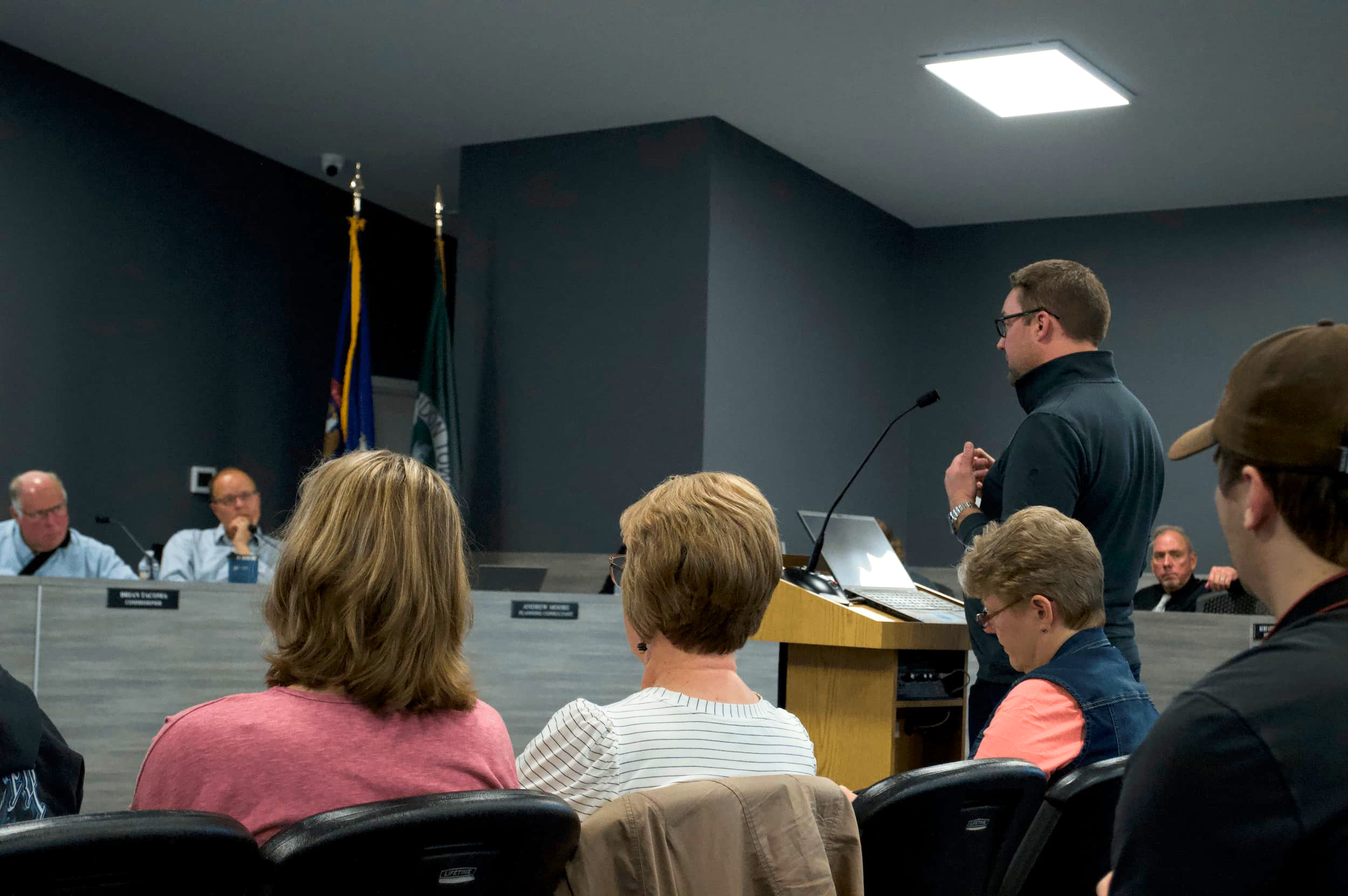
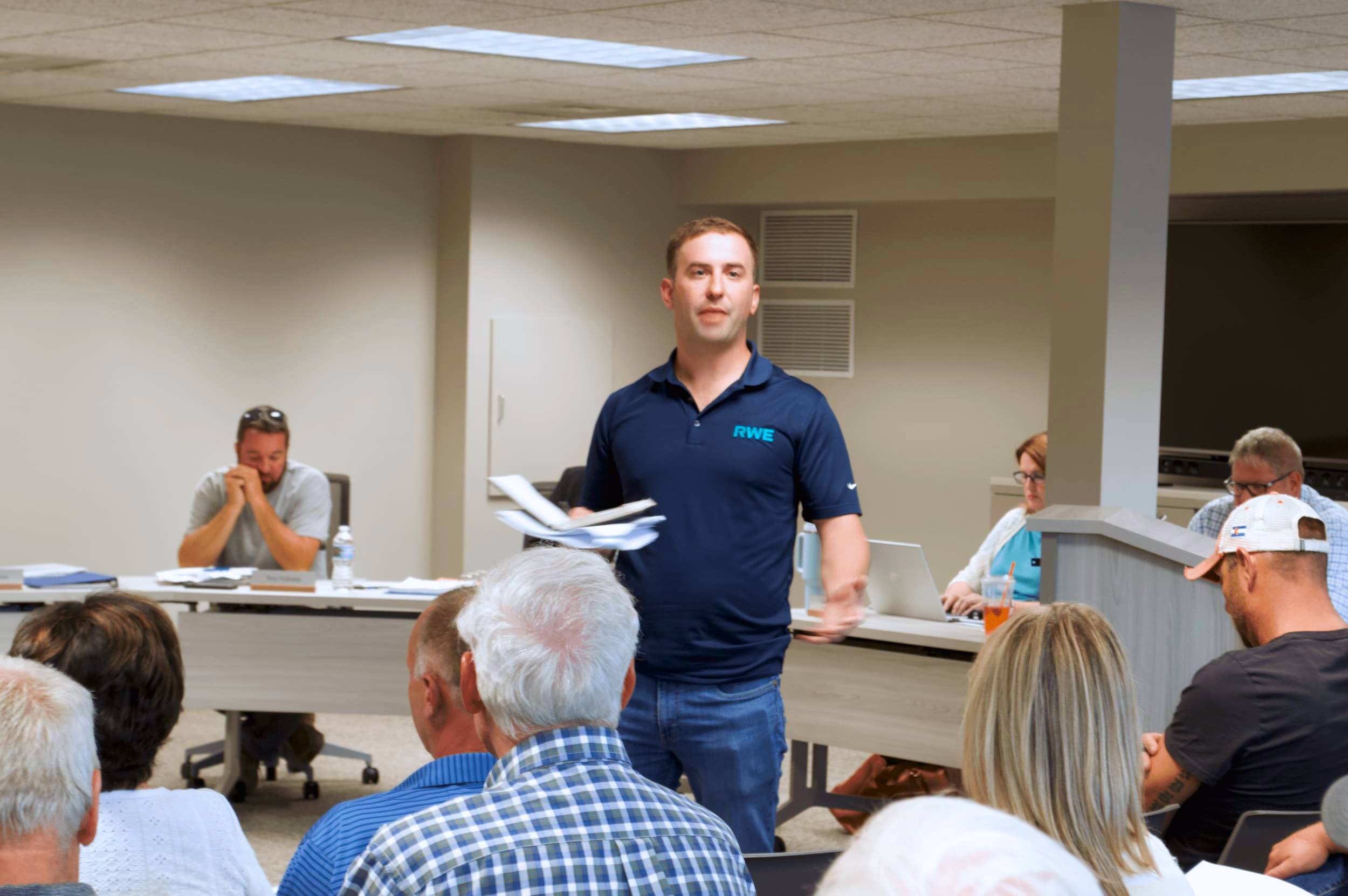
Even if you support the idea of having renewable projects constructed in your hometown, are you comfortable with the manner in which the State has been handling the influx?
Up until about a year and a half ago, municipalities followed the guidelines provided by Public Act 233 for renewable energy projects. Townships had the power to set restrictions on zoning, just as they would for other industries, companies, or individuals looking to build within their borders.
But on October 4, 2024, the Michigan Public Service Commission (MPSC) released an Order. Within the Order were a new application process, new definitions, and an altered structure of power under PA 233. Essentially, the MPSC—an unelected body of three commissioners appointed by Governor Gretchen Whitmer—determined who would have the authority to approve applications of renewable energy developers.
Currently, if a local planning commission follows the Order and writes a compatible ordinance that's approved by the township, a developer is able to site locally. If a planning commission fails to write a compatible ordinance, a developer is able to bypass the municipality and apply directly to the MPSC.
Why is this a big deal?
The Order made it so that townships no longer can control where these companies choose to place their projects if a developer finds a landowner(s) willing to lease property. Meaning, land that is zoned agricultural is no longer off limits. And if an application is accepted, renewable energy projects could be put beside livestock, crops, and residential homes, presenting risks to land, air, and groundwater contamination and causing residents greater concern than if these risks were contained to industrial zones.
Lawsuit against the MPSC
In response to the Order, 72 municipalities are fighting to regain local control using the legal system. On April 15, 2026, oral arguments were heard by the Michigan Court of Appeals. Representing the 72 municipalities was Attorney Michael Homier of Foster Swift. Homier posed the argument that the MPSC had legislated requirements in the PA 233 Statute that had not been there, fundamentally changing “the definition and the relationship” of municipalities in this “permitting scheme.”
Appearing to counter that view was Chief Judge Michael F. Gadola, who ventured that prior to the Order, townships had the ability to make parameters so restrictive that an energy company couldn’t possibly locate a facility within their community.
Homier disagreed. He said that the Zoning Enabling Act had provided guardrails by stipulating that townships cannot pass, adopt, or enforce an ordinance that prohibits a land use when there’s a demonstrated need. To his knowledge, Homier said, “there hasn’t been a single case involving renewable energies where any of his clients or any of the affected local units had ever been held responsible for exclusionary zoning on that basis.” Meaning, he reiterated, the guardrails were working.
In a counter argument, Nicholas Taylor, the assistant attorney general representing the MPSC, claimed that the Order speaks to the legislative intent of PA 233, and that the interpretation was necessary in order for PA 233 to be used and work in the way that the Legislature intended. But, Judge Christopher M. Murray clarified, the Legislature didn’t actually say that.
“It comes to the separation of powers and who really makes the rules…,” Judge Murray added.
Judge Gadola asked Taylor if in his judgement the MPSC would allow a solar farm to be constructed in a residential neighborhood or elementary school. Taylor replied that as long as a project meets PA 233 approval requirements, building next to residential neighborhoods and schools would not be off limits.
Brion Doyle, the attorney representing the intervening appellees, repeatedly spoke of the intent of the Order as being to remedy the “mischief” of the townships. He claimed that if zoning was left to the townships, the State would not meet the clean energy standards and the renewable energy goals.
In his rebuttal, Homier told the judges “the only mischief here is by the MPSC rewriting legislative text… The Legislature understood full well what it was doing, and it didn't want to cram these facilities down rural Michigan's throat...” Homier concluded by asking the Court to overturn or vacate the Order.
And now we wait for a decision. Will the Court rule that townships are up to “mischief” for wanting to put restrictions around where a project is constructed in order to minimize the impact of potential harm to the community? Or will it be ruled that the MPSC acted with mischief when it took away zoning authority from local governments?
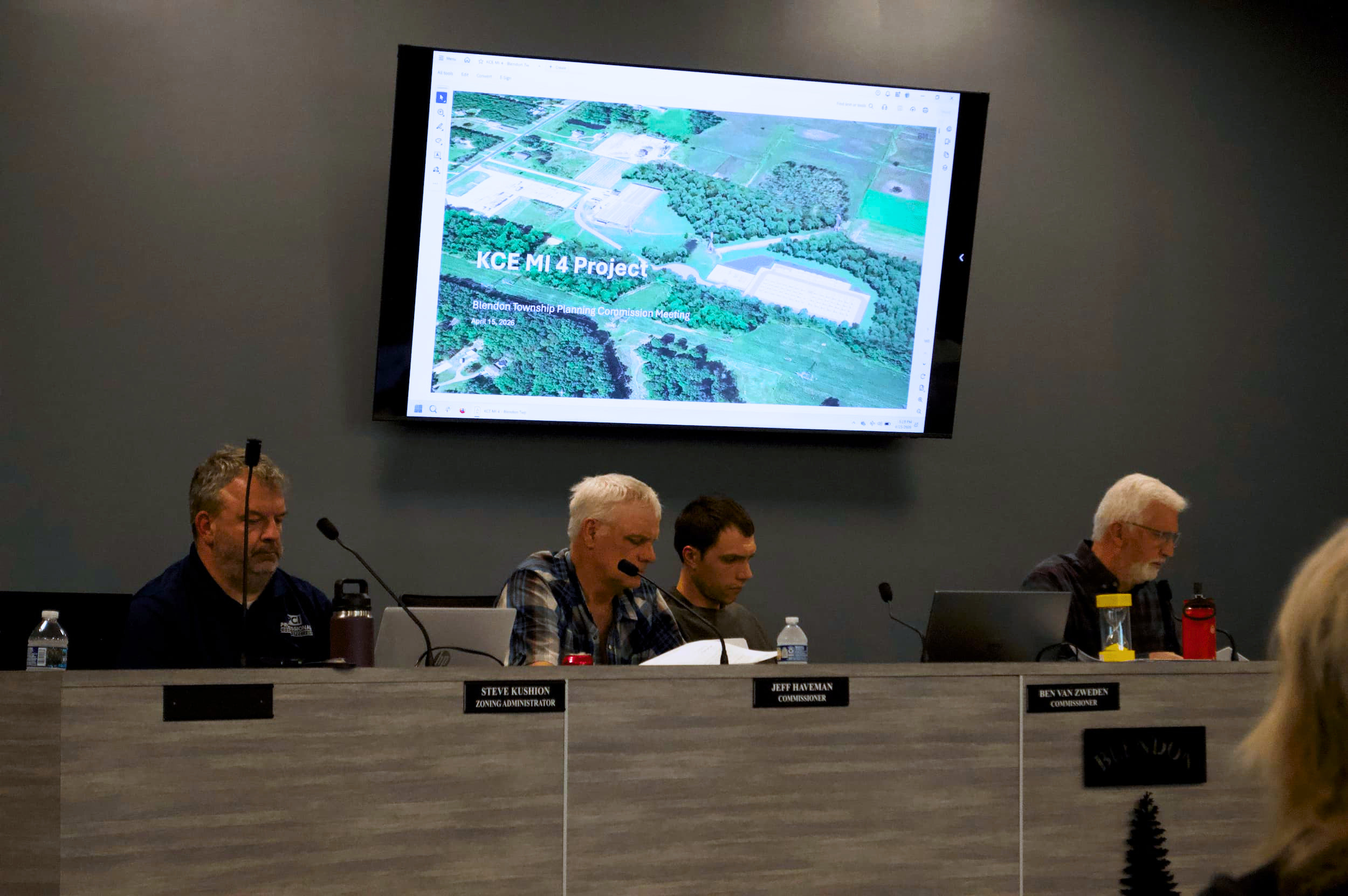
While the 72 municipalities wait for the next step, other townships are using alternate routes to resist the loss of local control.
Zeeland and Jamestown Townships: In response to the solar application by RWE, the Zeeland Planning Commission developed an incompatible workable ordinance. The result was that RWE now is pursuing approval from the MPSC. On March 3, the Planning Commission approved a one-year moratorium on data center applications while they work to develop a renewable energy ordinance. And on April 17, Zeeland Township filed a Petition to Intervene with the MPSC regarding RWE's application. Jamestown Township, a week later, also filed a Petition to Intervene. Additionally, the April 29 Zeeland Township Board Special Meeting agenda includes consideration for a Resolution to Oppose the Silver Maple Solar Project and a Resolution to enter into a Cooperation Agreement with Jamestown Township.
Blendon Township: KCE filed an application for a BESS on August 28, 2025. Since then, the Planning Commission has been taking its time going through a deliberative process gathering facts, bringing in experts, and compiling conditions. Whether the township will develop an ordinance compatible or incompatible with what KCE is requesting seems to be a decision that is months out.
Allendale Township: On March 23, 2026, the Board of Review passed a Resolution expressing opposition to House Bills 5529 through 5531 and 5581 through 5584 of 2026. The Board found that the Bills place significant limitation on local zoning authority and local decision making as provided under the Michigan Zoning Enabling Act. In the Resolution, the Board urges members of the Michigan Legislature “to preserve the long-standing principle of local control over land use planning and zoning decisions as contemplated by the Michigan Zoning Enabling Act.”
There are places to put renewable energy projects that won’t take up local farmland. In addition to industrial zoned areas, some companies have put energy products on roof tops such as shopping centers, above parking lots, and over highways. These options are sites that already have covered the ground with concrete and wouldn’t take from the local food chain or housing market. Brownfields, where land already is contaminated, are another option.
All Residents Are Affected
So, whether you have a farm next door to a proposed project or you live across town where it’s out of sight and somewhat out of mind, by living in Ottawa County you are affected by the State moving in on local decisions.
The debate is not whether or not these companies should exist. Rather it’s that planning commissions are in place to help their communities live and work together effectively by being mindful of their townships’ character and growth and looking out for residents' welfare. Should the State be able to take away local decision-making authority currently held by members of the community who are subjected to community input?

Krista Yetzke is a native of Ottawa County. A jeep-driving, guitar-playing wife, mom, and everyday adventurer, Krista was raised on the love of Jesus, the great outdoors, the arts, the value of frugality, and the beauty of food as medicine.
Copyright © 2025 Hollander Media. All Rights Reserved. This material may not be published, broadcast, rewritten, or redistributed without written authorization. By providing your email or phone number, you are consenting to receive emails, calls, and SMS/MMS messages from The Hollander and affiliates. Msg & data rates may apply.


.jpg)