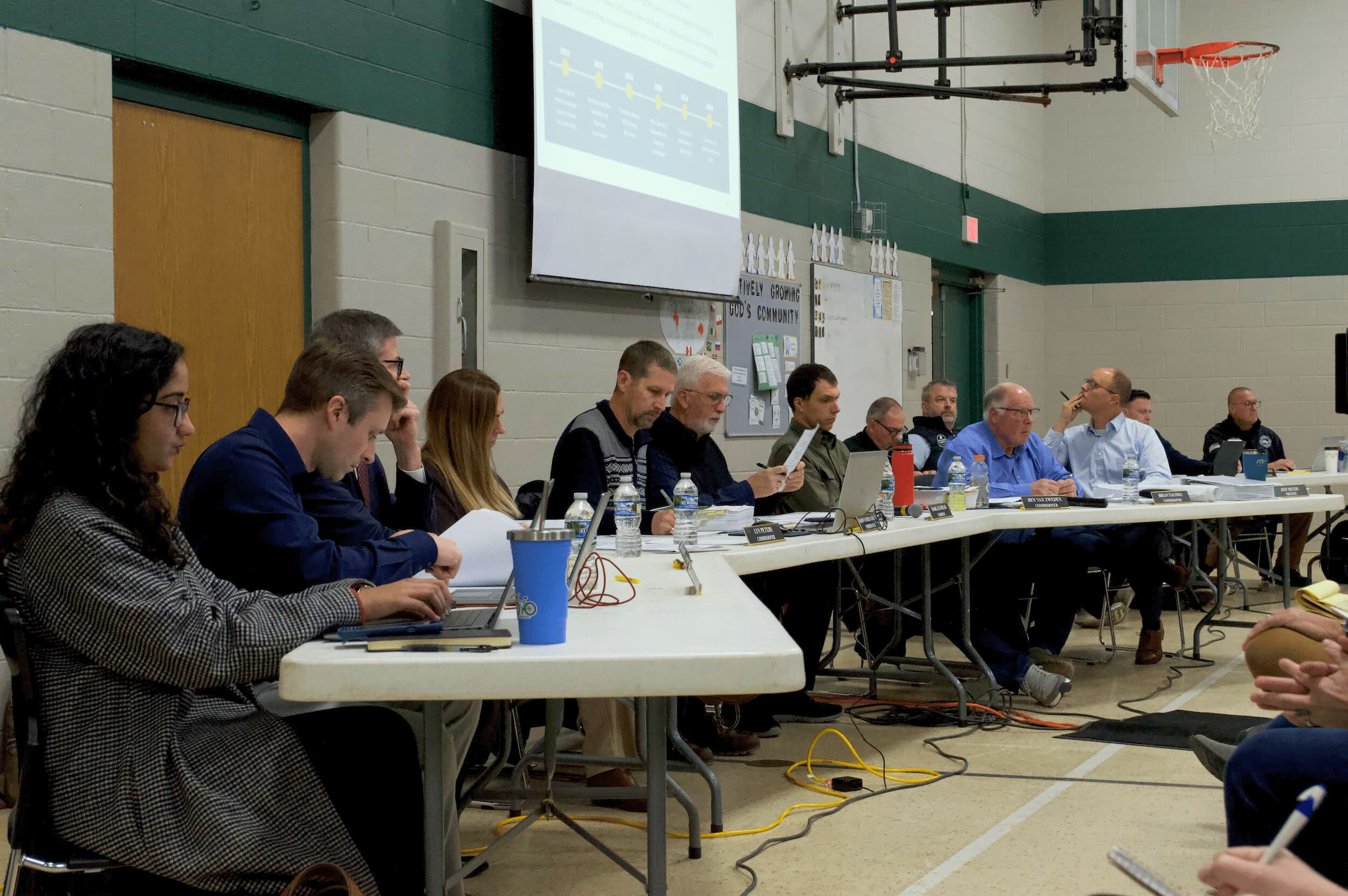
At the November meeting, the Planning Commission voted to table the application from the battery energy storage system (BESS) applicant, Key Capture Energy, until more questions could be answered.
And now, a month later, the Key Capture Energy (KCE) representatives shared the portion of their presentation that they’d been unable to finish at the previous meeting. Brian Madigan, KCE’s Lead Project Developer, began by listing the potential benefits to the township, including added jobs during the construction period and a $500,000 grant through EGLE.
Joel Vyduna, KCE’s Executive VP Commercial and Technology, addressed concerns around property values, homeowners insurance, and decommissioning.
Property values
Starting with property values, Vyduna explained that KCE has commissioned a project-specific study for Blendon which interviews real estate professionals who are brokering property deals near similar BESS projects around the nation.
Quoting from additional studies done across almost 200 BESS projects, Vyduna said there is no trend of negative impact on property values adjacent to BESS projects—especially when the BESS is sited as an existing substation, such as KCE is proposing.
Homeowners insurance
Regarding the impact to homeowners insurance, Vyduna listed applicable factors considered by insurance companies that underwrite homeowners insurance. The list includes claim history, on-premise factors (house age, size, and construction type), safety features (alarm systems, dead bolts, or other risk factors), attractive nuisances (swimming pools and trampolines), property use, and the geographic area. Also reviewed would be the crime rate, likelihood of natural disasters, and average reconstruction costs.
Vyduna pointed out that what is notably missing from consideration is what is next to a homeowner’s property. The underwriters look at the property itself and at the property's statistical norms. “And so, if you build a BESS in the community, especially if it's as well sited as this one, it's not going to impact that homeowner's insurance or property values,” Vyduna said.
Decommissioning
With decommissioning, Vyduna clarified that the Township wisely had positioned safeguards in the ordinance. KCE is required to prepare a decommissioning plan that ensures the return of the site to a useful condition, as existed before construction.
The ordinance also requires that KCE provides financial assurance suitable to the township, which could include a decommissioning bond from a surety company, an irrevocable letter of credit from a bank, or a parent guarantee from a credit worthy parent to Key Capture. “What that means,” Vyduna said, “is that if we walk away from the project and we abandon it, funds are made available from a credit worthy third party to take that facility down.”
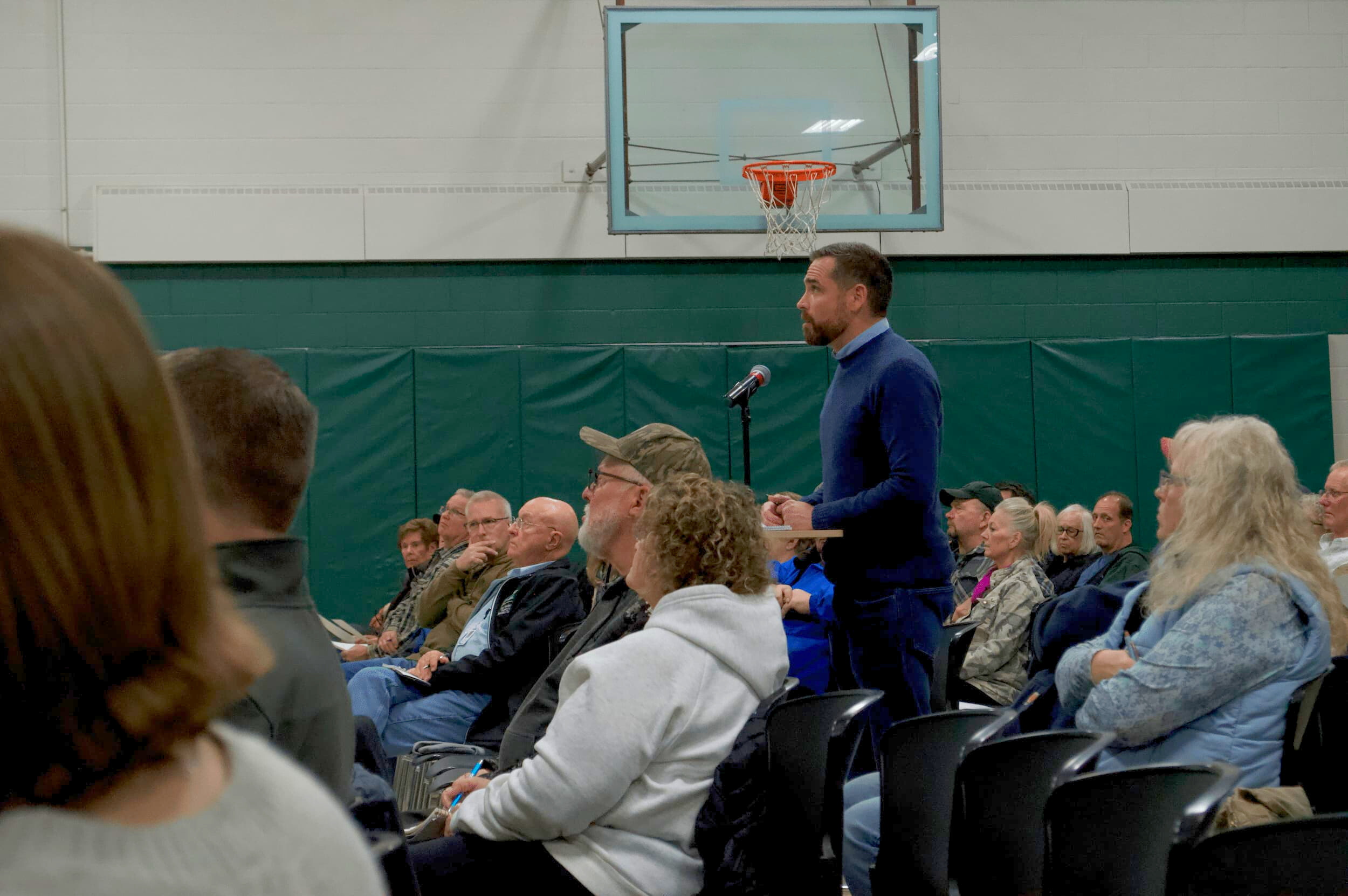
Michael O’Brian of Code Concepts addressed the issue that had been tabled at the previous Planning Commission meeting: the dimensional requirement regarding lot size. The zoning ordinance requires a 40-acre lot size minimum in the agricultural district. With KCE proposing to lease roughly 15 acres out of the original 40-acre parcel, there would need to be an exemption to the ordinance. O’Brien explained that the BESS ordinance that the Township adopted provides clear exemption language, allowing the Planning Commission to exercise its discretion for any dimensional or applicable requirements of the zoning ordinance.
O’Brien pointed the commissioners to Township Planner Andrew Moore's report in which Moore recommends that five of the exemptions be granted—including the lot acreage minimum. Two exemptions—regarding driveway requirements—Moore recommends not be granted and that KCE comply. It was noted that KCE will comply with the two requirements because they are committed to applying locally.
According to Moore, there were three options for the commissioners to move forward. The first would be to grant the exemptions. In so doing, the process would continue in front of the commissioners, allowing them to eventually make a decision on the application. Next, the commissioners could choose to deny the exemptions or to send the requests to the Zoning Board of Appeals (ZBA). If the ZBA were to grant the requested variances, the proposal would be brought back to the commissioners who then would continue their review. If the ZBA were to deny the variances, that basically would be the end of the road for KCE, locally. KCE then would be required to either abandon the project or seek approval from the Michigan Public Service Commission (MPSC).
Moore acknowledged the desire of commissioners to treat this application as they normally would but also cautioned that no other applicant has had the option that KCE has—to be able circumvent the Township. Moore expressed concern with the Township being able to maintain as much control in regulating the project were the exemptions sent to the ZBA and denied—which he called "possible, if not likely," due to ZBA standards. Denial by the ZBA could cause KCE to take the application to the state.
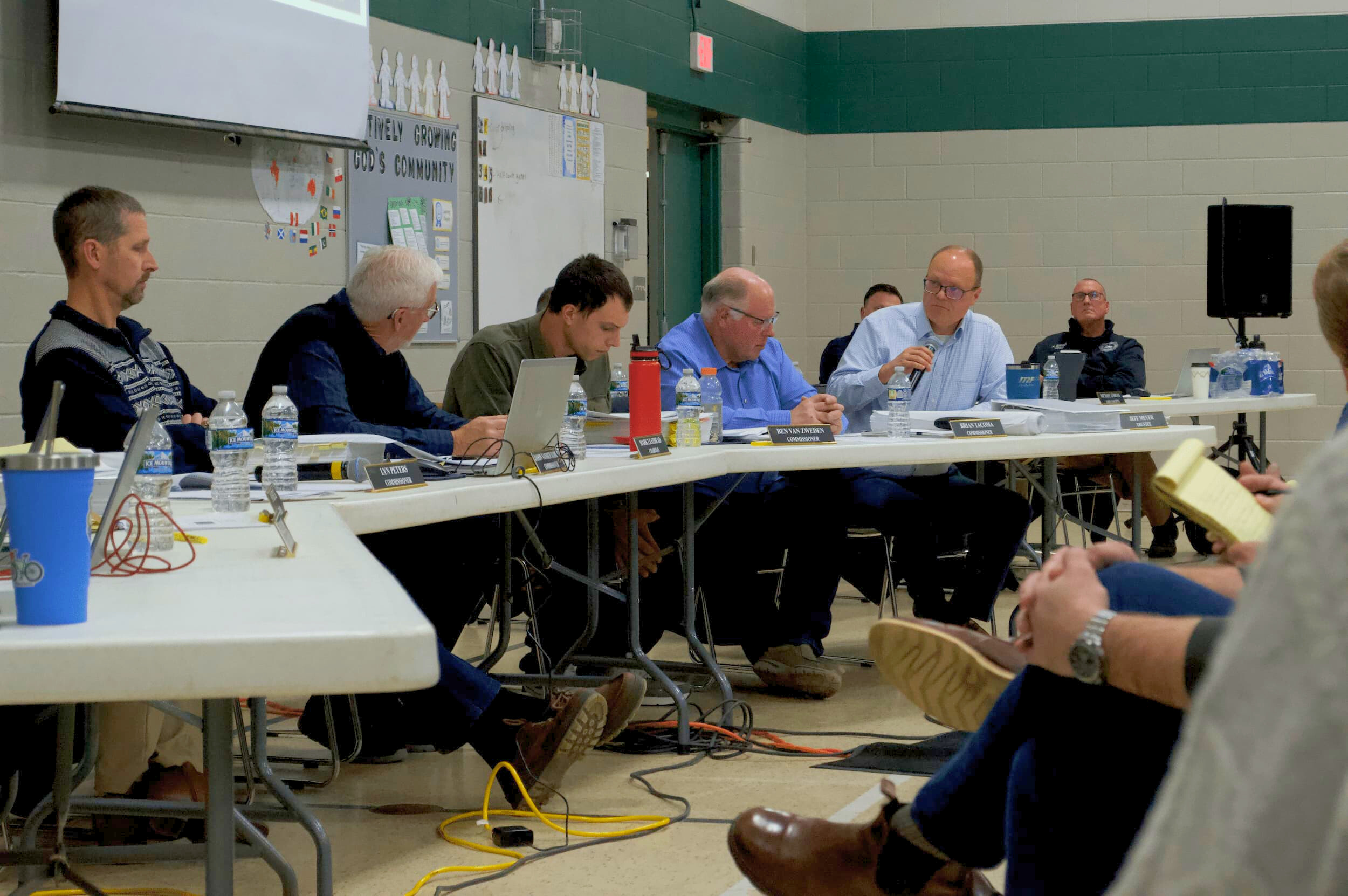
With that, the ball was lobbed into the court of the Planning Commission. Commissioner Jeff Meyer questioned whether denying the exemption for the dimension requirement would incentivize larger projects, due to the 40-acre minimum. He also was concerned whether denying the exemption would encourage future projects to skip the local process entirely. Given those considerations, Meyer said his initial thought was to grant the exemptions in order for the board to keep control and allow for more restrictions.
Vice Chair Jason Vander Kodde thought there was a fourth option for the board—having KCE modify the application to reduce the exemption requests. If KCE was willing to make changes to bring the plan into compliance, then he could make a decision on which option to pursue.
It was Commissioner Ben Van Zweden who then appeared to alter the trajectory of the conversation. He said he wasn’t entirely sure the Planning Commission has the authority to give an exemption. He continued that the ordinance outlines specific activities that may be exempted by the board—erection, construction, alteration, operation, and maintenance of energy storage facilities. A land split, he pointed out, would precede each of those.
Chairman Mark Leathead weighed in. He said that in the past, the process and protocol that the Commission has gone by, especially for a land split, has been to send the issue to the ZBA. He thought the commissioners were obligated to continue with that practice. Leathead then spoke about optics, how the proceedings looked to the public.
“Does Key Capture have the Planning Commission in their pocket?" Chair Leathead asked. He assured the public that KCE does not.
Leathead went on to say that the Planning Commission is making the decisions independently. And that even though there’s a risk that the ZBA won’t approve the exemptions, it is important to stick to the process and protocol.
“I don’t want to lose the trust of the public,” Leathead said—to which the crowd applauded. He furthered that advice regarding special land use has always been to listen closely to the applicant and to the public.
Meyer maintained that the Planning Commission should be the board to make the decision on the exemptions, and that the action would not mean there was approval of the proposal.
Vander Kodde requested more time to review the written opinion from Township Attorney Ron Redick. He moved to table the application so that the commissioners could consider legal opinion and determine the best step forward for the current variances.
The motion passed unanimously.
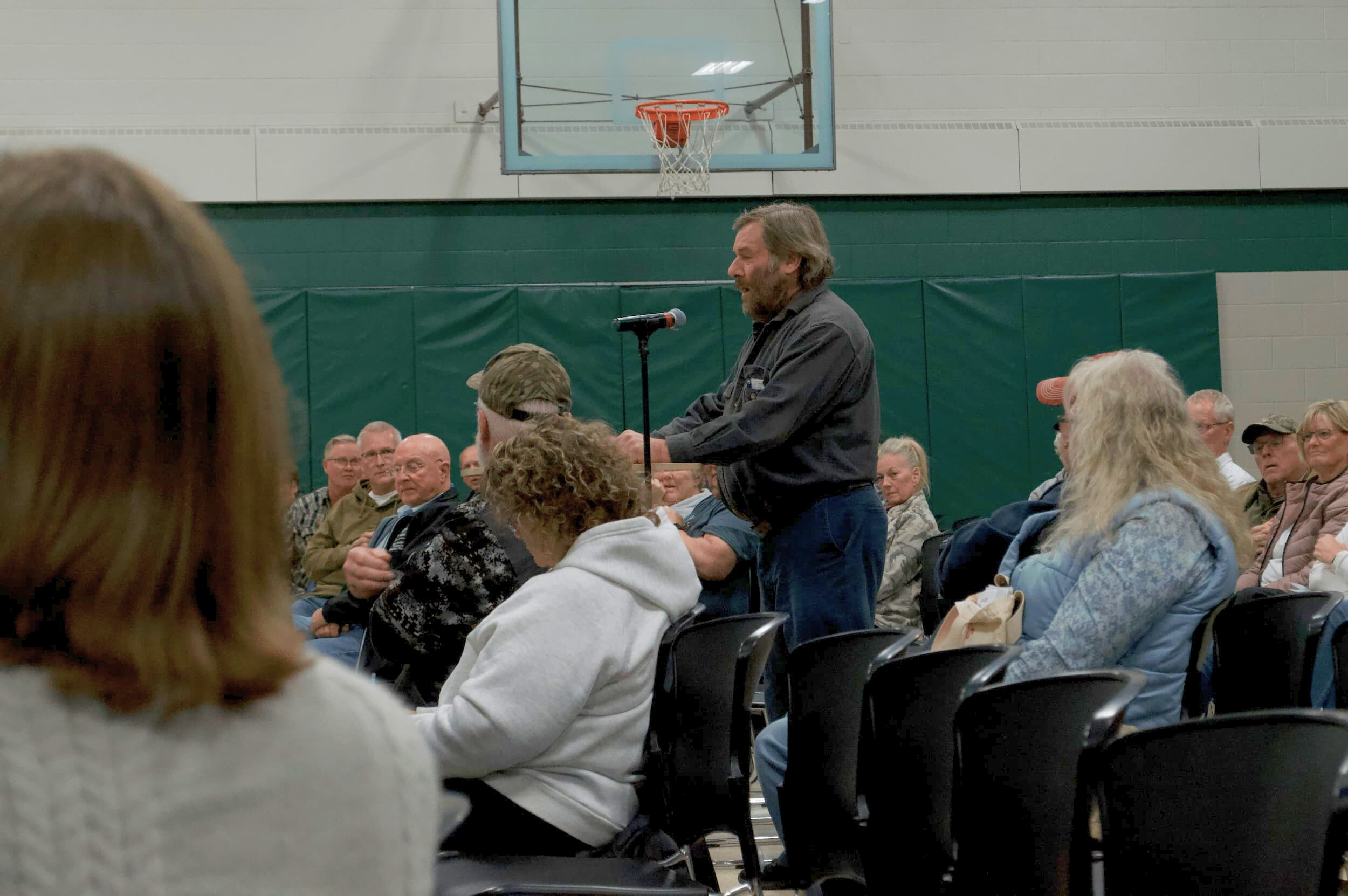
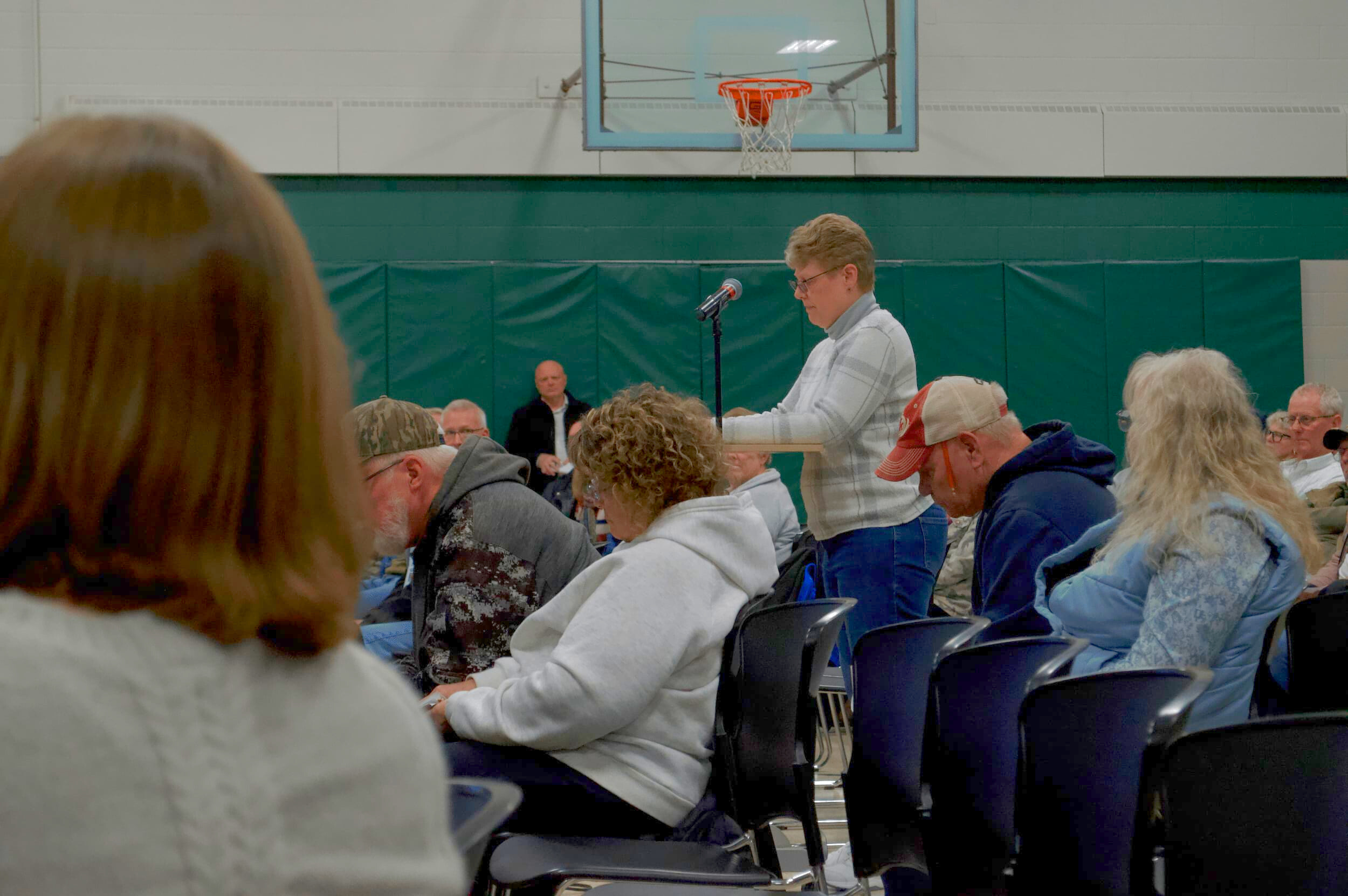
Public commenters thanked and supported the Planning Commission for the consideration to send the exemptions to the ZBA and follow protocol. Concerns were expressed over not having KCE pay up front for decommissioning. Others worried about the township's fragile water, fragile roads, and that even with all the presentations, KCE has not convinced some that the project is safe—there’s too much at stake and too many unknowns.
Another resident criticized there being only one entrance to the site, raising concern that an easterly wind could force fire fighters to go through the plume. And one resident questioned KCE's claim that the project won’t negatively affect property values and called attention to the growing number of similar projects in the county—solar farm projects between Zeeland Township and Jamestown Township and another BESS in Olive Township.
One has to wonder what is behind energy companies wanting to work with townships rather than the state. For one thing, townships seem to have more restrictions. Plus, developers tend to encounter intense upset from residents at local meetings. One possible motivator, according to EGLE, may be that the state process is costly for developers. The Hollander reached out to KCE to ask what makes the local process worthwhile but has yet to receive a response.
Local resident Bev Horinga shared information during her public comment about the state process. According to PA-233, she said that only after a township’s denial or incompatible ordinances may a developer attempt to go to the MPSC. And when that happens, the developer is not automatically given “the keys to override the township.”
Horinga said that PA-233 still provides tools for local control, but only if the township "vigorously enforces each and every required step. It is not an automatic approval." It could take up to a year for the MPSC to make a decision on an application. There's a process. It's not going to be instantaneous, and it's not a guarantee. Horinga said there have been developers who have been turned down by the MPSC.
Public commenter Christi Meppelink added that “companies are pushing for local ordinances because, as [KCE] acknowledged [during the meeting], the MPSC is not ready to handle these applications at the state level.”
With the MPSC potentially costing more, taking more time, and not being guaranteed, is there a bluff to be called when applicants seem to push for exemptions, saying they will just go to the state if they don’t get the accommodations they request?

Krista Yetzke is a native of Ottawa County. A jeep-driving, guitar-playing wife, mom, and everyday adventurer, Krista was raised on the love of Jesus, the great outdoors, the arts, the value of frugality, and the beauty of food as medicine.
Copyright © 2025 Hollander Media. All Rights Reserved. This material may not be published, broadcast, rewritten, or redistributed without written authorization. By providing your email or phone number, you are consenting to receive emails, calls, and SMS/MMS messages from The Hollander and affiliates. Msg & data rates may apply.